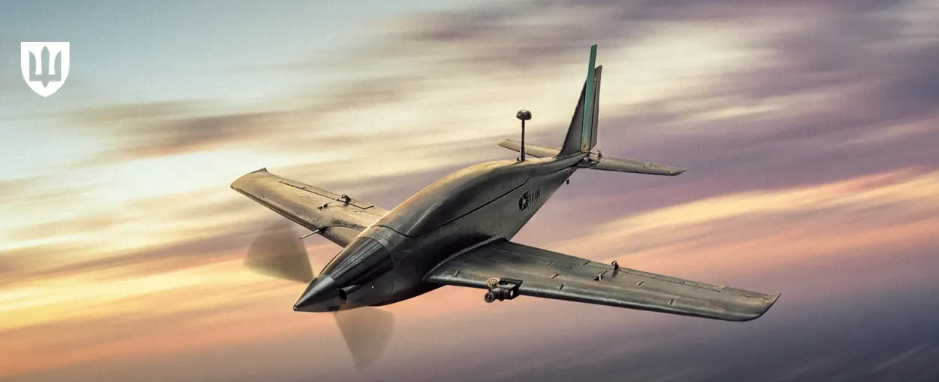
Ukraine has a new drone hunter that outclimbs its prey. Ukraine’s Defense Ministry codified the Tsyklop interceptor drone, which can rise above the maximum flight altitude of Russian strike and reconnaissance UAVs and destroy them from there.
It has a wingspan of a little over a meter, stays airborne for nearly 1.5 hours, and comes in two variants: a cheaper, simpler model for slow, low-flying air and ground targets, and a higher-performance version built to catch fast Shaheds at altitude.
The Ministry says the system’s range is enough to cover any Ukrainian regional center against drone attacks, and that its V2 variant has already destroyed more than 100 air targets, and was the first to down a Russian Shahed over Kursk Oblast.
The interceptor was developed by a Ukrainian enterprise experienced in building weapons specifically for high-intensity modern warfare, and various Tsyklop modifications have been at the front for several years already, per the Defense Ministry.
Tsyklop already kills full Russian drone catalog
The V2’s more than 100 kills span the range of Russian drones Ukraine faces daily: the Gerbera decoy-and-strike drone, the Zala and Supercam and Orlan reconnaissance UAVs, the Lancet loitering munition, and the Molniya. That target list is the point — it means one interceptor is bringing down both the cheap reconnaissance drones that spot for Russian artillery and the Lancets that follow, as well as Shaheds.
Different Tsyklop modifications have been at the front for several years, the Ministry said, so codification formalizes a system already proven in combat rather than introducing an untested one. The cheaper variant handles slow, low targets; the high-performance variant is built for fast Shaheds at altitude.
Tsyklop joins fast-filling interceptor lineup
Tsyklop enters a market that Ukraine has built at speed. The Defense Ministry codified 413 unmanned aerial systems in the first half of 2026, and interceptors are one of the fastest-growing categories.
The competitors each solve the Shahed problem differently. Ukraine’s Defense Ministry is procuring 8,000 Octopus interceptors with automatic terminal guidance. Germany funded 15,000 units of the STRILA, which hits 355 km/h and needs no GPS. Wild Hornets’ Sting has destroyed more than 600 aerial targets and became the first Ukrainian drone control system approved to NATO standards.
Tsyklop’s contribution to that mix is the vertical dimension: a drone that gets above the target rather than chasing it down.
Altitude answers the jet-Shahed problem
The high-flying variant matters because Russia’s drones have been getting faster and higher. Russia has fielded jet-powered Geran-4 Shaheds that cruise at 300 to 350 km/h and can burst to 500 to 600, outrunning much of Ukraine’s cheaper interceptor fleet.
Read also
-
Russia’s Shaheds cost $10,000 each. Ukraine just unveiled drone that kills them for $2,000
-
When you can’t get swarm through, you send one drone low and hand-flown. That’s Russia’s newest Shahed tactic
-
“When karma works”: Ukraine torched 188,000-square-meter warehouse of Russia’s biggest online retailer after years of strikes on leading logistics company
About the Author
