Ukraine’s aerial attack drones opened a new front against Russia’s sanctions-dodging shadow fleet, striking 20 vessels in the Black Sea in a single night, the Unmanned Systems Forces (SBS) reported. The raid launched the Black Sea phase of a campaign that had until now played out in the Sea of Azov, and it pushed the 10-day tally well past a hundred ships.
The Black Sea cluster opens
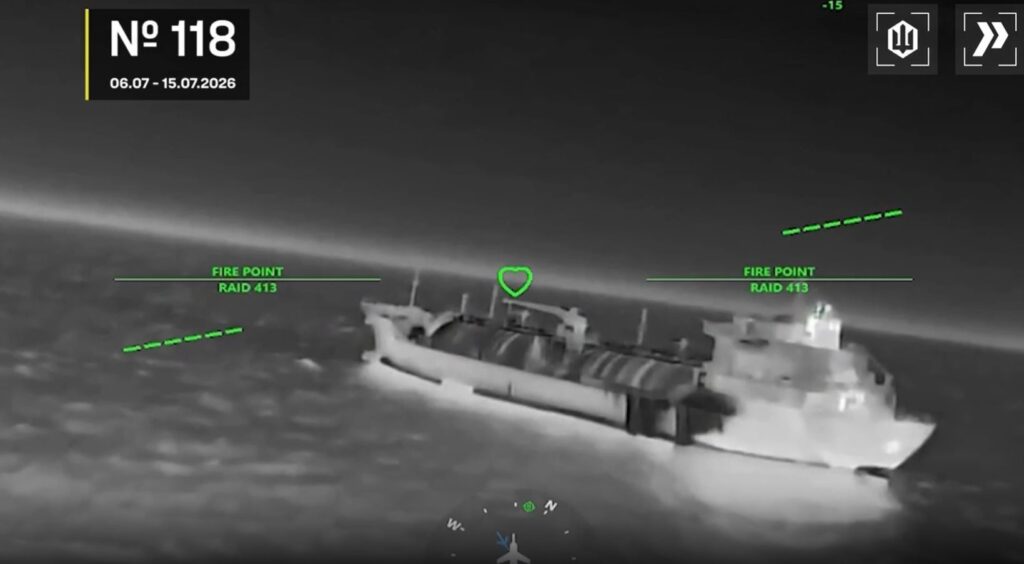
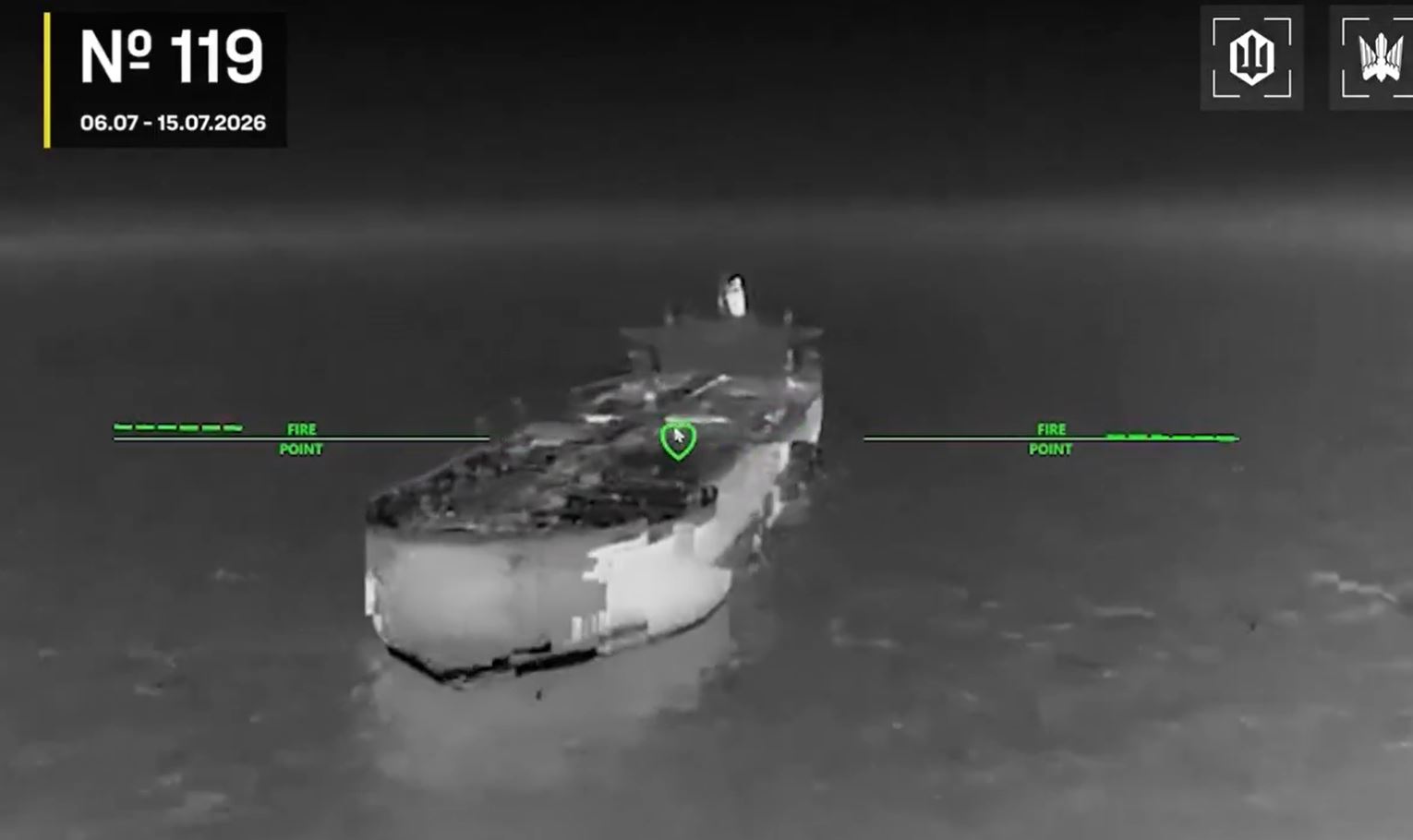
Overnight on 15 July, SBS operators struck 17 oil tankers, two gas carriers, and one tug in Black Sea waters. Six drone units ran the raid together: the 9th “Kairos” Battalion of the 414th “Magyar’s Birds” Brigade, the 1st Separate Center, the 20th “K-2” Brigade, the 412th “Nemesis” Brigade, the 427th “Rarog” Brigade, and the 413th “Raid” Regiment.
The two gas carriers fell to Nemesis and Raid operators. The 1st Separate Center took the tug.

The timing was deliberate. SBS commander Robert “Madyar” Brovdi wrote that the Black Sea cluster of operation MoLoChKa (“Dairy”) opened on 15 July, the Day of Ukrainian Statehood. He framed the night as a scoreline: 20 to nil.
Ukrainian drones switch to the Black Sea: 20 first tankers hit
Drone Forces Commander Robert Brovdi says the tally of ships hit in the Black Sea and the Sea of Azov now stands at 136.
Madyar pic.twitter.com/J30Fv9TNo1
— Euromaidan Press (@EuromaidanPress) July 15, 2026
136 ships in 10 days
The Black Sea haul adds to a running total that has climbed fast. From 6 to 15 July, Ukraine’s drones struck 136 vessels of Russia’s shadow fleet across both seas.
Of those, 116 went down in the Sea of Azov between 6 and 14 July, as an earlier daily count tracked. The 20 Black Sea kills on 15 July carried the campaign west into deeper, wider water.
Bigger tankers, a different aim point
The Black Sea vessels seen in the SBS video are ocean-going ships, far larger than the flat-bottomed river couriers Ukraine has been burning along the Azov feeder route. The footage from the FP-1 or FP-2 attack drones shows the operators aiming mostly for the deck structures rather than the bridges, with follow-up drones filming the fires that spread after the first strikes.
The operation’s stated goal is steady disruption of Russian logistics and the money behind them. Disabling tankers, cargo ships, and support vessels complicates oil exports and limits Russia’s ability to fuel its troops and the occupation force in Crimea.
About the Author
