I have not been to a literary evening in years, and as I find a place in the garden of Franko House on the evening of 25 June—the closing night of a fellowship named for a Ukrainian writer a Russian missile killed three years ago—I am already a little sorry I came.
Here we go again, I think. Another manufactured theme, another self-pleased little world.
Then the moderator, Sasha Dovzhyk, opens by explaining that both of this year’s fellowship writers spent three months circling one idea: home. It is fitting, she says, to talk about home in the house-museum of Ivan Franko, a classic of Ukrainian literature. Here we go again, I think. Another manufactured theme, another self-pleased little world that flatters the people sitting in it and says nothing to anyone outside it. I settle in to be bored.
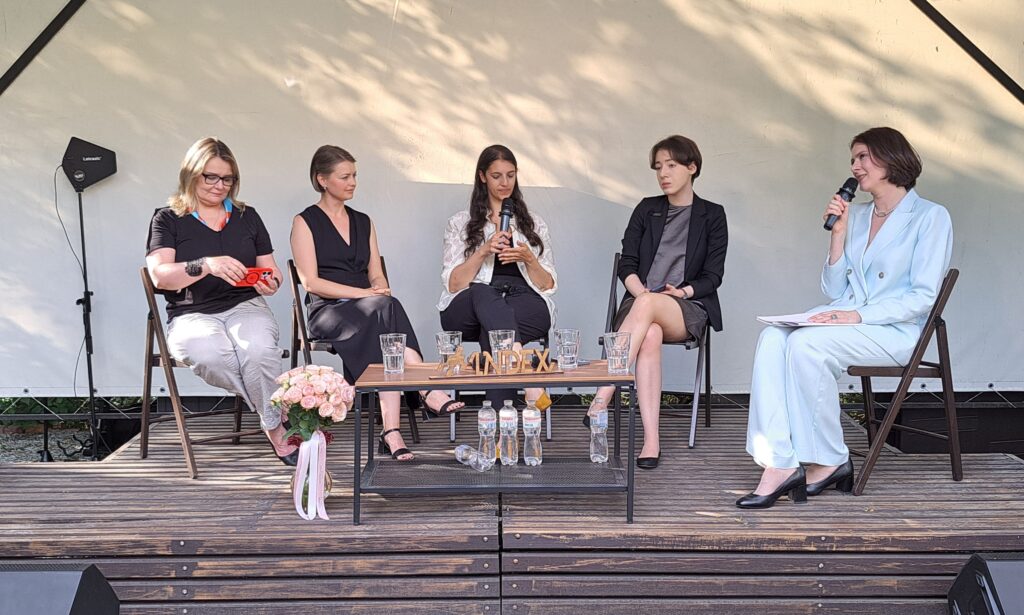
Anna Gruver starts to read
Anna Gruver left Donetsk at 17 and has not been able to go back in the 13 years since. She reads from a text built almost entirely out of what is missing: home as a doll in a velvet dress, still lying, perhaps, in a drawer in her occupied apartment; home as a cemetery she cannot reach to tend her dead.
“Maybe home is testimony,” she reads. “I testify, therefore I have a home.”
Then: “Home is explosion. Explosion. Explosion.”
I came braced for polite boredom, and instead I am sitting among strangers who are quietly coming apart.
By now she has tears in her eyes, and so does much of the garden, and so, to my surprise, do I. It hits me like a freight train. I came braced for polite boredom, and instead I am sitting among strangers who are quietly coming apart—and I am one of them.
Gruver says, a little later, that she feels skinless up here, that she cannot hide behind irony, and that home for her is the one place a person is allowed to be seen like that. I sit there thinking about my own home: where it is and what it is. So much for the emotionless man who came to be bored.
The writer they came for
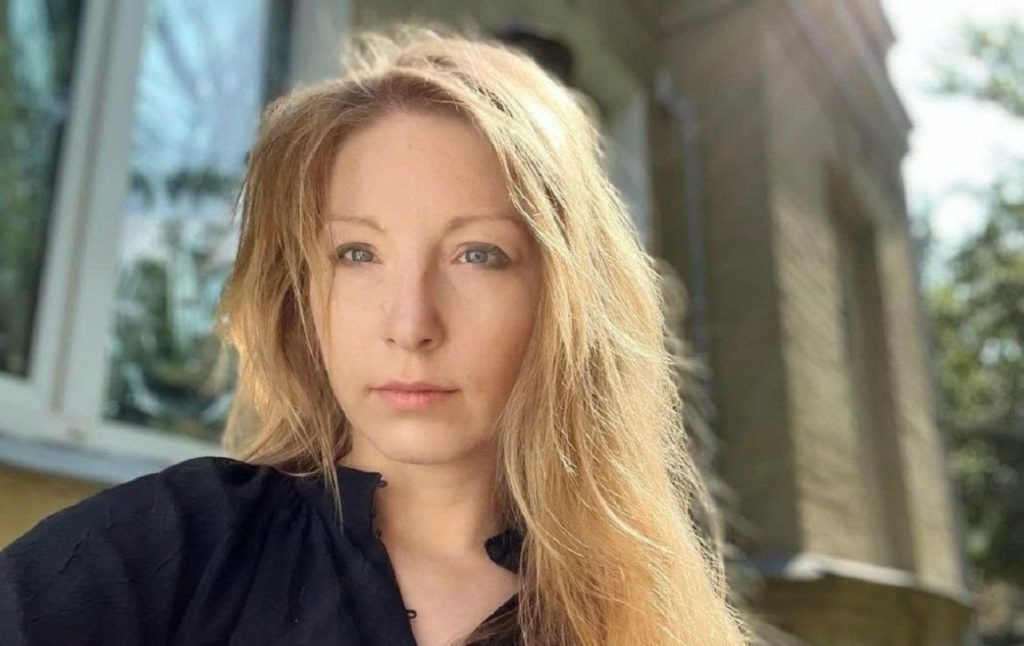
Victoria Day closes the fellowship that INDEX: Institute for Documentation and Exchange runs each year in memory of Victoria Amelina. She was a novelist who founded a literary festival in the town of New York in the Donetsk region, and who, after the full-scale invasion, retrained to document Russian war crimes with the Truth Hounds team.
A Russian missile strike on a restaurant in Kramatorsk left Amelina critically injured, and she died days later.
Her posthumous war diary, Looking at Women Looking at War, won the George Orwell Prize for political writing. Each year, the fellowship brings one Ukrainian and one international writer to her hometown of Lviv for three months.
On 27 June 2023, a Russian missile strike on a restaurant in Kramatorsk left Amelina critically injured, and she died days later, on 1 July. The same strike killed 13 people, four of them children.

Russo-Ukrainian War. Day 495: Ukrainian writer Victoria Amelina dies after a Russian missile attack.
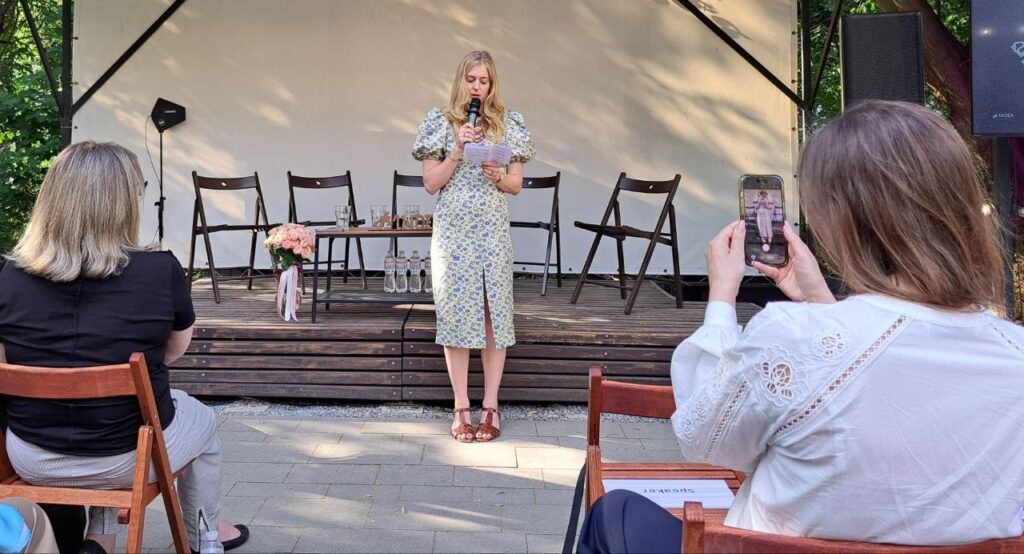
Opening the evening before the writers spoke, the United Kingdom’s Chargée d’Affaires to Ukraine, Charlotte Surun, gave the official count: the Prosecutor General’s office has recorded more than 200,000 crimes since the start of the full-scale invasion, each one with a person behind it, she said. She quoted a line of Amelina’s that the rest of the evening kept proving: the answer to truth is often more truth.
The evening falls almost exactly three years after the missile.
The two fellows this year, Gruver and the British journalist Lucy Fulford, both arrived at the same subject without planning to. The evening falls almost exactly three years after the missile, in the last days of June that now belong to her.
Home down to a hand in your hand
Olena Stiazhkina, a novelist and historian also from Donetsk and a member of the fellowship jury, says she wants to talk about home like a mad person—from a position of madness, she says, and of mad solidarity.
She does not soften what the warm garden is sitting on. This evening should not be happening, she says, simply because Russia keeps killing the people dearest to us, and the four of them should be on this stage with Amelina, not in her place.
What is no longer there shouts the loudest.
Her old Donetsk home is made of absences now, she says, and what is no longer there shouts the loudest; she keeps wondering where the absent finds such strength for a voice.
Years ago, she wrote that occupied Donetsk looked like a woman who had been raped, a city the municipal crews scrubbed every morning in a kind of compulsion, washing it and washing it raw. When she heard Gruver tell that same lost city, this evening, that she missed it and loved it, she heard it as love spoken to the violated woman. Not everyone can give love to what is filthy, spat on, defiled, wounded, she says. But we do.
On the old facade, she read the words “anatomy” and “histology” in Latin, and she stood there and cried.
Then she follows the madness where it leads. Earlier that day, she walked to Amelina’s grave, and on the way back, she passed the medical university on Pekarska Street, a building she had walked by for years and somehow never seen.
Her father, a Jewish boy who left the antisemitism of Donetsk, studied there in the late 1950s, and she had never thought to ask him how he lived in this city, whether he was happy, whether anyone needed him. On the old facade, she read the words “anatomy” and “histology” in Latin, and she stood there and cried. It was a gift from Vika, she says, because that is how it works.
She traces her own idea of home down to almost nothing. Leaving Donetsk in 2014 with two suitcases, she thought two was a reasonable number for any life; later, a single emergency bag seemed plenty; later still, she understood that a hand held in your hand was enough, and that the hand in your hand was the home. When she thinks about home now, she says, she thinks only about people, and about wonder.
When a shelling ends in Kyiv, her friends text one another, “How are you?” and once it is over comes the second line: “Today it’s not you. All clear.”
And some of those people are dead. When a shelling ends in Kyiv, she says, her friends text one another, “How are you?” and once it is over comes the second line: “Today it’s not you. All clear.”
Everyone knows where the phrase comes from, and it means that Vika was with them this time. In her own diary, Vika is still alive, and the two of them quarrel—Stiazhkina cannot forgive her for leaving the Book Arsenal festival to drive off with the Colombian writers to Kramatorsk, where she was killed. Sometimes they make up, when Vika lets her know she is there.
The invisible displacement
Lucy Fulford brings an outsider’s view that, she argues, the subject badly needs. She knows displacement from inside her own family: her grandparents were among the South Asians whom Idi Amin expelled from Uganda in 1972, given 90 days to go, and they made their way to Britain and then to Australia, where she was born, a journey she told in her book The Exiled.
Displacement, she says, is the story of our times, certain to grow with war and climate change, and she has watched hostility to migrants harden at home in Britain even as she reports it abroad.
So she came to Ukraine for the part of this war that readers abroad mostly miss. Far more has been written internationally about the Ukrainians who fled in 2022 than about the displacement inside the country, she says: “There’s a general lack of understanding of how disruptive this war has been within the country.”
Far more has been written internationally about the Ukrainians who fled in 2022 than about the displacement inside the country.
For three months, Fulford gathered testimony from people forced to move within Ukraine and from those who chose to return. A chapter on how Mariupol is being kept alive in memory elsewhere. A chapter on newsrooms that fled and kept publishing. One on civilian injury and rehabilitation as its own kind of displacement, and one reaching back to Chornobyl.
One interview stayed with her. A former school principal from Mariupol, now a mathematics teacher working with young children, was describing, almost point for point, the story of Fulford’s own displaced grandmother—a maths teacher who became a primary-school teacher after she was uprooted.
Home is people
Yaryna Grusha, who lives in Italy and translates Amelina into Italian, built a home inside a second language out of necessity in 2022, when her parents were under occupation and unreachable, and she had to make Italian readers grasp that she no longer had one.
Home, she has decided, is a climate that other people make for you.
Her first piece in Italian was about the walnut tree in her parents’ yard, the tree that shaded them all from the heat for years and could do nothing to shield them from Russian bombs. Home, she has decided, is a climate that other people make for you, and most of the people who make hers are in Ukraine.
What keeps surfacing, across all four, is how much of their language for home came from Amelina. Stiazhkina says Vika seemed to have written the dictionary herself, that she already had a word for their Donetsk home before the rest of them could find one.
Grusha says reading Amelina’s novel Dom’s Dream Kingdom in 2017 made her understand that this was allowed: that you could tell the history of a country through one family. She has been writing toward that permission ever since.
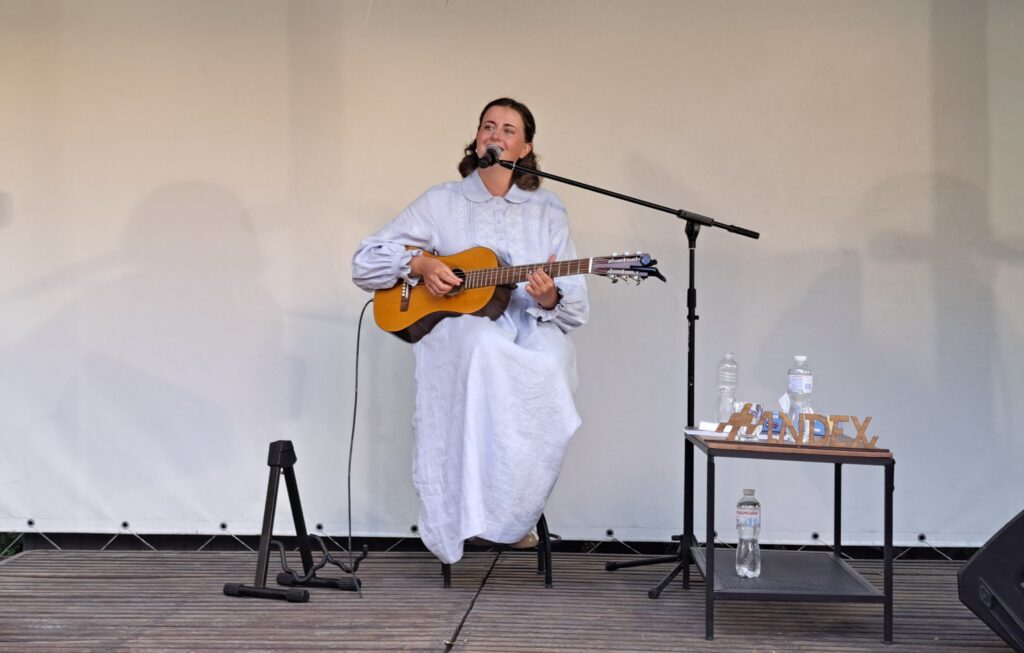
Chuprynenko starts to sing
The conversation ends, and the musician Marusia Chuprynenko comes out with a small guitar. She works in what she calls documentary song: at some point, she stopped inventing and began singing only what she lives through. The melodies are plain, sometimes barely melodies at all, more spoken than sung, the same lines circling back on themselves.
At the market where she always paid in hryvnia, they now want rubles.
She sings in surzhyk, the mixed Russian-Ukrainian speech of the south, and her last song of the night walks through a beautiful city that will not become home. Someone, she sings, has taken all the things she loves and quietly swapped them around.
The wall where she once pinned pictures of the places she dreamed of seeing now has the barrel of a tank against it. At the market where she always paid in hryvnia, they now want rubles. Her own side bombed her music school to kill the Russian soldiers inside it, and she never even loved the school, yet it grieves her all the same.
Russia is wiping her home region off the map, she sings, with the patience of someone embroidering. By the end the song has worn down to a single line, repeated and then breaking off, a heart and a stone trading places.
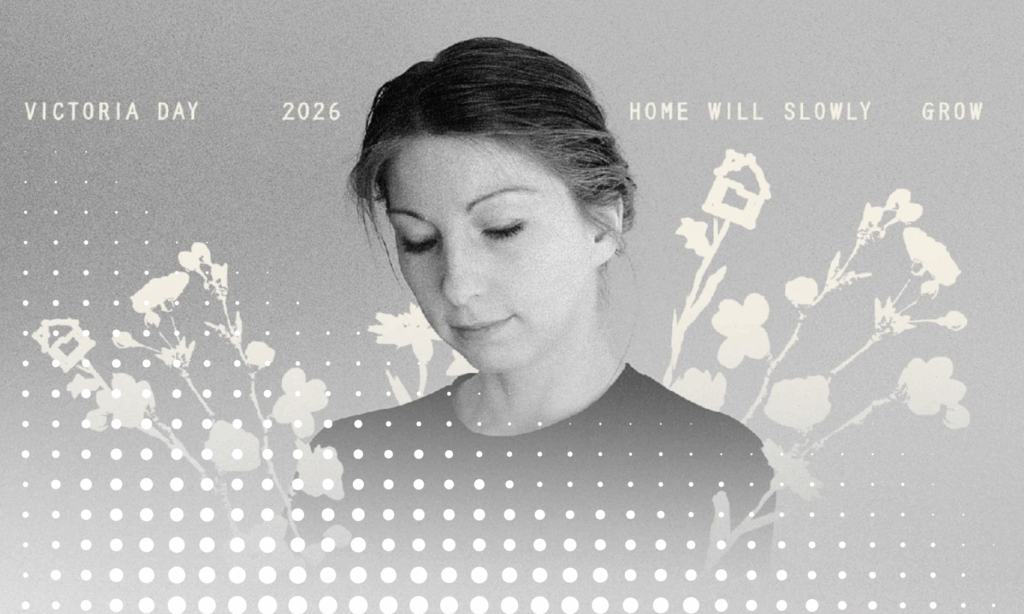
Home will slowly grow, runs the line of Amelina’s that gives the fellowship its name.
She has tears in her eyes through almost all of it, and keeps singing. By the end, I have them too, and I am not the only one.
Home will slowly grow, runs the line of Amelina’s that gives the fellowship its name. In the garden, three years almost to the day since a Russian missile killed her, it is doing exactly that—poem by poem, song by song, among the people who loved her and the ones only now finding her. Including the one who came to be bored.
About the Author
