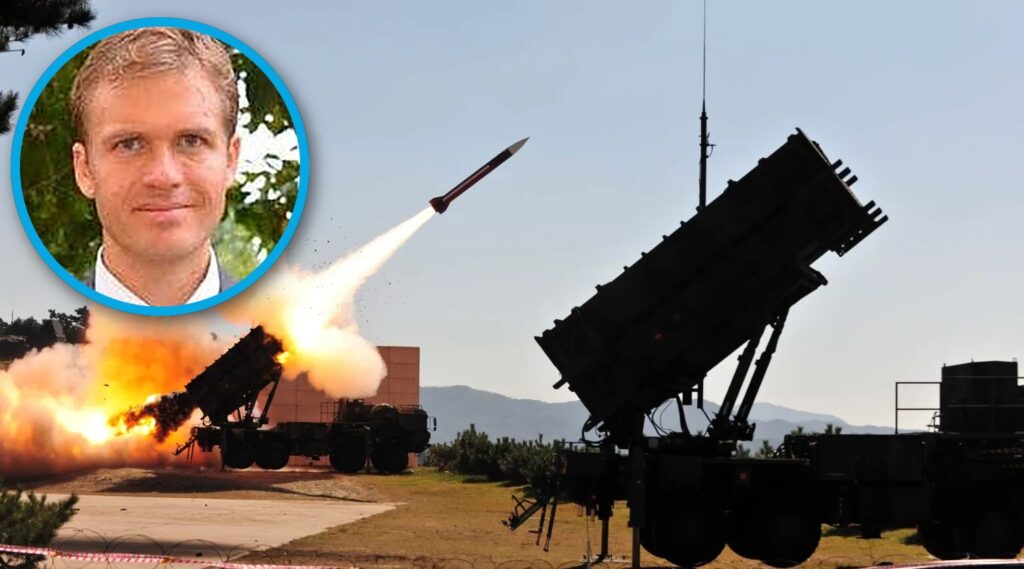
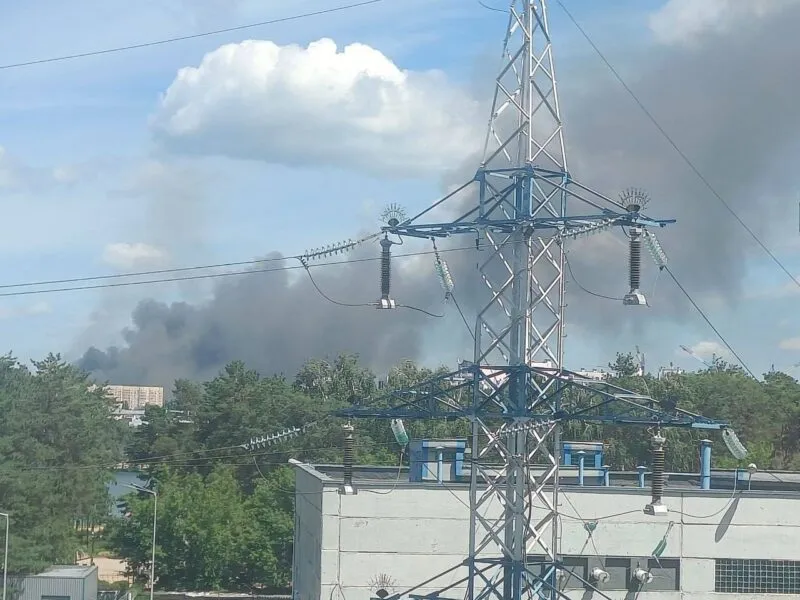
Russia’s escalating missile campaign has exposed one of Ukraine’s most dangerous shortages. Russian attacks killed at least 274 Ukrainian civilians in May, the UN says — the deadliest month since Moscow’s full-scale invasion — and have damaged all 15 of Ukraine’s thermal power plants. The weapon that most reliably stops Russia’s ballistic missiles, the US Patriot, is scarce, and Ukraine’s interceptor shortage has no quick fix.
That was the problem hanging over the 18 June 2026 Ramstein-format meeting in Brussels, where Ukraine’s partners pledged $4 billion and signed a deal with Germany to build Freya, a Ukrainian ballistic-missile interceptor.
But neither the money nor Freya can fix the shortage soon, says Marc DeVore, a senior lecturer at the University of St Andrews who has advised the UK government on Russia’s war against Ukraine.
The bottleneck is global, he says. Only five or six countries can build interceptors capable of stopping ballistic missiles, and Patriot is ordered years in advance: the US makes about 600 a year, while Russia builds around 70 ballistic missiles a month, each requiring two or three interceptors to stop.
With another hard winter approaching, Ukrainian Energy Minister Denys Shmyhal warns that the 2026–2027 heating season could be as punishing as the last.
DeVore spoke to Euromaidan Press about why ballistic missiles are so hard to stop, why Freya won’t reach the battlefield this winter, and why Ukraine’s next interceptors may come from outside the usual Western supply chain — through sanctions, long-range strikes, and suppliers like Japan and South Korea.
The global anti-ballistic shortage and what it portends for Ukraine
Daniel Thomas: Does anything that came out of Brussels actually fix Ukraine’s supply problem?
Marc DeVore: The Freya initiative is good, and I hope it works. But there’s a significant challenge here if we think globally.
There are only about five or six producers in the world of air-defense missiles with some degree of ballistic-missile interception capability: the United States and Japan, which both build the Patriot; South Korea, with the M-SAM and L-SAM; Russia, with the S-300 and S-400; China; the Franco-Italian Aster behind the SAMP/T; and the US-Israeli Arrow.
These interceptors are expensive, [with a single Patriot PAC-3 interceptor running about $4 million], take years to develop, and are hard to build well, so there are significant shortages right now.
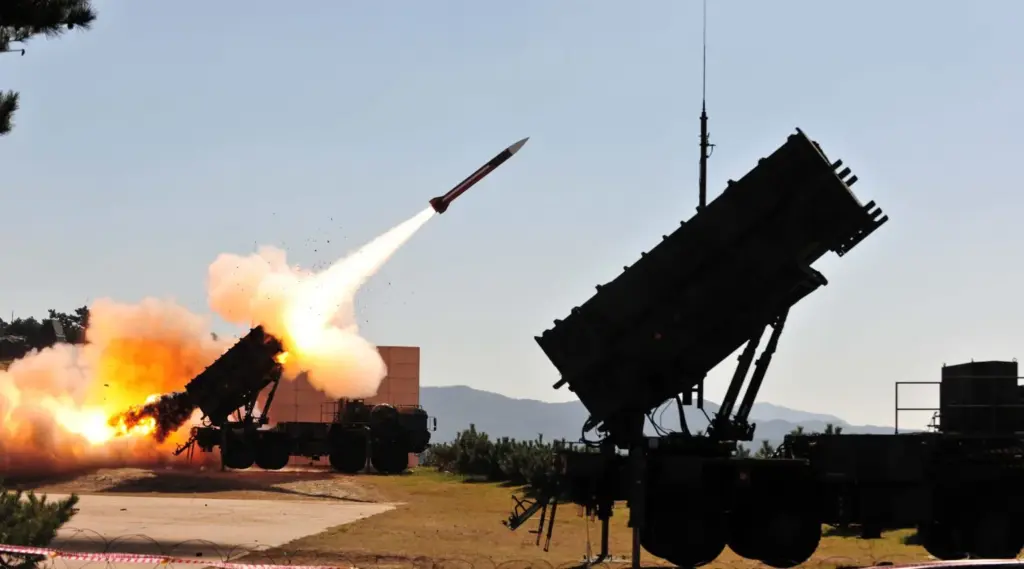
Take Patriot, the most important system for Ukraine. US production runs about 600–650 missiles a year. So far, roughly 1,600 Patriots have gone to Ukraine and another 1,900 or so to the Middle East: about 3,500 in recent wars, almost six years of production.
The big problem is that Patriots are forward-ordered by years. Even before the Iran war, the wait was about five years.
“If you had put in a commercial order for Patriots in January 2026, you would probably receive them in 2031.”
So even if Europe funds a lot of Patriots, when Ukraine gets them, it depends on politics. The Trump administration may prioritize rebuilding its own stocks for a possible war with China, reassuring Gulf allies after the Iran war, or arming Taiwan. My priority would be Ukraine, but with the shortfalls and Lockheed Martin’s years-long PAC-3 backlog, the US gets to choose who’s first in line.
The French push SAMP/T as a viable European alternative, but it’s made at maybe 100 a year, and tested far less than Patriot. Even a Franco-Italian “tiger team” aims to make just 300 a year by 2028, under half US Patriot output. The same Aster missile is in demand for European naval air defense, too, so I don’t know how many reach Ukraine.
Those are the only commercially produced missiles on the table for Ukraine. As a Ukrainian or European diplomat, I’d reach out to the Japanese about buying Patriots from their line, though they make only several dozen a year, and to the South Koreans about their [home-built] interceptors, the M-SAM and longer-range L-SAM.
Ukraine has about seven Patriot batteries operational and would need around 14 to cover its territory, so even with more missiles, it’s short on the radars and launchers themselves.
In that context, the Freya initiative is good, but I don’t see it as a short-term fix. In Ukraine’s shoes, I’d focus more on disrupting Russian missile production and launches.
Why ballistic missiles pose a harder problem than drones
Thomas: Is intercepting ballistic missiles a different order of challenge from drone production, where Ukraine has made much progress? And how realistic would it be to release Freya by this winter, a timeline that has been floating around?
DeVore: I would not bet on producing it by this winter.
Ukraine has achieved things that, before the war, any defense-industrial expert would have called impossible. What it’s done with Hornets, Fire Points, Flamingos, and its cruise-missile programs has been remarkable. But the challenges of ballistic-missile interception are much, much greater.
It means building an interceptor capable of high-G maneuvers involving tight turning and integrating it with radars and guidance that can steer it to the target, historically very hard. In the first Gulf War, in 1991, the US had about a 2% success rate: probably one of the roughly 70 Patriots fired hit a Scud. It’s improved a lot since then, but intercepting a ballistic missile is still very challenging.
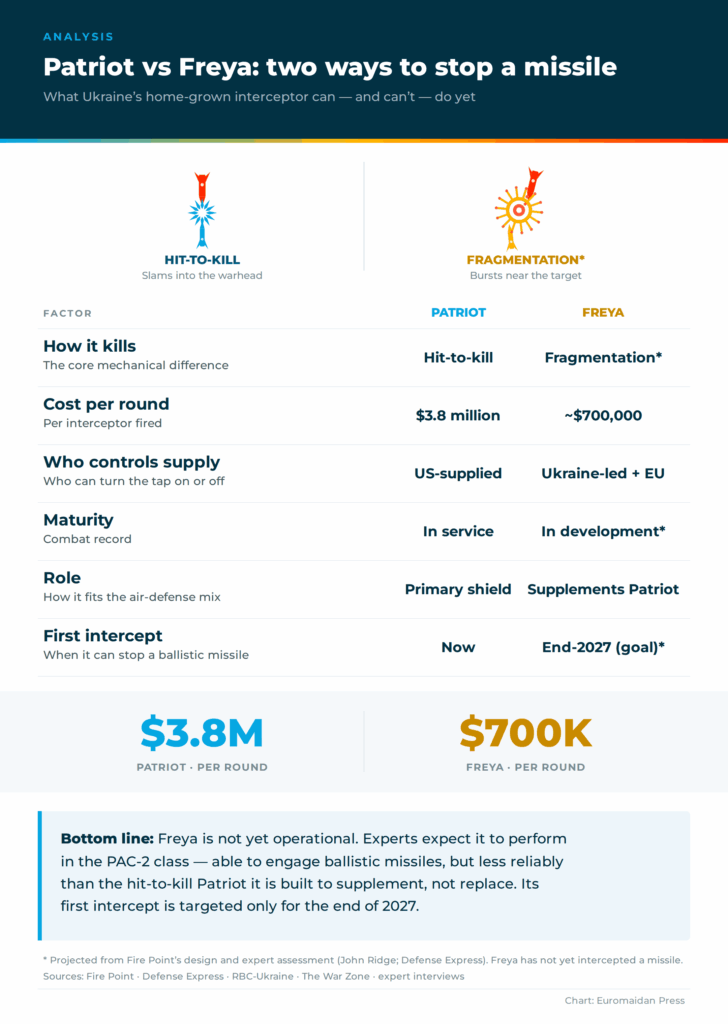
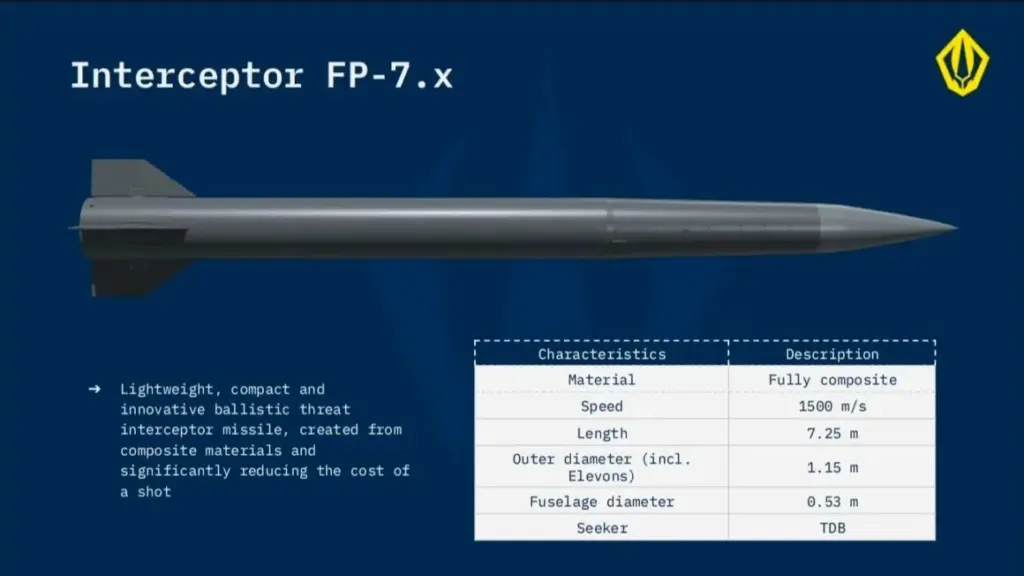
I’d be very happy if Freya were a truly operational system by December 2027; I’m fairly doubtful it’ll be by December 2026.
That doesn’t mean I wouldn’t go forward with [Freya]. Given how critical ballistic missiles are to Russia’s campaign, and the global interceptor shortage, Ukraine and its allies have to find ways past the production bottlenecks. Systems like Patriot and SAMP/T are simply too exquisite for money alone to provide enough.
But there’s no silver bullet. If I were Ukraine, I’d pursue programs like Freya, push diplomatically for as many Patriots as possible—along with alternatives like the L-SAM, M-SAM, or Japanese-produced Patriots—and analyze Russia’s missile production and launch ecosystem to see whether I could go after it. None of those three is a perfect solution.
Daniel Thomas: So, is making up the shortage the Iran war created within six to 12 months a tall order?
DeVore: On the positive side, Russia has the same problem producing ballistic missiles that the US has producing Patriots. Russia’s ballistic missiles still depend on fairly exquisite components and almost hand assembly. So they haven’t been able to scale up ballistic-missile production the way they’ve scaled up drones.
Sanctions, logistical strikes, and interceptors must work in tandem
Thomas: Tell me more about the other side of the coin — Russia’s own bottlenecks. Beyond exquisite, hard-to-assemble parts, what holds its missile production back?
DeVore: NAKO, a Ukrainian anti-corruption watchdog, has done a good job publicizing data on Russian missile components, especially in the Iskander and Kinzhal.
Many of the guidance components are Western-made, especially American, and are subject to dual-use sanctions.
Russia has built fairly sophisticated smuggling operations to import the chips and equipment in the quantities it needs.
A more vigilant, joined-up sanctions effort could disrupt that, but it would mean holding the original producers accountable when their parts end up in Russian hands.
This means holding a Texas Instruments, or whatever other US producer, responsible when it sells chips to an unvetted Hong Kong shell company set up months earlier to dodge sanctions.
“It doesn’t help that the EU, the US, and the UK haven’t harmonized their lists of prohibited dual-use components, leaving gaps the Russians can exploit.”
Russian missiles also tend to require skilled labor; Russian drones don’t. The drone factory in Tatarstan is very basic, staffed largely by South Asian laborers with relatively few skills, and Shaheds are mostly built on fiberglass frames, basically the same way you’d make a surfboard. It’s very low-tech.
Missiles require qualified craftspeople, so striking factories, destroying jigs, and wounding or discouraging workers from showing up could have a greater impact on missile production.
What Ukraine and its partners need to do
Thomas: To keep Russian ballistic missiles off Ukrainian cities, where should the main effort go: building more interceptors, or disrupting Russia’s production chain through sanctions and deep strikes inside Russia?
DeVore: I’d ask whether I’m speaking for Ukraine or for the broader European coalition behind it. Taking the two together, I’d rank four things in order of priority.
First, go after production. The area where Ukraine can do the most good is to destroy the missiles at their source: map the defense-industrial supply chains, find the factories, and hit them as hard as possible. For something like the Kinzhal, which needs an exquisite launcher like the MiG-31, go after the launchers too. The goal is for Russia to fire fewer missiles.
Second, extend an air-defense zone into western Ukraine — for the broader Western coalition. Russian drones have for years transited Polish and Romanian airspace to hit Ukraine from other directions, a violation of NATO airspace. The Biden administration chose to accept this out of paranoia about escalation.
The simplest move would be for NATO to intercept any drone or missile heading toward NATO airspace with its own assets. Since no NATO country wants the debris crashing on its own territory, it makes sense to push that zone into western Ukraine, possibly as far as Odesa. If Poland and Romania, backed by Britain, France, and Germany, did that, Ukraine could pull its Patriots eastward to concentrate on protecting Kyiv and the east.
Third, concentrate diplomacy on South Korea and Japan, the two countries that could sell interceptors in the short term: Patriots from Japan’s line, M-SAMs from South Korea. I’d also do everything I could to butter up the Trump administration, without putting much stock in my success there.
Fourth, make more initiatives like Freya — domestic products and innovations that can shoot down ballistic missiles. But that’s the longest-term option, the slowest to bear fruit.
Why the next interceptors may come from Tokyo and Seoul
Thomas: December 2027 sounds optimistic and more feasible than December this year. Regarding South Korea and Japan, is that trend tied to Europe’s broader push to decouple from the US after the war in Iran?
DeVore: Even if you didn’t want to decouple from the US, you really can’t buy more interceptors than the Americans have to offer at the moment.
South Korea and Japan are the two places with substantial numbers of ballistic-missile interceptors to spare, partly because neither is in the habit of selling such systems abroad. Japan’s Patriot line was built for sovereign supply, not export, and any sale would still need American permission.
Japan only recently amended its constitution to allow defense exports at all, so exporting Patriots in large numbers would be novel. But it has been supportive of Ukraine’s war effort, and I don’t see why it wouldn’t.
And the first buyer of Japanese Patriots could well be Ukraine. Japan is reluctant to get involved in the Middle East, which it sees not as a clean war of good guys and bad guys but as a complicated mess. So Ukraine, funded by Europe, has a far better shot than, say, Qatar or Saudi Arabia.
South Korea is similar: it has kept M-SAM a purely domestic program, but vigorous diplomacy might change that.
Marc DeVore is a senior lecturer at the University of St Andrews’ School of International Relations, specializing in military innovation and defense-industrial matters. He has advised the UK’s Foreign Office on Russia’s war against Ukraine.
This material was produced as part of a project by the Institute of Mass Information with the support of the Ministry of Foreign Affairs of the Netherlands. The content of this publication does not reflect the official position of the IMI or the Kingdom of the Netherlands.
Read also
-
Towards clearer skies? What Ukraine gets out of the most recent Ramstein meeting — and what it doesn’t
-
Ukraine’s Patriot systems are on a “starvation ration,” Air Force spox says
-
Not enough Patriot missiles to stop 60 Russian Iskanders a month. The Iran war is draining what’s left
-
US spent up to 61% of its Patriot arsenal in 39 days — Ukraine looks at building its own ballistic defense
About the Author
