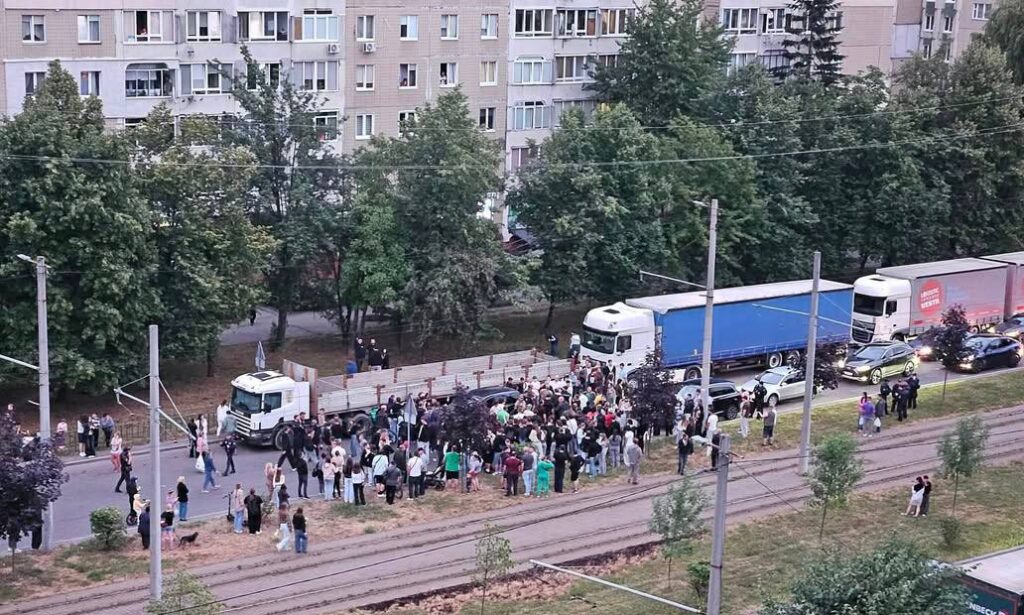
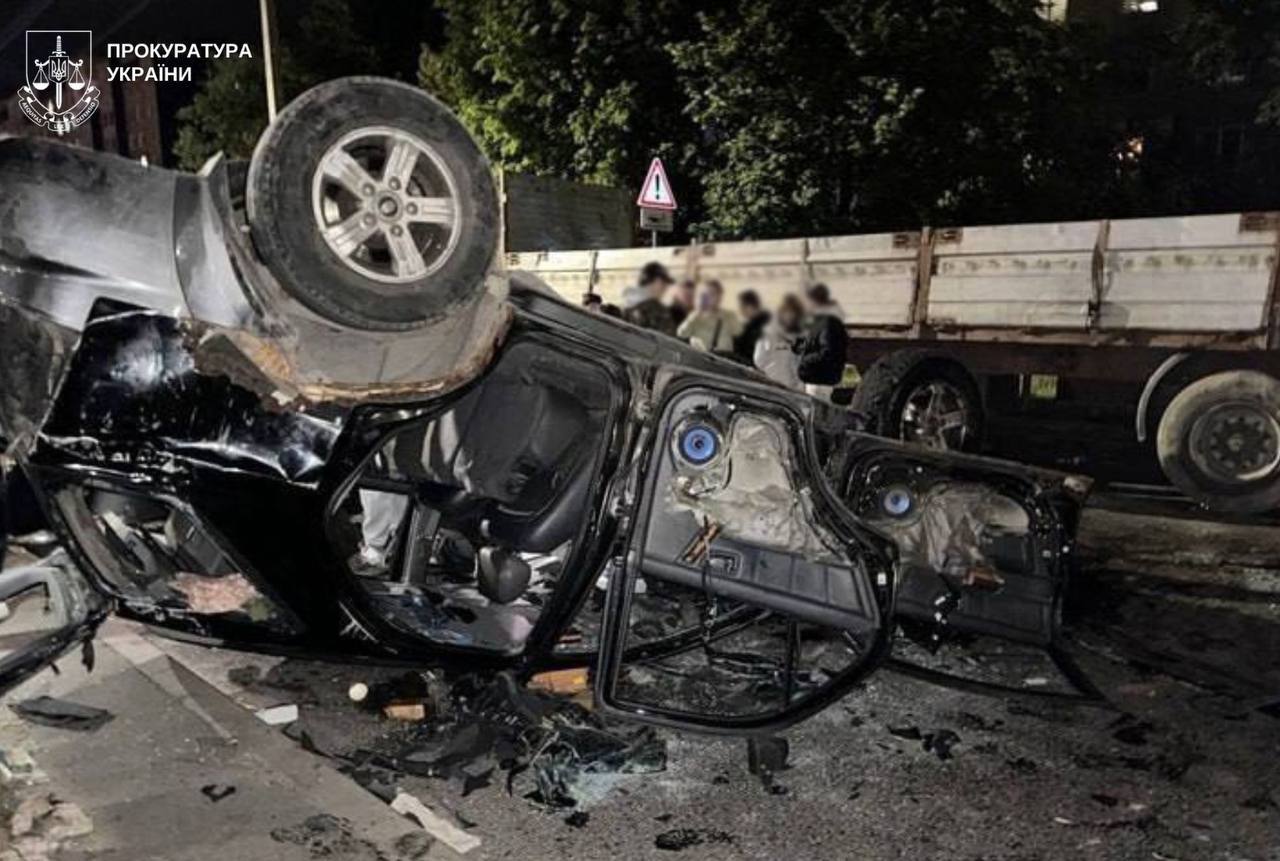
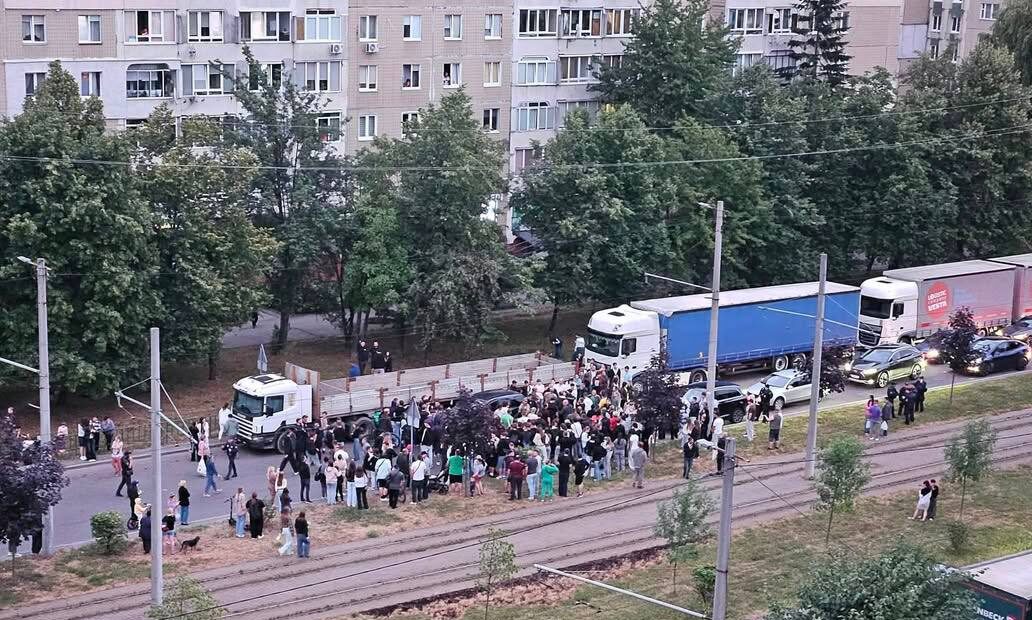
When a crowd in Lviv overturned a draft-office car this week, the footage spread as such clips always do—as proof that Ukraine is growing war-weary. Yet, the reading is wrong—and it is the one Moscow works hardest to sell.
What the crowd was actually pushing against is not the war as such. It is a bargain that the Ukrainian state has, for more than four years, refused to make honestly.
“Not only motivated volunteers and those who could not buy a place in the reserve should have to fight.”
Who is actually carrying the war
Let me explain. Many of the men who volunteered in the first days of 2022—when there were long queues outside recruitment offices—are still at the front, with no legal way home.
“Not only motivated volunteers and those who could not buy a place in the reserve should have to fight,” Lieutenant Colonel Maksym Zhorin, deputy commander of the 3rd Assault Brigade, wrote back in January 2025; “representatives of all categories of society should fight—the children of politicians, officials, bloggers, and activists.”
But they do not. At least, many of them don’t, and the burden has narrowed either onto the people who shouldered it first or onto those who lack money or connections to avoid mobilization. By now, the war has lasted long enough for that to harden into something dangerous.
While the exact figures are hard to come by, Ukraine seems to mobilize around 30,000 a month.
Why? Because there is no system to rotate those people out. There is no demobilization law, and the service is tied to martial law that will not be lifted while the fighting continues—the army cannot release them without replacements, and those replacements arrive too slowly.
So the ranks are topped up, the only way left: draft officers stopping men on the street. While the exact figures are hard to come by, Ukraine seems to mobilize around 30,000 a month, roughly half of what the military says it needs, the secretary of parliament’s national-security committee, Roman Kostenko, told NV in December 2025.
The evasion deepens the shortage that makes the street stops unavoidable.
The street stops breed distrust. The distrust feeds evasion. The evasion deepens the shortage that makes the street stops unavoidable. And this, in turn, leads to situations like that in Lviv this week.
Although it is clear that Russia uses such incidents, the distrust is not solely Russian-made. Ukrainian media have documented units that chewed through mobilized men—the 155th “Anne of Kyiv” Brigade, French-trained, that hemorrhaged soldiers to desertion before it ever fought well.
Soldiers talk; the families of the dead talk; and the reputation of the worst formations travels faster than the reality that most service is ordinary. To a man weighing whether to wait out the draft, who has heard mostly about the units that break, avoidance can look rational.
The objection that proves the point
Here, the government has a case, and it isn’t a foolish one: releasing a hundred thousand of your most experienced soldiers in the middle of a war, with nothing trained to fill the hole, would hand Russia the front. That is why the military command asked parliament, on the eve of the 2024 vote, to strike the demobilization clauses from the mobilization law. Keep the veterans in, and the line holds.
An exhausted soldier is not a preserved asset.
Except it does not hold, not across years. An exhausted soldier is not a preserved asset. Past a point, he is a man who cannot do it anymore, and the army loses him regardless—not on a schedule it manages, but chaotically, to death, injury, or desertion.
In 2024, some 51,000 Ukrainian soldiers left their units without leave, more than double the year before, with fatigue named among the primary causes. “The number of soldiers going AWOL will break every record,” a combat officer who joined on 24 February 2022 told Ukrainska Pravda. The men the state insists it cannot afford to release are leaving anyway.
That is what turns the military logic against itself.
The hard political decision—telling the country that the cost has to be shared and building the machinery to do so—was never avoidable.
Precisely because the country cannot simply free the 2022 cohort, it needs a system that moves people predictably—so veterans can be relieved before they break, and civilians can plan for service instead of fearing the street, which, in Lviv and elsewhere, young men now avoid. They are not afraid of the war but of how they’ll be taken to it.
Such a system is not a concession that weakens the army. In a long war, it is a condition for keeping the army whole. Which means the hard political decision beneath it—telling the country that the cost has to be shared and building the machinery to do so—was never avoidable. It was only delayed. And delay, dressed as military levelheadedness, is merely avoidance.
The reform that isn’t the repair
The delay is now, belatedly, ending—or half-ending. In 2026, President Zelenskyy ordered the overhaul he had promised once before, in late 2023, and dropped: new contracts, higher frontline pay, a phased path out for the longest-serving. Yes, there is a certain déjà vu to it. Yet, the plan is real and aimed at the right wound—service terms.
But soldiers have read it less as a way home than as a reset: sign a new contract and the clock restarts; serve months more before even a short deferment, an illusory reprieve rather than a discharge.
The plan rewards the wrong thing—dangling combat bonuses while base pay is near $700.
The combat medic and writer Yaryna Chornohuz has argued that the plan rewards the wrong thing—dangling combat bonuses while base pay is near $700, and offering a soldier of four years the same short deferment as a raw recruit, instead of being scaled by time served. Certainty, she and others say, would keep and attract more soldiers than any bonus.
And the reform barely touches the other half of the problem: the recruitment side—the street stops, and the exemption rules the military ombudsman Olha Reshetylova says any reform must start with. It fixes things for the soldiers already inside. It does nothing for the collision on the pavement between the state and the men it is trying to pull in. That collision is exactly what happened in Lviv.
The enemy in the vacuum
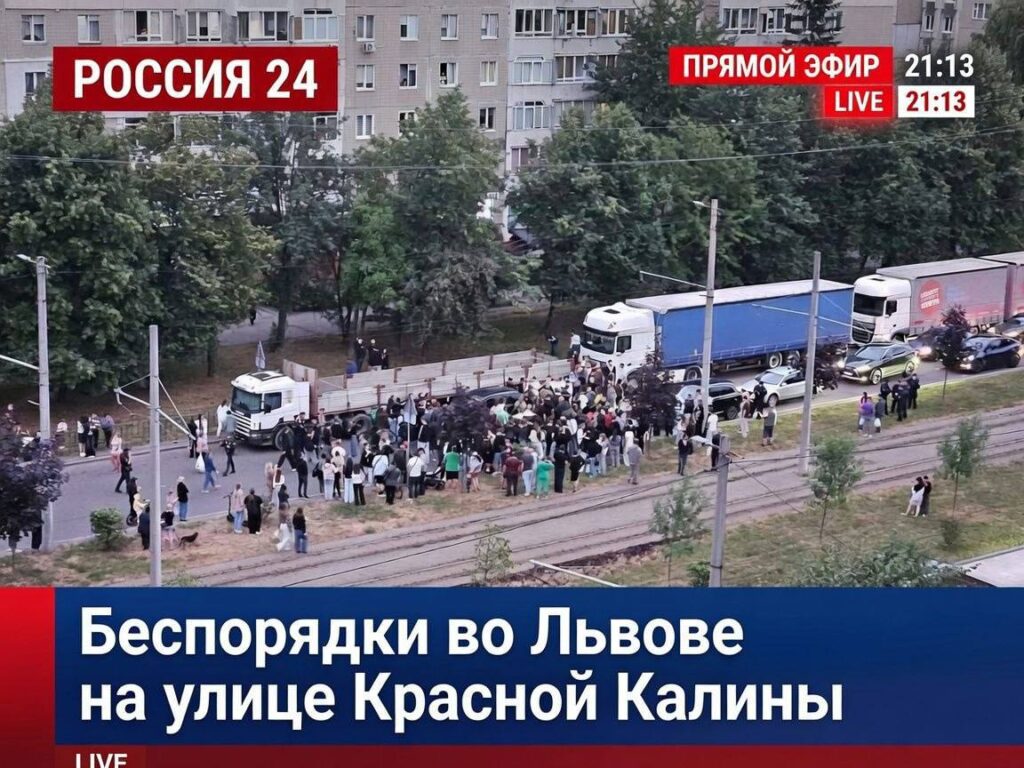
Into every space the state leaves, Russia pours. Its information war now targets not politicians but the country’s ability to raise an army at all, Olesia Horiainova of the Ukrainian Security and Cooperation Centre finds—turning the recruiter into the enemy in Moscow’s place.
It works because the vacuum is real: a state that says nothing leaves the field to an adversary happy to speak for it. The anger isn’t manufactured. That is exactly what makes it useful.
The bill for a fifth year
What would break the loop is not another contract scheme. It is the thing Ukrainian officials, from the human-rights commissioner to the military ombudsman, have only now begun to say aloud: the rules have to become fair and finite, and someone at the very top has to make the public case for why.
It asks the comfortable to share a burden they have so far been able to sidestep, and it asks a president who reads the public mood closely to get out in front of it.
That case is politically expensive. It asks the comfortable to share a burden they have so far been able to sidestep, and it asks a president who reads the public mood closely to get out in front of it rather than trail behind. It has gone unmade for four years because it is hard. The car on its roof in Lviv is a preview of what a fifth year of not making it will cost.

Editor’s note. The opinions expressed in our Opinion section belong to their authors. Euromaidan Press’ editorial team may or may not share them.
Submit an opinion to Euromaidan Press
Read also
-
Ukraine’s draft evasion problem is a symptom of a deeper crisis
-
Russia won’t start a nuclear war. It might cause a nuclear disaster.
-
Europe can legally quit Russian LNG today. It keeps choosing not to.
About the Author
