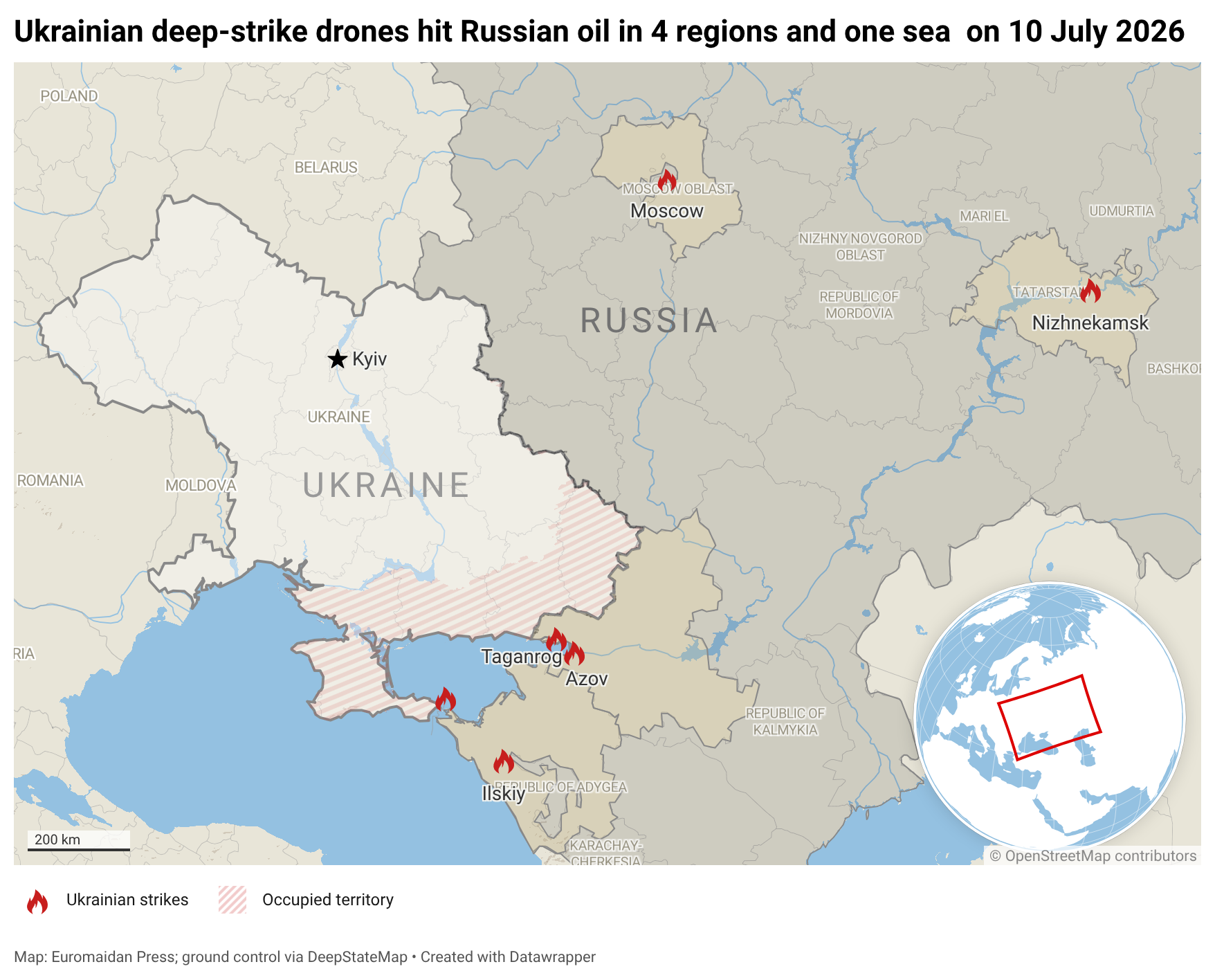
12 more Russian vessels have been hit in the Sea of Azov over the past 24 hours, Ukrainian drone forces reported. Ukraine’s drone campaign to sever occupied Crimea rolled through a fifth straight night on 10 July, hitting tankers, ports, fuel depots, and the peninsula’s power grid. The OSINT channel Cyberboroshno found satellite evidence of Russia’s Azov tanker fleet shrinking fivefold under the strikes, while Planet Labs imagery confirmed a burning tanker and another damaged vessel near the Kerch Strait. The same night, a key substation strike left occupied Yevpatoriia without power in Crimea, while at least three oil facilities were struck in Russia next to the Azov and Black seas.
The tanker hunt’s fifth night, seen from orbit
Ukraine’s Unmanned Systems Forces (SBS) updated their 9 July tally to 15 vessels hit, up from the initially reported 14. The force’s live dashboard showed 12 more fleet targets struck by mid-afternoon on 10 July, within 718 total target hits over 24 hours. Cyberboroshno’s chronology of the campaign: two tankers on 6 July, nine vessels on the 7th, nine on the 8th, fourteen on the 9th, and 12 ships on the 10th.
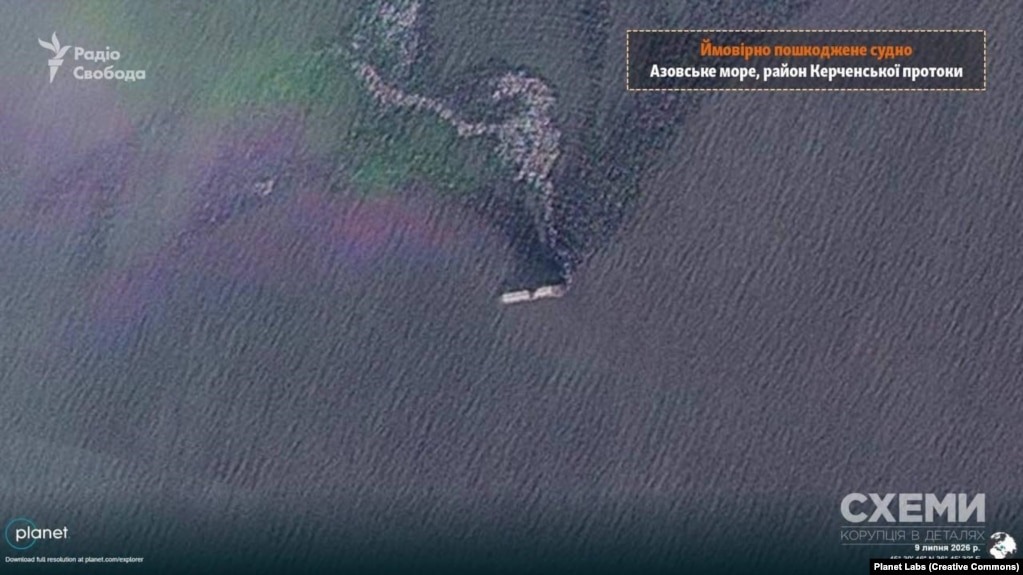
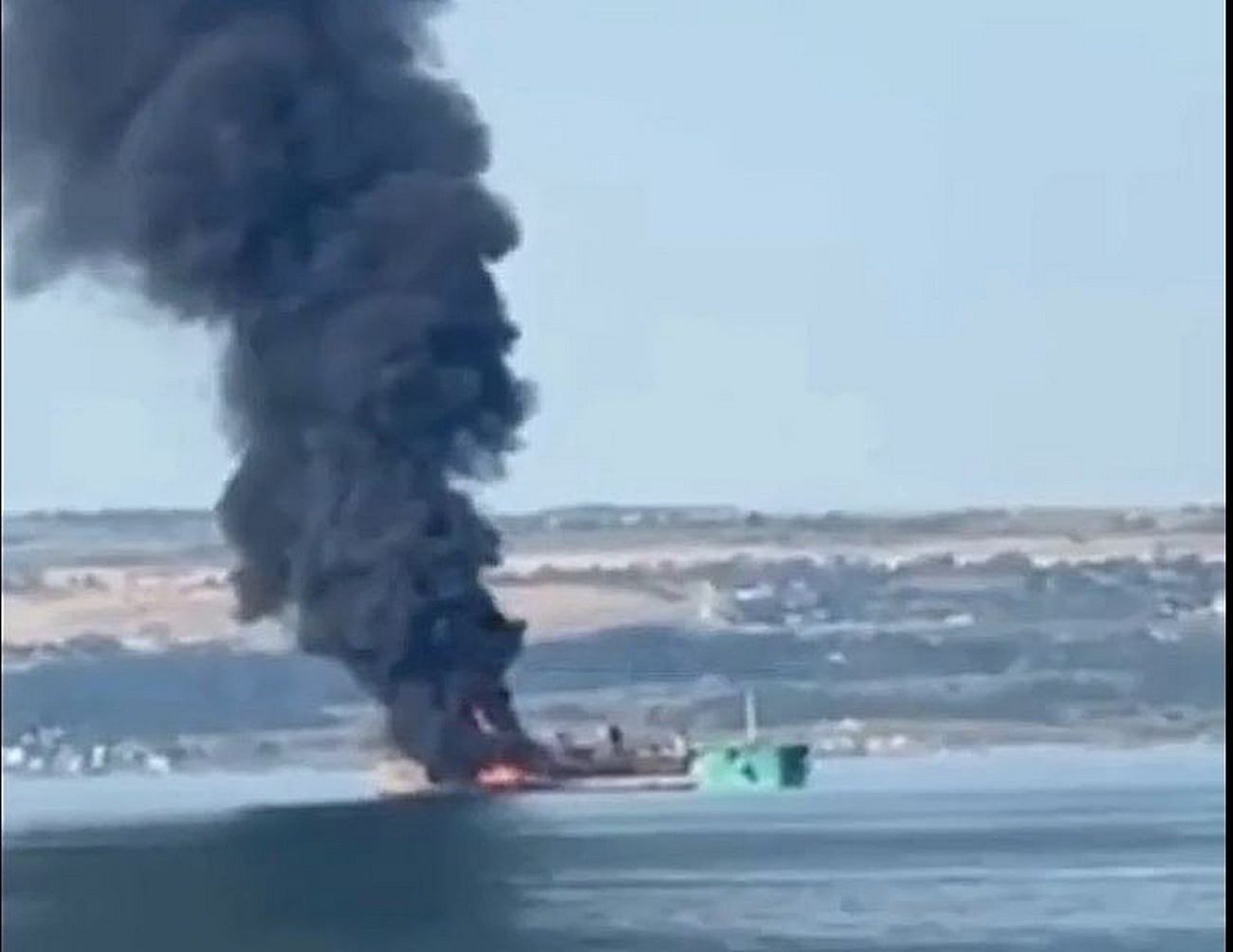
Journalists of Skhemy, an RFE/RL project, published Planet Labs satellite images showing the aftermath. One frame near the Kerch Strait captures a tanker on fire, with another vessel bearing visual signs of damage about 10 kilometers away. The imagery resolution does not allow identifying the ships’ class or type, the journalists noted.
A fleet vanishing from the satellite record
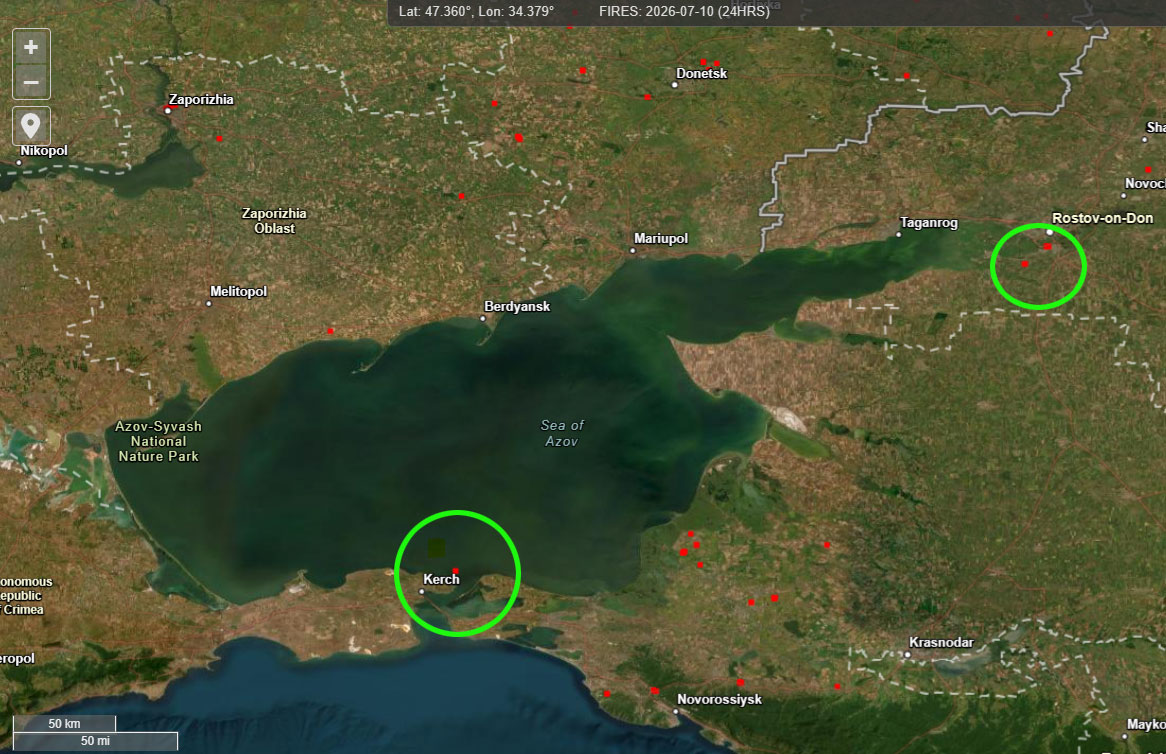
Cyberboroshno’s analysis of satellite imagery tracked the shadow fleet’s collapse in numbers. Around 1 July, about 100 vessels sat north of the Crimean Bridge in the Azov Sea, with roughly 100 more to the south near the Taman port. By 6 July, the northern group had thinned to about 40. By 8 July, some 20 remained in the north, one of them burning, with massed movement toward the bridge.
The northern vessels are mostly small river-class tankers, the analysts found. They shuttle fuel south, where cargo is transshipped onto much larger ships for direct Black Sea runs to importer countries. The vessels belong to Russia’s so-called shadow fleet, used to circumvent sanctions.
ISW: Ukraine has opened a new phase of Crimea’s isolation by hunting seaborne fuel tankers
The ports and depots that feed the fleet
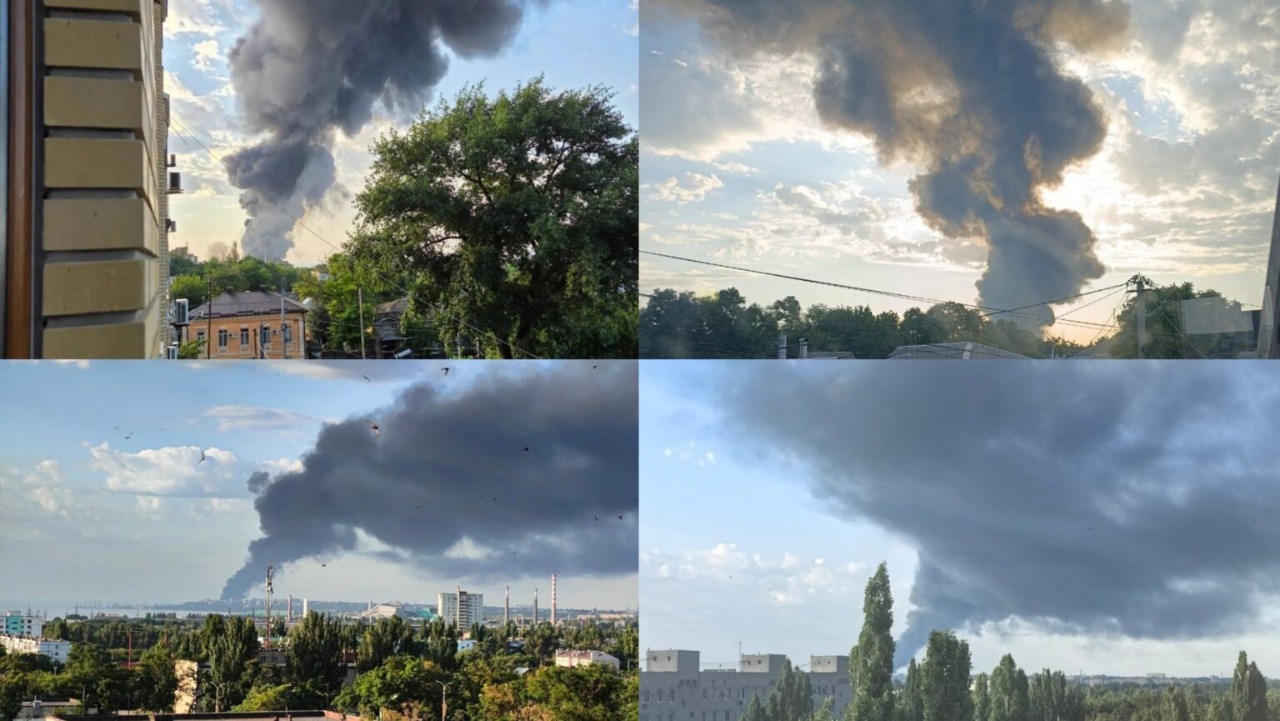
On 10 July, the tanker strikes were supplemented by hits on the two ports that load the vessels — Taganrog’s Kurganneftprodukt terminal and the port of Azov, both in Rostov Oblast on the northeastern coast of Azov Sea. The Cyberboroshno analysts confirmed fires at all five oil depots of the city of Azov: the Port depot inside the harbor, the DonTerminal depot two kilometers away, the railway station depot, and two more in the southern industrial zone.
Ukrainian drone attacks on Russian shipping in the Sea of Azov as seen from a commercial vessel
The video was published yesterday.
Exilenova+ pic.twitter.com/eKaV2o6Jem
— Euromaidan Press (@EuromaidanPress) July 10, 2026
At the Ilsky refinery in Krasnodar Krai — the Russian region across the Kerch Strait from occupied Crimea — the channel mapped the burning zone over the plant’s largest primary processing unit, AVT-6. The unit’s capacity of 3.6 million tons a year provides 56% of the refinery’s total output.
Yevpatoriia goes dark after the Moinaki substation strike
Explosions sounded across occupied Crimea through the night of 10 July, Suspilne reported, including in Kerch. The monitoring channel Krymsky Veter reported a hit on the Moinaki substation in Yevpatoriia — on Crimea’s western coast — at 02:30 and a fire there by 03:42.
The 110/35/10 kV Moinaki substation is a key energy node for the city. Russia ran a modernization of the facility worth 1 billion rubles (about $12.5 million) in 2024, replacing its power transformers and almost quadrupling its capacity to 126 MVA. After the strike, Yevpatoriia and nearby settlements lost power, subscribers told the channel.
Power restrictions and water cuts across the peninsula
The Russian-controlled power company Krymenergo announced additional electricity restrictions in Crimea’s Southern and Central energy districts, citing “repair works,” Russian state agency RIA Novosti Crimea reported. A number of settlements in the peninsula’s northwest remained without power. Alushta’s occupation administration head Galina Ogneva claimed 1,650 customers there lost electricity because of bad weather.
The occupation water utility Voda Kryma reported partial water supply loss across the peninsula due to an accident on Krymenergo’s grid. Russia’s Defense Ministry claimed 376 drones intercepted overnight over Crimea, other occupied territories, the Azov Sea, and Russian regions, without saying how many over the peninsula.
Read also
About the Author
