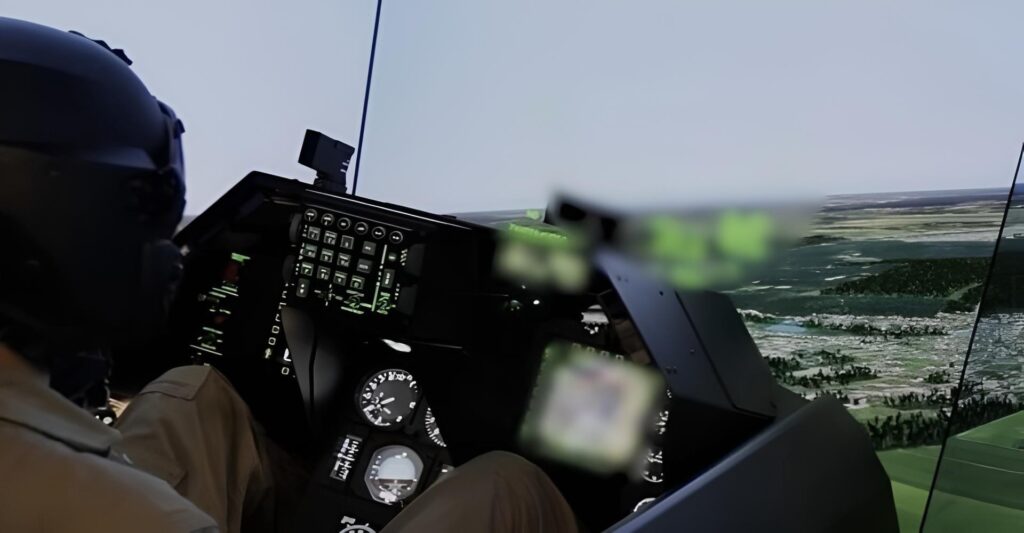
Ukraine’s Air Force has received a second batch of mobile F-16 flight simulators, the Defense Ministry announced on 13 July. The machines let pilots rehearse combat without taking off—and, unlike an ordinary simulator, they can be packed up and driven somewhere else when the airfield gets hit.
Ukraine fights a war in which its most valuable equipment is the hardest to replace, and Russia targets the bases where that equipment sits. Anything that generates combat capability without exposing an aircraft —or a runway—is worth more here than the same thing would be worth to any NATO air force in peacetime.
Why a simulator matters more here than anywhere else
Ukraine has taken delivery of roughly half of the fighter jets its European partners promised. The ones that fly are in the air defending Ukraine each night. None can be quickly replaced, and each has a finite number of flight hours in its airframe before it requires deep maintenance.
That makes training expensive in a way it isn’t for other air forces. Every hour a Ukrainian pilot spends learning to intercept a cruise missile is an hour of wear on a jet that should be intercepting cruise missiles. A simulator hour costs less, risks no aircraft, and uses none of the fleet’s life.
“More training means faster preparation, preserved aircraft service life, and significantly higher effectiveness in the air. Protecting the sky is our top priority.” Defense Minister Mykhailo Fedorov said when the first mobile units arrived in April.
The part that moves
A conventional flight simulator is a building, it has an address, and Russia knows the addresses of Ukraine’s airbases.
These simulators don’t, because they were built to Ukraine’s own specifications—the software models Ukrainian terrain and weather—and they can be relocated within days. Training stops for nobody’s missile strike. It resumes next week somewhere else. Fedorov called mobility critical to pilot safety amid constant attacks. The Ministry says only a handful of such systems exist anywhere, because they are expensive to build.
The Netherlands, Czechia, and Austria supplied this batch through the Air Force Capability Coalition, the group of countries that has spent the last three years building Ukraine’s F-16 force — jets, pilots, and the training to fly them
About the Author
