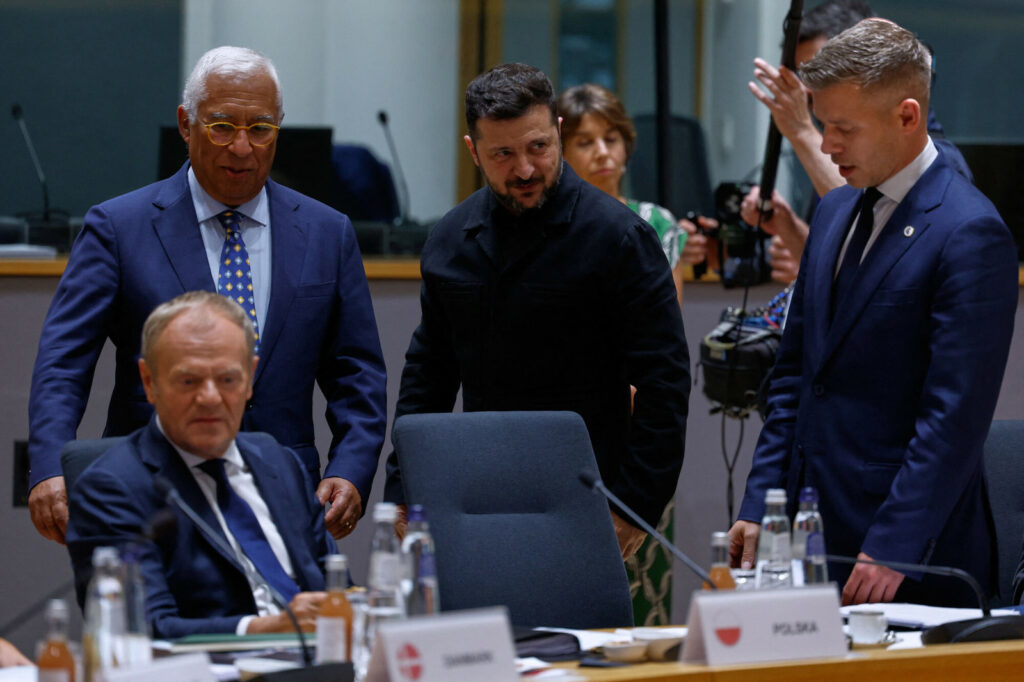
For four hours on 18 June, Péter Magyar, Hungary’s new prime minister, sat with EU leaders and refused to budge. They wanted to advance Ukraine’s membership talks. Magyar held out until they struck that language from the summit text. He got what he came for.
EU accession is a prize Ukraine has pursued since the 2013–14 Euromaidan, when Ukrainians bled for the right to choose Europe: a say in the continent’s decisions, access to EU markets and funds, and a European path away from Russia.
Yet any member state can stall that process. Viktor Orbán, Hungary’s pro-Russian former prime minister, repeatedly did—and Magyar’s government is still holding up Ukraine’s accession.
Magyar is not Orbán. After Russia struck Zakarpattia Oblast—Ukraine’s westernmost Oblast, home to many ethnic Hungarians—Magyar condemned the attack. His pro-Western foreign minister, Anita Orbán (no relation), summoned Moscow’s ambassador and asked when Russia would end the war.
For Magyar, however, helping Kyiv could cost votes: more than half of Hungarians oppose restarting talks, and even supporters of Magyar’s own Tisza party—which ended 16 years of pro-Russian Fidesz rule—are split down the middle.
What Orbán left behind also influences Hungary’s hesitation: a Fidesz propaganda apparatus that has shrunk but whose narratives endure, a minority issue opponents can still weaponize against Magyar, and an energy system tied to Moscow.
Magyar’s caution may be less about what he believes than what Hungarian politics rewards: helping Kyiv still carries more risk than reward at home.
Hungary is not alone: an EU-wide poll found that 41% were opposed to Ukraine joining the EU, even if it met all accession conditions.
The 18 June confrontation came three days after a brief breakthrough. On 15 June, Hungary helped Ukraine open the first of six negotiating clusters—parts of the EU rulebook Kyiv must work through before joining. Each requires unanimous approval from the EU’s 27 governments.
On 23 June, Budapest blocked the other five from opening. Hungary later cleared Cluster 6, covering foreign policy. The EU and Ukraine formally opened Cluster 6 on 14 July, leaving four clusters unopened.
What Hungary is actually blocking
Magyar has repeatedly argued that accelerating Ukraine’s EU talks would be unfair to Western Balkan countries that have waited years to join.
In a recent Substack analysis, Dániel Hegedűs, deputy director of the Institute for European Politics, rejects Magyar’s suggestion that opening several clusters quickly would give Ukraine special treatment.
Other candidate countries have advanced at a similar pace, he said, making Ukraine’s request unusual mainly because of the war, not because it breaks EU precedent: Albania opened all six clusters in just over a year, between October 2024 and late 2025.
For Kyiv, Magyar is harder to read than Orbán. With the latter, Ukraine knew it would not get anywhere with EU accession, as the Fidesz leader would veto every attempt.
As Vitalii Diachuk, an analyst at Ukraine’s Institute for Central European Strategy, stated, Orbán’s veto was “predictable and targeted.” Brussels could counter it with diplomatic pressure, blocking funds, and isolating Hungary’s vote.
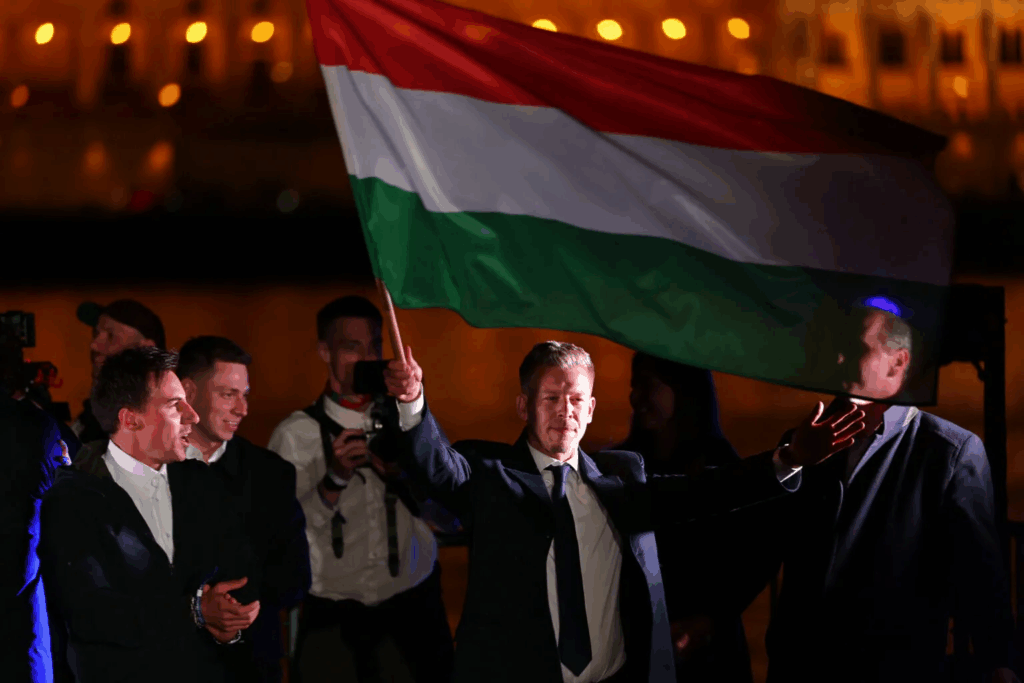
Unlike Orbán, Magyar did not come to office with a long record of hostility toward Ukraine. But with little track record on Ukraine—Tisza’s manifesto offered few details beyond opposing accelerated accession—his future course is harder to predict.
Soon after taking office, he said Hungary would hold a referendum on Ukraine’s eventual EU membership. Diachuk warned that this would leave Kyiv dependent on Hungarian politics and public opinion years from now:
“It is unclear what the Hungarian government will look like, how public opinion will be shaped, or whether the referendum will be genuinely democratic rather than another Orbán-style ‘national consultation’ [government mail-in questionnaires criticized for their leading language].” —Vitalii Diachuk
Speaking with Euromaidan Press, Hegedűs argued that Magyar’s Ukraine policy will remain subordinate to domestic political calculations.
“He will pursue closer rapprochement with Kyiv only if it either brings him a tangible political benefit or does not expose him to vulnerabilities in the domestic political arena,” Hegedűs noted.
Not just a Hungary issue: Europe’s wider doubts on Ukraine’s accession
Hungary is the most visible obstacle to faster talks, but Magyar is not alone: most EU governments also oppose speeding up Ukraine’s accession.
Few want to reject Ukraine outright, Hegedűs said. Yet EU member states favor moving negotiations forward under existing rules while keeping pressure on Kyiv to complete difficult legal, democratic, and economic reforms.
France and Germany have resisted shortening the process, while only the Nordic and Baltic states have pushed to open all six negotiating clusters quickly. Most member states support continued negotiations but do not waive accession requirements or promise membership before Ukraine has met them.
Beyond the halls of power, many EU citizens remain wary of Ukraine’s accession, largely over economic concerns. French farmers pressed Paris to curb Ukrainian food imports, while France’s agricultural minister warned that market disruption could erode public support for Kyiv.
Farther east, a June poll found nearly six in ten Poles opposed Ukraine joining the EU. From 2023 to 2025, Polish farmers repeatedly blocked crossings with Ukraine, claiming that Ukrainian grain meant for global markets was depressing local prices.
Polish farmers’ fears were disproportionate to the broader trade picture: the EU matters far more to Ukraine than Ukraine does to the EU. Still, Brussels struck a temporary compromise, leaving unresolved how accession would reshape farm subsidies and competition.

Concern extends beyond agriculture. András Simonyi—the former Hungarian ambassador to NATO and the US—noted some Europeans fear a war-hardened Ukraine whose defense firms are already “way ahead” in some technologies. Their cheaper, combat-tested systems could undercut established manufacturers and win export contracts.
Le Monde reported unease among French manufacturers, while French experts warned that Ukrainian drone makers could become “formidable competitors.” Simonyi argued that Europe should treat that competition as a catalyst, not a threat.
Janitorial duties: Fidesz’s shadow over Magyar
Domestic priorities have dominated Magyar’s first months in office as his government has focused on restoring the rule of law and securing the release of billions of euros in EU funds frozen under Orbán.
Hegedűs said the “absolute primacy” of domestic affairs would keep the government focused on constitutional reform, removing Fidesz loyalists from state institutions, and pursuing accountability for corruption.
Simonyi put it more simply:
“Magyar’s focus for now is cleaning up after Orbán.” —András Simonyi
As part of his domestic agenda, Magyar has begun dismantling Fidesz’s propaganda apparatus. After his April victory, he appeared on M1, the state-funded broadcaster aligned with Viktor Orbán, and vowed to shut down its “factory of lies.”
M1 had echoed Kremlin claims that Russia was defending “the Russian-majority population in Donetsk and Luhansk Oblasts” from “Ukrainian fascism” and that Ukraine persecuted minorities. On 7 July, it suspended news broadcasts for an overhaul intended to restore public-media independence.
That overhaul could weaken one major source of anti-Ukrainian messaging. But analysts warned that Orbán’s defeat had not erased the wider media ecosystem—or the audience it cultivated.
“The government’s production line of content and narratives has currently stalled, but public demand and the opposition’s infrastructure remain on standby.” —Vitalii Diachuk
Polling backs Diachuk up. In a post-election ECFR survey, Tisza voters split almost evenly on restarting Ukraine’s accession talks—41% for, 43% against.
On arming Ukraine, though, they were not torn: just 12%—one in eight—backed it. Nationally the mood was colder still—54% opposed reopening the talks at all, and majorities rejected sending Kyiv either money or weapons.
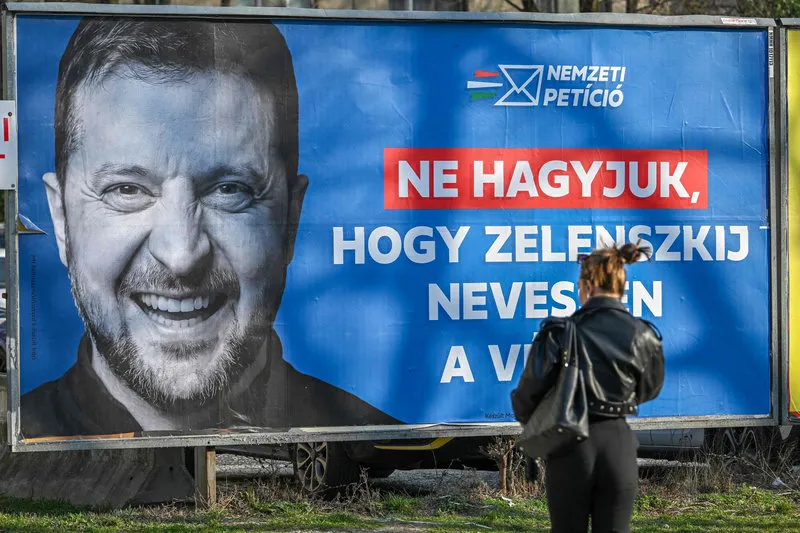
Magyar might therefore be trying not to hand Fidesz political ammunition. As Hegedűs noted, a too-visible rapprochement with Kyiv could expose Tisza to attack and alienate voters beyond its base.
Magyar’s hesitation may reflect electoral caution more than distrust of Ukraine. The danger is that a temporary tactic becomes lasting policy whenever supporting Kyiv carries a domestic cost.
The threat of Russian influence also lingers. The Carnegie Center notes that Fidesz remains embedded in transnational illiberal networks that carried Kremlin talking points and could survive Orbán’s loss of power.
“He cannot appear less sensitive than Orbán”: The minority question
The Hungarian minority in Zakarpattia remains a potential flashpoint for bilateral relations—and Ukraine’s EU bid. Ukraine’s westernmost region is home to roughly 150,000 ethnic Hungarians, before war and emigration substantially reduced the community. Under Orbán, Budapest deployed intelligence agents there, stoked interethnic tensions, and amplified claims of persecution through state media.
Magyar has taken a different approach. Within three weeks of taking office, his government struck a deal to restore Hungarian-language schools and expand language rights in education and public services. Ukraine also agreed to write those commitments into law and its EU-required minority-rights action plan.
Diachuk said the contrast between Magyar and Orbán was night-and-day:
“Orbán and Szijjártó [Orbán’s foreign minister] used demands [connected to the Hungarian minority] to block Ukraine’s EU path, regardless of Kyiv’s progress, because an agreement would have cost them leverage. Péter Magyar, by contrast, sought and reached an agreement.” —Vitalii Diachuk
There is a catch. Magyar has prioritized disputes he can resolve quickly and present to voters as proof he can fix what Orbán left behind, as Hegedűs noted.
Future disputes over the Hungarian minority in Zakarpattia Oblast could still become politically combustible. Diachuk noted that “demand for narratives about protecting Zakarpattia’s Hungarians is genuine and exists independently of Fidesz narratives.”
Recent events show why Hungarian politicians continue to treat the issue so carefully. Magyar framed the June agreement as restoring “fundamental rights” to 100,000 Hungarians.
His deeper concern is domestic: Magyar wants to avoid criticism from Fidesz and the far-right Mi Hazánk party for looking “too soft on Ukraine,” Hegedűs told Euronews.
New disputes could therefore become a test of whether Magyar is defending ethnic Hungarians abroad—and hand his opponents an opening to accuse him of yielding to Kyiv.
“Magyar cannot appear to be less sensitive to the minority question than Orbán. But he can take the initiative, get it out of the way and not allow others to hide behind Hungary,” Simonyi noted.
The harder break with Moscow lies in energy
In the April election, VSquare reported that Russian operatives campaigned hard for Orbán and cast Magyar as a Brussels puppet. It failed, and “Russians go home” became a prominent slogan of the opposition.
“Russia failed in Hungary. Hungarians, and especially the Magyar government, will be vigilant and unmask any Russian effort to interfere in Hungarian politics.” —András Simonyi
Magyar’s subsequent actions support that assessment. On 4 May, his government expelled SVR agent Artur Sushkov, whom Orbán had shielded months earlier. In June, Budapest dismissed every Orbán-era intelligence chief and appointed Péter Buda—a critic of Orbán’s pro-Russian course—to overhaul the security services.
Nevertheless, Russia’s presence remains pronounced in Hungary’s energy sector. Russian crude accounted for 93% of Hungary’s oil imports in 2025, while Magyar has pledged to end dependence on Russian energy only by 2035—eight years after the EU’s planned phaseout.
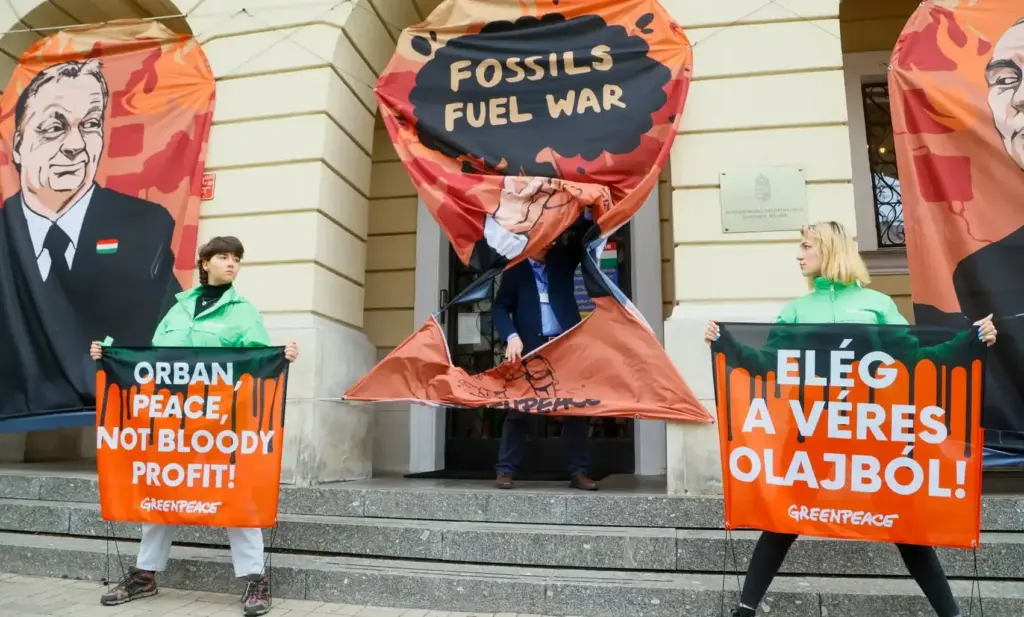
Diachuk noted Magyar inherited an energy system deeply tied to Russia—long-term contracts, infrastructure built around Russian fuel, the Russian-built Paks II project—dependencies no single decision can undo.
The difference is visible in how each leader uses the same vulnerability. Orbán held up a €90 billion EU loan for Ukraine until Russian oil resumed through the Druzhba pipeline; Magyar has instead sought French nuclear cooperation to diversify Hungary’s supply.
“Magyar treats energy dependence not as leverage over Brussels, but as a problem Hungary must gradually resolve,” Diachuk said.
That difference matters, but it does not settle how Magyar will act when supporting Ukraine becomes costly at home.
Diachuk said the coming weeks would determine whether the opening becomes durable. “This is a real window of opportunity, but it’s quite small.”
This material was produced as part of a project by the Institute of Mass Information with the support of the Ministry of Foreign Affairs of the Netherlands. The content of this publication does not reflect the official position of the IMI or the Kingdom of the Netherlands.
Read also
-
Hungary votes Sunday: what could change if Viktor Orbán loses to Péter Magyar—and what may not
-
How fabricated crises in Transcarpathia win Hungarian elections—and block Ukraine’s path to Europe
-
Hungary’s new government summons Russian envoy after strike on Zakarpattia
-
Hungary’s opposition Tisza still leads the election, but the gap is closing—and a win may not be enough for Ukraine
About the Author
