- Ukraine’s latest drone hunter is a surplus European naval helicopter
- The nine Sea Kings in or bound for Ukraine are stable, capacious and cheap to operate
- That makes them good platforms for launching small interceptor drones
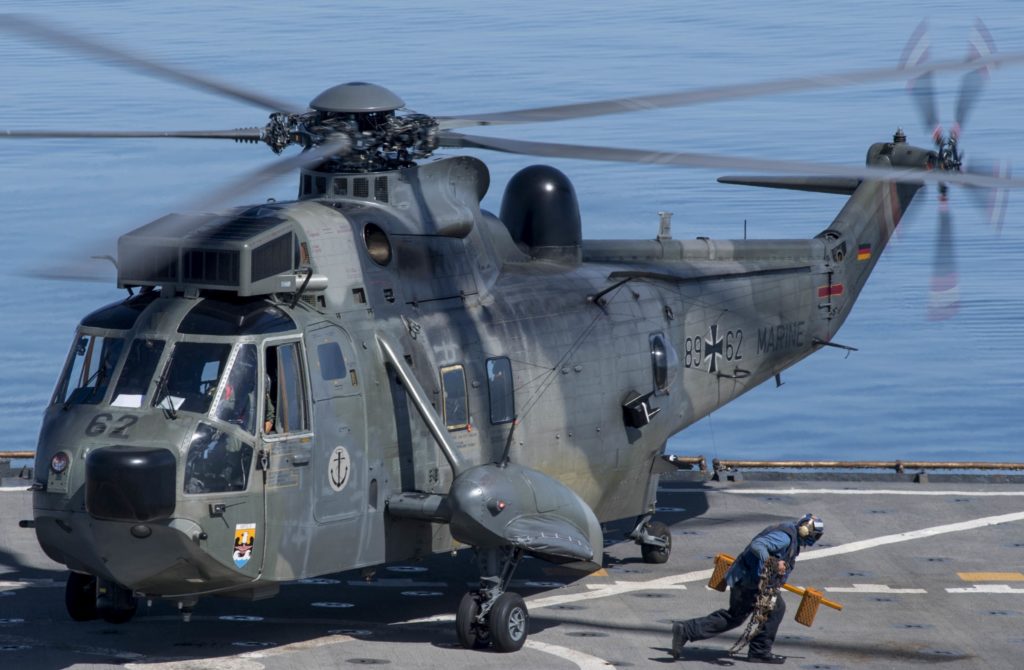
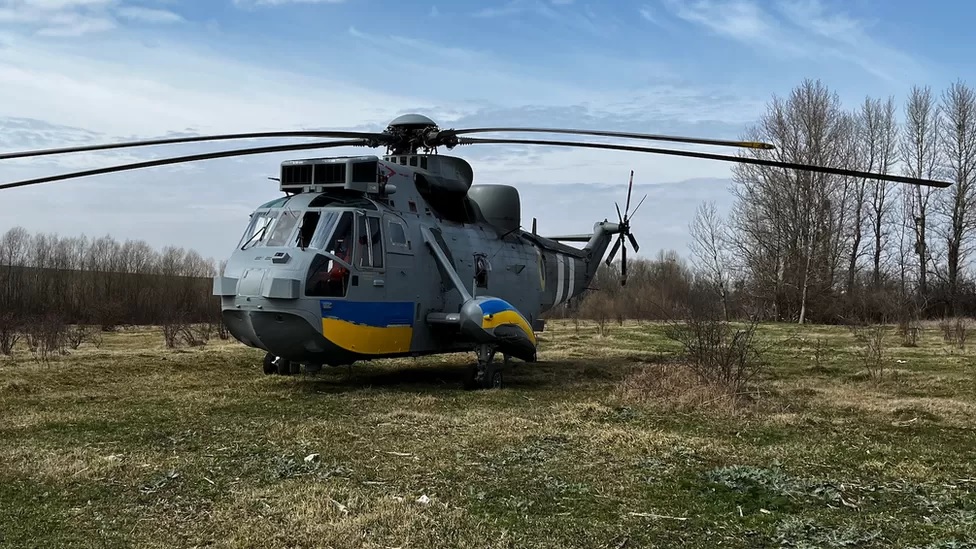
The Ukrainian navy’s tiny fleet of donated Westland Sea King helicopters appears to have a new mission: hunting Russian Geran drones.
Aviation reporter H.I. Sutton was the first to note the new mission, when he spotted a specially equipped Sea King on the ground at the Farnborough Air Show in the United Kingdom this week.
The 1970s-vintage Sea King had new equipment: an under-fuselage railing for small interceptor drones. Ukrainian forces use the inexpensive interceptors to chase down and take down Russia’s Geran one-way attack drones. Some of the remote-controlled interceptors feature A.I.-assisted targeting and pack tiny explosive charges. Others are strictly manually controlled and knock down their targets through the sheer force of impact.
Regardless of the details of their designs, interceptors costing just a few thousand dollars apiece have helped Ukrainian air defenders blunt the impact of the thousands of Gerans Russia launches at Ukrainian cities every month. Air defenders typically take out around 90% of incoming Gerans.
But interceptor drones come with limitations. They’re powered by batteries that exhaust themselves after just a few minutes of flight. And they are prone to being blinded by bad weather and low clouds. To prolong the interceptors’ flights and get them above the rain and clouds, Ukrainian forces have begun using manned aircraft to loft the interceptors into the air before launching them.
The Sea King, it seems, is Ukraine’s latest interceptor drone carrier. While the helicopter Sutton spotted at Farnborough was unmarked, it’s likely one of six Sea Kings Germany has donated to the Ukrainian war effort. The United Kingdom previously donated three surplus Sea Kings to Ukraine. The Ukrainian navy’s sole helicopter unit, the 10th Naval Aviation Brigade, reportedly operates the Ukrainian Sea Kings.
Before now, it seems the Ukrainian Sea Kings strictly flew coastal search and rescue flights in support of Ukrainian ground and naval forces. But there’s an obvious need for more air defenses over the Ukrainian coast. Sea Kings hauling interceptor drones under their bellies, and the drones’ operators in their cabins, could be just the thing.
Geran killer
The threat: A.I.-assisted Geran drones. Shortly after Ukrainian drone forces began targeting the tankers, dry cargo ships and auxiliaries belonging to the unregistered “shadow fleet,” Russian forces retaliated, launching cruise missiles and Gerans at grain ships and infrastructure in Odesa and other ports in southern Ukraine. Over weeks of near-daily port strikes, Russian missiles and drones have repeatedly hit grain carriers and terminals; the deadliest, a cruise-missile strike on the bulk carrier Golden Leo on 19 July, killed 10 of its crew.
An interceptor drone flying around 350 km/h is too slow to hit a cruise missile flying 900 km/h, but all but the fastest jet-powered Gerans are within the targeting envelope of all but the slowest interceptor drones. The problem, of course, is battery life and weather. To stand the greatest chance of hitting the most Gerans, the interceptors should launch from around a thousand meters in the air.
The Sea King is an old helicopter. But it’s also reliable, cheap to operate and capacious. A solid platform for drone launches.
And it’s part of a widening trend. This spring, Ukrainian forces armed an Antonov An-28 light turboprop transport with interceptor drones, complementing the An-28’s existing side-firing gun and giving the lumbering transport great reach during its drone hunts.
As a drone platform, the An-28 apparently works. Well enough, in fact, that Russian forces have copied the concept. A recent video depicts two old Russian warplanes getting the fittings for aerial interceptor drone launch: a Yakovlev Yak-52 turboprop trainer and an Antonov An-2 piston-powered transport.
Like the Ukrainians do, the Russians hang drones under the planes’ wings and seat the drones’ operators inside the cabin or cockpit. All aerial drone platforms require add-on radios and antennae to connect the seated operators to their interceptors so that the operators can see what the drones see, and steer them to a hit.
If the Sea Kings also work well as drone platforms (and there’s no reason they shouldn’t), the Ukrainians may well extend the concept to other airframes. Any helicopter, transport or trainer with a reasonable payload and some space in the cabin or cockpit is eligible.
The Sea King is the latest Ukrainian drone hunter, but it’s probably not the last.
About the Author
