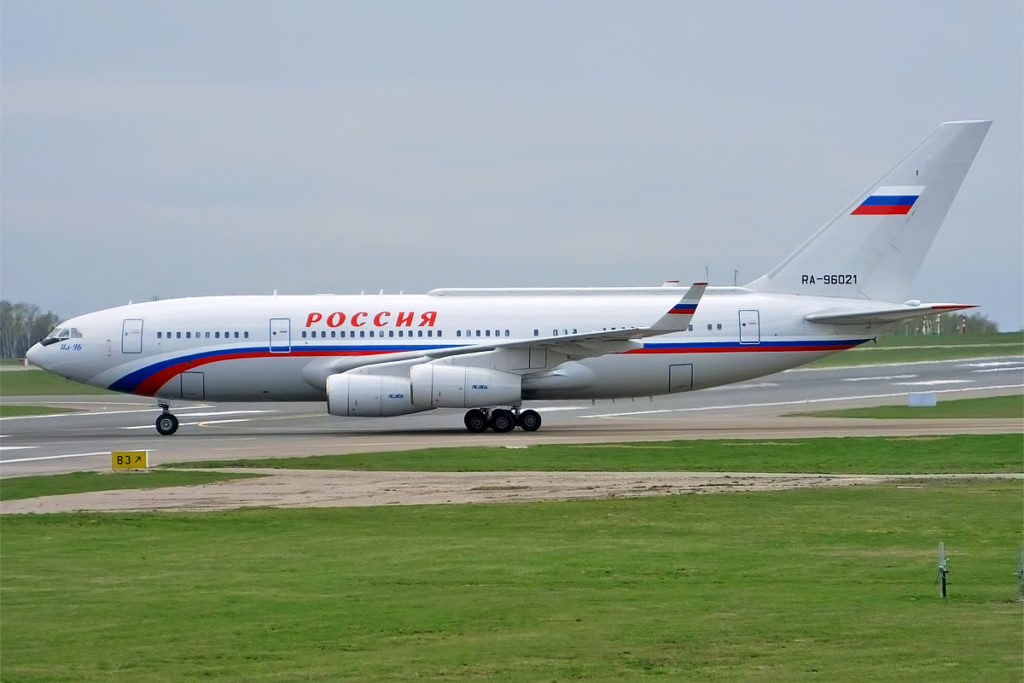
Russia is now tearing apart brand-new planes to keep older ones in the air. The country’s civil aviation continues to deteriorate under international sanctions, forcing it to dismantle even new, fully equipped aircraft to obtain spare parts, Ukraine’s Defense Intelligence (HUR) reports.
About 95% of all passenger traffic in Russia operates on Western-built aircraft, mostly Airbus and Boeing, according to HUR, a figure consistent with the roughly 90% EP has reported in earlier Ukrainian intelligence assessments.
Much of that fleet has flown past its guaranteed service life and would long since have been retired under international norms, but cut off from certified maintenance, Russia keeps flying it against the rules.
Repairs are carried out without proper certification, parts are often handmade from unsuitable materials, and what cannot be made is imported through third countries.
The usable fleet is shrinking toward a hard floor
The risk of seizure abroad has boxed Russia’s usable fleet into a narrow set of planes. Because of the danger of arrest in foreign jurisdictions, Russia can relatively safely operate only about 400 foreign aircraft and fewer than 150 Soviet and Russian-built machines, according to HUR.
The 400-aircraft figure tracks the roughly 400 Western jets Russia appropriated from foreign leasing companies after the 2022 full-scale war, planes it re-registered domestically and cannot fly to most of the world without risking impoundment. Ukraine’s Foreign Intelligence Service reported in October 2025 that Russian carriers could shed hundreds of planes by 2030 as sanctions block imports of aircraft, parts, and maintenance, with more than a third of the civil fleet already cannibalized for parts.
The homegrown replacement program is failing on the specifics
Russia’s plan to replace Western aircraft with its own is ambitious on paper and stalling in practice. The state has a program running to 2030, worth about $12 billion, to build 994 civilian aircraft and 765 helicopters, according to HUR, but an industry cut off from Western technology cannot make components of adequate quality.
The failures are specific and checkable. The MC-21, meant to replace the Airbus A320 and Boeing 737, had to have its capacity cut from 210 to 163 seats because of problems with its domestic PD-14 engines. The Superjet has hit similar engine trouble, and Russia has abandoned new modifications of the Il-96 entirely.
Regional aviation is no better. The LMS-901 “Baikal,” meant to replace the Ukrainian-designed An-2, cannot do what its predecessor could: take off and land on unprepared dirt strips. The Il-114-300, meant to replace the An-24 and An-26, can operate only from paved airfields, and the use of unsuitable propeller materials carries a risk that the propellers could fail.
About the Author
