The World Cup is nearly through, and that means time’s running out for us Americans to parachute in with our scorching hot World Cup takes. (No, you’re not getting a precise stoppage clock time. Ever. Stop asking.) Only two matches are left, the championship and the third-place match, and that leads me to my contribution:
We need more third-place games in sports.
Yes, I know all the reasons against this kind of zombie gameplay. The players don’t want to play in them. The fans of each squad are already heartbroken. The England-France match on Saturday is nothing but a brazen money-grab for FIFA, its sponsors and its broadcasters. All valid complaints.
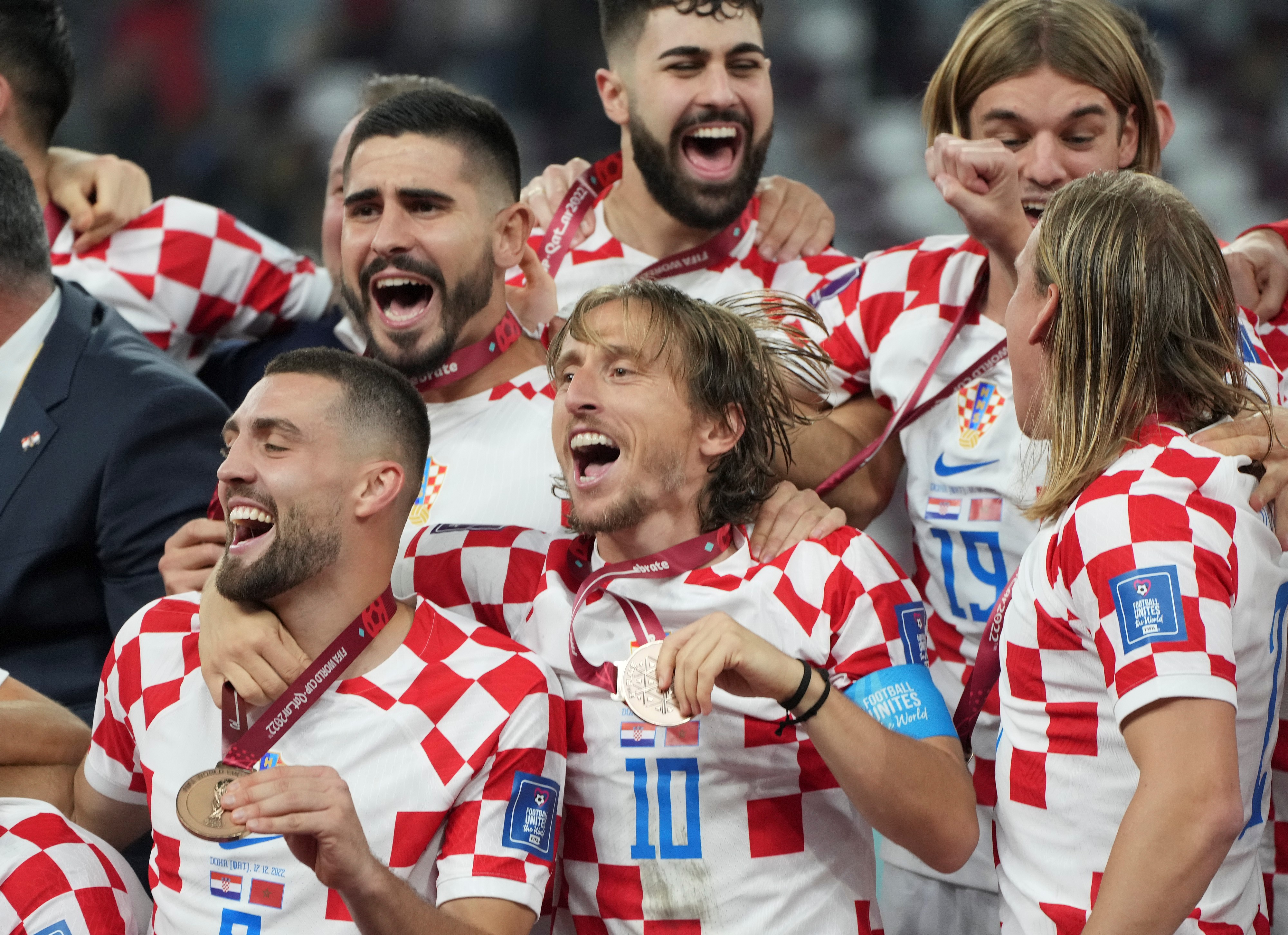
Counterpoint: Third-place games are cool. And they’re one more chance to see elite competition in action before the long, cold offseason.
Angled properly, a third-place game — or match, if you prefer — is a way for a beaten-down squad to salvage some measure of pride. You think England supporters won’t take a bit of grim satisfaction at beating France on Saturday, and vice versa? A podium finish can’t compare to a World Cup final berth, but hey, it’s better than finishing fourth, right?
So hear me out: third-place games for the losers of, say, the NFL’s conference championship games and the College Football Playoff’s semifinals. (This year, that would’ve been Rams-Broncos and Oregon-Ole Miss, for the record.) Play the game in the home stadium of the higher-ranked team, put some actual stakes on the line — FIFA gives an extra $2 million and ranking points to the winner of the third-place game, and all stats count — and turn ‘em loose for one more go.
The NFL’s short-lived third-place game
Now, before you add the third-place game to the long list of World Cup elements that we would never adopt in America, like flopping and winning knockout matches against European teams, here’s a wild fact: the NFL actually once had a third-place game. The “Playoff Bowl” ran from 1961 to 1970, pitting the runner-up teams from the NFL and the AFL (later the NFC and AFC) against one another in a game held in Miami.
The “Playoff Bowl” dissipated after the NFL-AFL merger, since it wasn’t quite as attractive a property once the playoffs expanded to multiple games (and once Miami got its own franchise). But for a decade, a third-place game was a very real — if not necessarily essential — element of the pro football landscape.
Yes, many coaches and players hated it — legendary Packers coach Vince Lombardi called it “The Sh-t Bowl” and termed it a “hinky-dink football game, held in a hinky-dink town, played by hinky-dink players,” and he won the damn thing. But for others, it was a reward for a hard season, an opportunity to knock down big-name competition … and, not incidentally, a chance to cut loose on the town with teammates one last time.
Bowl games prepared us for this
The closest American equivalent to the World Cup’s third-place match is, coincidentally enough, in the sport that most closely matches soccer for its fans’ religious, occasionally sociopathic devotion: college football. Although they’re very much on the way out now, college football’s bowl games have provided one more opportunity for schools to play, often against opposition they’d never see on their normal schedules.
Some schools use bowl games as a paid vacation, allowing players and coaches alike to enjoy a week of stocking up on buffets and swag bags in a warm-weather location. Others take a more tactical approach; Alabama’s Bear Bryant, among others, clawed for every bowl game invitation he could get, because it gave him an extra month’s worth of practice with his team to prepare them for next season. (Fútbol fans unfamiliar with the nuances of college football: Alabama is like Argentina, except their Maradona and Messi were coaches.)
By this rationale, why wouldn’t a national team manager — assuming they haven’t already been sacked — take the opportunity to put some of his younger players in a zero-stakes World Cup environment, to prepare them for next time? A bit more seasoning never hurts.
Point is, bowl games thrived for decades even though virtually none of them crowned a true champion. The comparison isn’t exact — national team players have club commitments, not true offseasons, to start — but the fundamental idea is the same. Fans just want to watch their team, no matter what the stakes are … and they’re willing to pay for the privilege.
(You know, the more I write, the more I’m convinced that if FIFA ever hears about this, they’ll set up an entire college football-style World Cup bowl series just to wring even more money out of us all. Get ready for the [SPONSOR REDACTED] Atlanta Bowl and the [SPONSOR REDACTED] Dallas Bowl!)
Yes, I’m aware that under normal circumstances, the chances of third-place games ever taking place are less than zero. But just wait until the NFL and whoever’s running college football get a look at the revenue that FIFA will pull in from England-France. And then? Well, start saving for tickets to the 2028 Runner-Up Bowl.
About the Author
