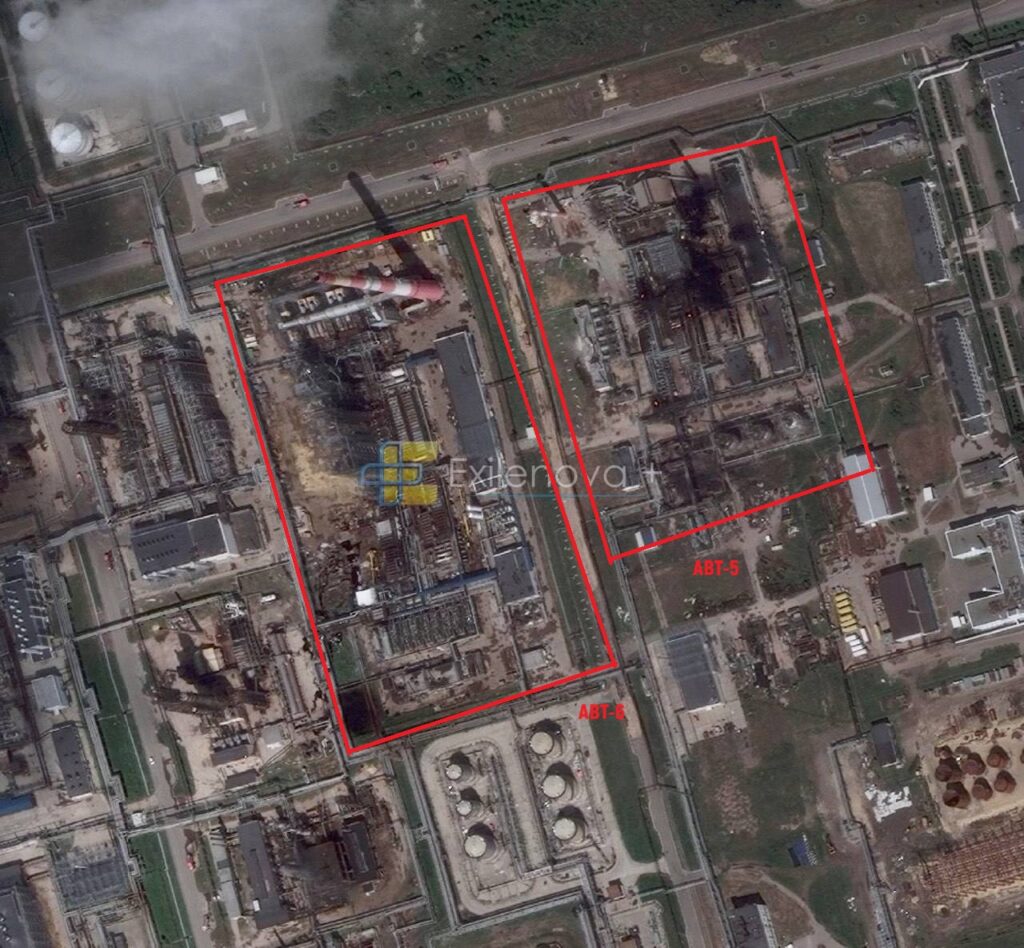
Satellite images have confirmed the scale of the damage at Russia’s Syzran oil refinery in Samara Oblast, where Ukrainian FP-1 strike drones started a large fire on 12 July.
Imagery published by the Ukrainian Telegram channel Exilenova+ shows the AVT-5 primary distillation unit burning at several separate points, technical pipe racks burned across the plant, and significant further damage to the second primary unit, AVT-6, Militarnyi reported.
Russia’s oil pays for the army destroying Ukrainian cities, and the war is in its fifth year. Ukraine’s answer has been to reach the refineries themselves — targets that Moscow long assumed sat safely out of range, deep in the interior.
Both distillation units are down.
AVT-5 processes 2.6 million tons of crude a year, about 30% of the plant’s throughput. AVT-6 handles the remaining 70% — 6.3 million tons, by Ukrainian OSINT channel Cyberboroshno’s count, though Militarnyi puts it at up to 6 million. Together, they are the refinery’s entire primary processing capability.
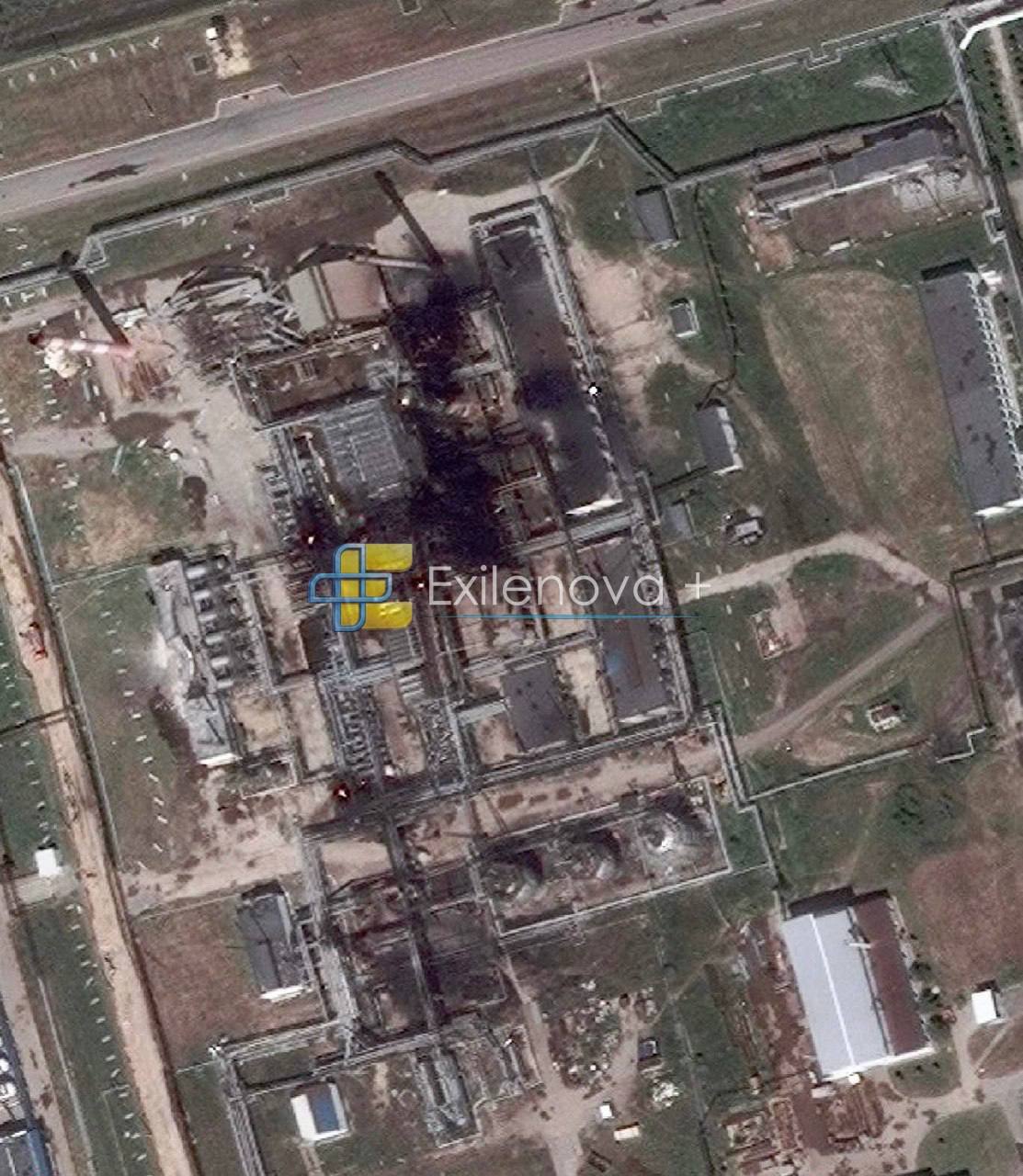
Cyberboroshno mapped hits on both units and reported 100% of primary processing capacity damaged — a combined 8.9 million tons a year, Euromaidan Press reported. Nothing leaves a refinery that cannot distill crude in the first place, the analysts pointed out.
A third hit landed on the LCh-35/11-600 catalytic reformer, which makes components gasoline cannot be blended without. Cyberboroshno says that the hit was pure chance. In one video published by Exilenova+, the reformer’s stack looms up in front of an incoming drone. The warhead detonates in mid-air right over the unit, and the fragments tear through it. It is seen burning in later footage.
A plant that keeps burning
Rosneft owns Syzran, one of the Volga region’s key fuel producers, and the plant supplies the Russian army’s logistics directly. It refines 8.5–8.9 million tons of crude a year, over 3% of Russia’s total, and sits more than 800 km from Ukraine’s border.
Drones struck the facility on 21 May, seriously damaging AVT-6 and forcing a prolonged shutdown. Reuters reported on 25 May, citing sources, that the plant had suspended operations. Drones also hit the plant three times in August 2025, and the May strike was already the 11th on the facility. Local authorities claimed the latest fire was caused by falling drone debris.
About the Author
