In 1904, A. Piatt Andrew published an article in The Quarterly Journal of Economics titled “The End of the Mexican Dollar.” It saw, quite correctly, that a period of 300 years during which silver coins mined and minted in Mexico had been the currency of choice for much of the world was coming to an end.
To understand this remarkable story, we need to understand the very nature of coins. Before coins were invented, humans had to barter: “I will give you six chickens for a sheep.” Small lumps of metal quickly became the currency of choice. Copper, silver and gold were relatively rare in ancient societies, so a small amount of metal held considerable value. Even if you were buying something large, a horse perhaps, you didn’t need to haul around great heaps of metal to make the trade. A lump of metal could also be broken up into pieces to make a series of smaller trades. Metal was also pretty indestructible. It might survive a fire in your house, or could be buried in times of danger and retrieved years later.
The world’s first coins
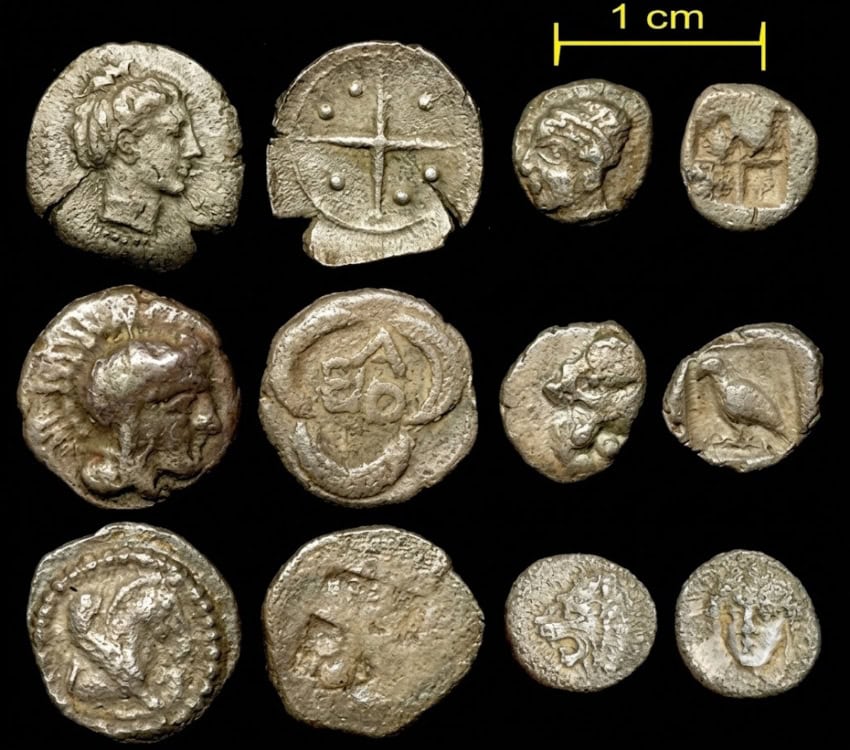
Around 500 B.C., the people of Athens conquered the silver mines of Laurion, and their city was suddenly flooded with silver. They saw the advantage of casting the metal into units of standard weight, and the result was the world’s first coins. These were round and marked by a symbol of the city that had minted them, a sign that both the weight of the coin and the purity of the metal could be trusted. From then until the wide acceptance of paper money 2,000 years later, metal coins financed the majority of human trade.
Just as the discovery of silver inspired the Greeks to invent coins, the opening of the rich silver mines of New Spain, as Mexico was then known, led to the production of the round silver coins known, among many other names, as the Spanish dollar, the Mexican silver dollar or the Mexican peso. The adoption of the term peso is an interesting story. Transactions in the Spanish motherland were made with small copper coins called reales. It was not practical to make such low-value coins out of silver, so the Mexican coins were cast with 24.44 grams of silver, making them worth eight reales. For small purchases, people literally cut the heavy coins into triangular pieces, creating the name “peso de ocho” (weight of eight) or peso. And of course, “peso de ocho” became the “pieces of eight” of pirate legends.
The emergent trade economy in Mexico
As mines developed in Mexico, Bolivia and Peru, the Spanish colonies in the Americas were producing about 80% of the world’s silver. However, this was not an even division, as by 1700, the majority of that silver was coming from Mexico. It was also Mexico, with access to both the Atlantic and Pacific oceans, that was becoming the center of world trade. Convoys of merchant ships sailed between Veracruz and Spain, while on the Pacific coast, the great Manila Galleon made its annual trips between the Philippines and Acapulco beginning in 1565. Here, they met with Chinese merchants keen to exchange their luxury goods of spice, silk, porcelain and tea for silver coins.
The Mexican peso did far more than drive commerce. European governments tucked them away in vaults as a reserve, bringing them out to finance the mercenary armies that fought Europe’s endless wars. Sailors in the Mediterranean were paid in silver pesos at the end of a voyage, and Mexican silver coins were used to pay taxes in China. As trade increasingly connected the world, a silver peso that had been mined and minted in Mexico might end up in the palace of a Chinese emperor or be given as an offering in an Istanbul mosque.
Minting the Mexican peso
Producing coins in sufficient numbers became a major enterprise. Mexican mints were owned by rich and influential merchants who bought the ore at a discounted price. Within the mints, armies of workers extracted the silver from the ore, a long, hard process that was damaging to both the workers’ health and the environment. The coins were then produced by hand, first by cutting a disk of metal from the end of a silver bar, then by shaping each piece with pliers, before hammering the coins against a die to create a pattern on each side.

Mints struggled to cope with the vast amount of silver being mined, and the early coins were rushed and crude productions that could vary in shape. This generation of coins is referred to as cobs, perhaps from the Spanish phrase cabo de barra, meaning “end of the bar” and referring to the bar of silver each coin was cut from.
View this post on Instagram
However, what remained consistent, and what made the coins trustworthy and desirable, was the silver content. Over time, technological advances such as mule-driven rolling mills and mechanical screw presses improved both the quality and the quantity of the coins. Grooved edges were added, an important move against the criminal act of chipping, in which gangs chipped away a little silver from coins and used these scraps to make fake coins.
A global currency
The use of Mexican pesos was not restricted to the Spanish world; they were passed on by traders throughout much of Asia. British-occupied North America also used them as the currency of choice, creating a confusing affair where prices were expressed in pounds but goods were paid for in pesos or, as they were more likely to be called north of the border, in Mexican dollars. We have discussed the term peso, but where did the name “dollar” come from?
From the 1700s, there was one coin that rivaled the peso as a “world currency,” and this was the Maria Theresa thaler. These were used throughout the German-speaking world, in Arabia, India and all across East Africa as far south as Ethiopia. The word dollar is believed to have originally been an English corruption of thaler. The Austrian thaler was so similar to Mexican coins in size and appearance that merchants seldom distinguished between them, and the word dollar started to be used for both Austrian and Mexican coins.
Upon independence in 1793, the new U.S. government opened its first mint, copying the size and silver content of Mexican coins, and even adopting the name “dollar.” The world-recognized dollar sign might also have had a Mexican origin, being a simplified version of the coat of arms that appeared on Mexican coins. However, the young United States lacked the silver or the technical skill to produce coins on the necessary scale, and Mexican silver dollars remained legal currency until 1857.
When the peso began to decline
What kept the Mexican dollar in such demand for so long was not its use in the U.S., but the Chinese hunger for silver coins. While daily trade in China was carried out in copper, silver was demanded by the government when paying taxes. The demand for silver became greater in the early decades of the 19th century when the British forced opium imports on the country, causing a considerable drain on China’s reserves of silver coins.
However, by that point, other factors were starting to turn against the Mexican currency. In 1859, silver was discovered in Nevada, the first of a growing number of U.S. silver mines. By 1873, the United States was not only minting its own coins but issuing silver “trade dollars” for use overseas. Similarly, from 1895, British coins minted in Bombay and Calcutta finally started to rival the Mexican dollar in Hong Kong and the Straits Settlements. Japan, having bought its first minting equipment from Hong Kong, started to produce its own silver coins — the yen. It took time for these to gain trust, but by 1900, the Mexican silver dollar was losing ground in the vital Chinese market to British, Japanese and locally produced coins.
A new ‘world economy’
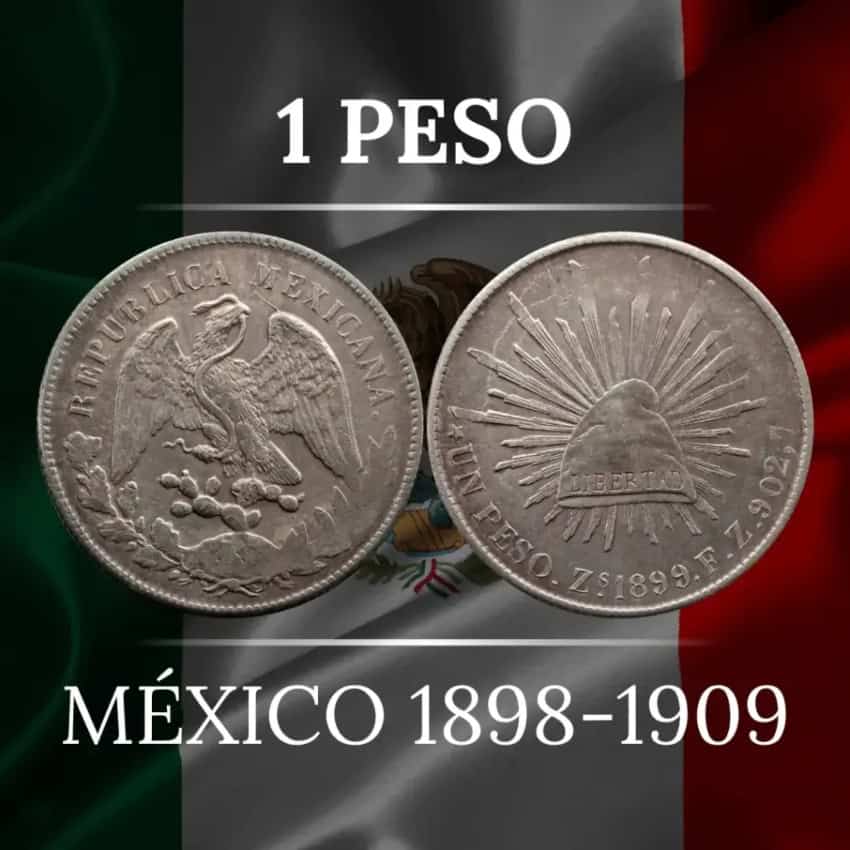
France had more of a struggle to have its silver coins, known as piasters de commerce, accepted. The first coins were slightly low in silver content and therefore not popular in Asia. The French government tried to correct this mistake by issuing special coins intended just for use across its Asian empire. However, these had so much silver that merchants tended to hoard them or melt them down for the raw metal. As a result, French-issued coins continued to operate side by side with other currencies, including the long-standing Mexican dollar.
Mexico’s silver currency suffered a heavy blow in 1898 when the Philippines, still an important commercial meeting point between China and Europe, was lost to the United States. In addition, the amount of silver coming onto the market from new mines around the world was lowering the value of the metal. Mexican coins were more or less pure silver, so a Mexican businessman wanting to buy, for example, factory machinery from France, would now have to hand over a greater number of coins. For all these reasons, by 1904, The Quarterly Journal of Economics could run its article predicting the imminent decline of the silver Mexican peso.
Bob Pateman lived in Mexico for six years. He is a librarian and teacher with a Master’s Degree in History.
The post When the Mexican peso ruled the world appeared first on Mexico News Daily
About the Author
