GUADALAJARA, Mexico — As the Jalisco government plans to spend more than 20 billion pesos to overhaul Guadalajara’s aging and long-neglected water system, residents across Mexico’s second-largest metropolitan area have launched an unprecedented effort to answer a more immediate question: What is coming out of their taps?
Working alongside university scientists, neighborhood volunteers have collected hundreds of water samples, documented hundreds of health complaints and built a citizen-led monitoring network that has become the public face of a water crisis authorities have yet to fully explain.
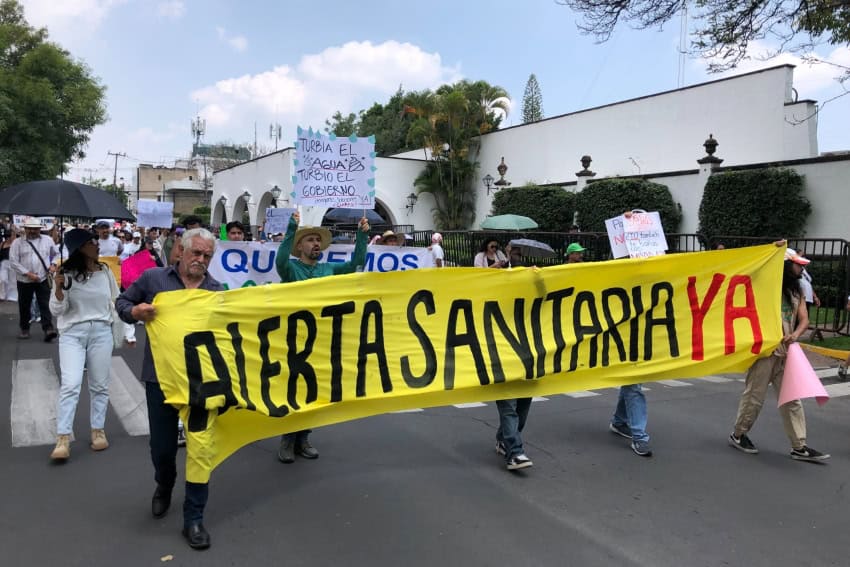
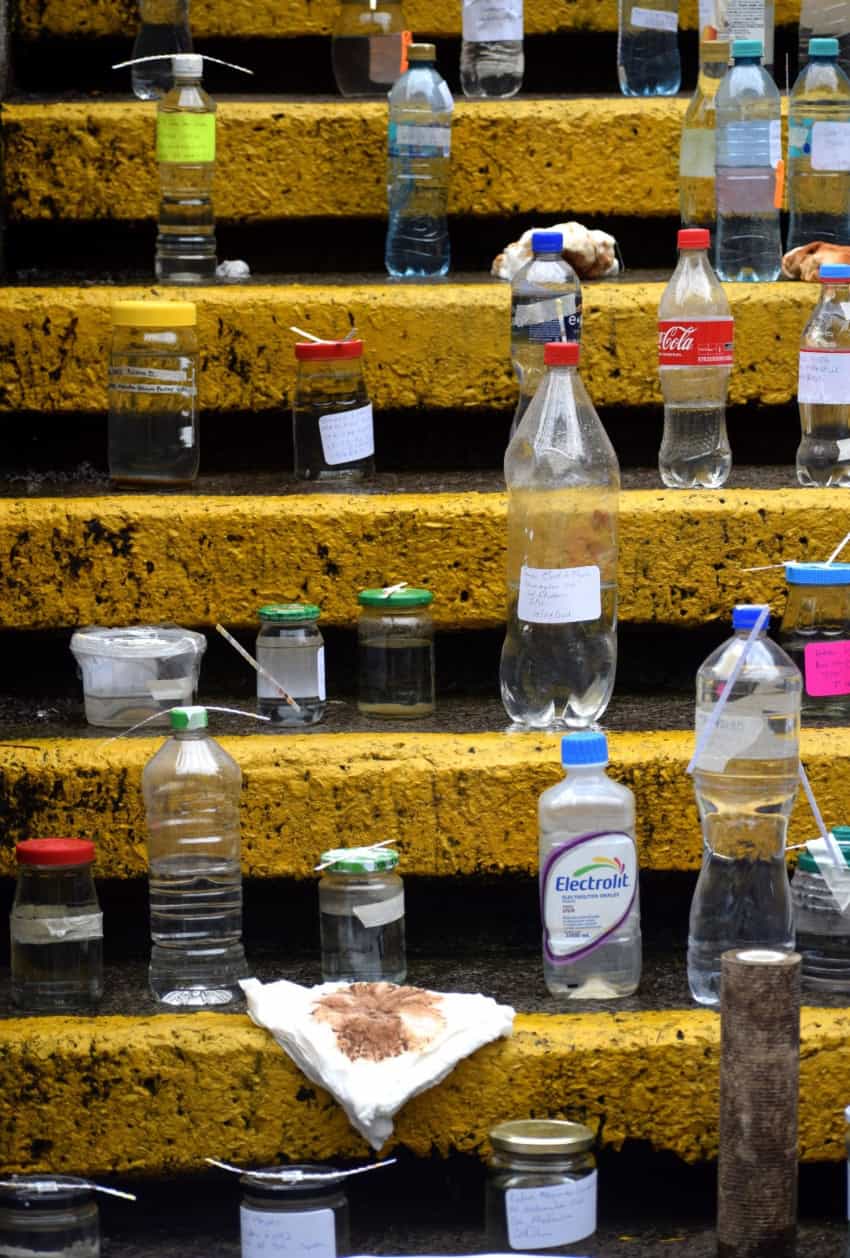
Four months ago, under the banner “Mas Agua, Menos Mundial” (More Water, Less World Cup), hundreds of Guadalajara residents marched through the city center carrying bottles of murky tap water.
The citizen movement for transparency and accountability
Some held jars filled with brown sediment. Others described rashes, stomach illnesses and respiratory problems they believed were linked to the foul-smelling water flowing from their faucets. Children took turns smashing a piñata bearing the face of Jalisco Gov. Pablo Lemus as protesters chanted for accountability from SIAPA, the metropolitan water utility.
The next day, SIAPA’s director was gone.
Since March, the movement that hit the headlines with angry residents holding up bottles of dirty water has evolved into a broad citizen-led campaign that combines community science, public health advocacy, legal action and sustained public pressure. Through the citizen campaigns “The SIAPA We Want” and “Corrupt SIAPA,” neighborhood volunteers have trained as water monitors and collected hundreds of samples across the Guadalajara metropolitan area.
The effort is supported by the Mexican Institute for Community Development (IMDEC) and academics from ITESO, Guadalajara’s Jesuit university. Together, they have documented hundreds of health complaints, delivered technical reports to public health authorities and launched a coordinated legal campaign, all with the goal of forcing greater transparency about the quality of the water flowing from Guadalajara’s taps.

A collective complaint
In recent days, the coalition has filed a collective complaint backed by more than 1,500 signatures, along with a technical report, demanding that health authorities conduct independent testing and declare a preventive public health alert. Representatives of more than 30 neighborhood organizations, universities, environmental groups and labor unions delivered a technical report and petition to Jalisco’s health protection agency, COPRISJAL, as well as federal health authorities and Mexico’s National Institute of Public Health. Their demand was simple: stop asking citizens to trust reassurances and begin producing independent, transparent evidence about the quality of the water reaching people’s homes.
The campaign’s evolution mirrors a growing realization among many residents that replacing one official would not answer the questions that mattered most: Why was the water dirty? Was it making people sick? And why, months into the crisis, had authorities still not produced a comprehensive public diagnosis explaining what was happening throughout one of Mexico’s largest urban water systems?
Citizens become the water monitors
Perhaps the movement’s most remarkable achievement has been something few imagined only months ago. Residents have begun testing their own water.
Working with researchers from ITESO University, volunteers have trained as neighborhood water monitors and formed a Metropolitan Network of Community Water Monitors, learning how to collect samples, interpret results and document conditions across the Guadalajara Metropolitan Area (GMA).
Citizen science has become one of the movement’s defining characteristics. Rather than relying solely on protest or political pressure, residents have learned to gather evidence themselves. Volunteers receive training in standardized sampling methods and work alongside university researchers, not to replace accredited laboratories, but to identify potential risks, document patterns and press authorities to carry out the comprehensive testing that community groups argue should already be underway.
Their latest report analyzes 184 samples collected in 90 neighborhoods between March and June.
What testing results are showing
According to the citizen coalition organized under the banner, “El SIAPA que Queremos” (The SIAPA We Want), 93% of the samples showed no detectable residual chlorine — the disinfectant intended to provide a basic barrier against microbial contamination in drinking water. Community monitoring also detected lead, mercury, nitrates, fluorides and coliform bacteria in some samples, prompting demands for immediate testing by accredited laboratories.
View this post on Instagram
“We began these monitoring efforts because there is no official information from SIAPA, there is no transparency and we do not know what the water we are receiving contains,” Diego Rico of the Metropolitan Neighborhood Water Monitoring Network said during a press conference organized by the coalition at the state congress building this week.
The coalition emphasizes that it is not trying to replace government laboratories. Rather, organizers say citizen science has become necessary because residents have been left without reliable information about the water reaching their homes.
Environmental researcher Veyda Alcala of ITESO, who helped analyze the findings, put it this way: “Community evidence cannot be met with dismissal, silence or omission. It must be met with official verification, transparency, public health measures and accountability.”
She also warned that while boiling water can eliminate bacterial contamination, it does not remove heavy metals — and may actually concentrate them.
Two visions of the crisis
The citizen coalition’s demands come as the Jalisco government has publicly acknowledged the seriousness of the problem.
Earlier this week, Cabinet Chief Alberto Esquer acknowledged that water quality in Jalisco is “a real, historic problem” while unveiling a 30-point strategy involving more than 20 billion pesos (roughly $1 billion) in infrastructure investments.
The plan focuses on upgrading treatment plants, constructing a replacement Chapala-Guadalajara aqueduct, improving pumping systems and modernizing other parts of the metropolitan water network.
Critics say the government is proposing billion-peso engineering projects before answering a more immediate question: What is contaminating the water people are receiving today?
State Deputy Valeria Avila voiced that concern bluntly during Wednesday’s press conference.
“It seems the state government wants to solve everything through pipes and more money,” she said, arguing that lawmakers should not approve massive new investments until authorities fully explain the causes of the contamination and how residents will be protected in the meantime.
Systemic analysis is needed
Water engineer Arturo Gleason of the University of Guadalajara, who has written and spoken out extensively about the crisis, welcomed the fact that state officials have finally broken months of public silence.
But he argues that announcing major infrastructure projects without first conducting a comprehensive scientific diagnosis risks treating symptoms rather than causes. Authorities, he says, need to determine what is happening throughout the entire system — from Lake Chapala, the Calderon reservoir and groundwater wells to canals, treatment plants, storage tanks and Guadalajara’s 8,500-kilometer distribution network — before deciding which investments are needed.
From protest to public participation
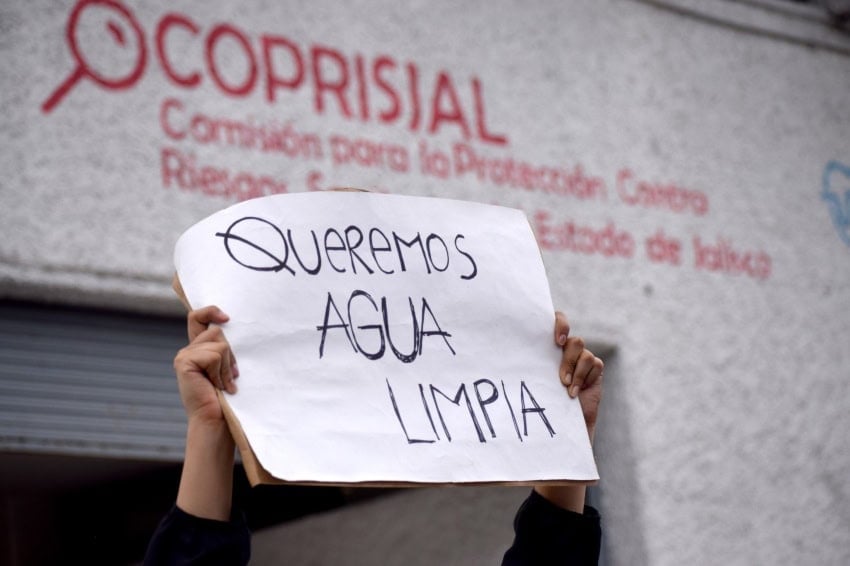
The movement has also broadened beyond monitoring. Organizers say they have documented more than 900 citizen complaints since March, including reports of gastrointestinal, respiratory and skin ailments.
Their petition asks health authorities to establish a permanent working group on water quality and public health with citizen participation, conduct independent testing in affected neighborhoods, investigate why so many community samples lacked residual chlorine, determine the source of contaminants including lead and mercury, and declare a preventive public health alert under the precautionary principle rather than waiting for more people to become ill.
The campaign will continue throughout July with the so-called Citizen Mobilization Days for Clean Water and Health, including events at the state and national human rights commissions, a citizen evaluation of SIAPA’s new director and demonstrations calling for accountability in unresolved corruption cases involving former SIAPA directors.
Inviting more people into the process
Even SIAPA’s own workers acknowledge the depth of the problem.
“It is not the workers’ fault,” said Jose Gonzalez Gonzalez, secretary of the utility workers’ union. “We lack vehicles, materials and supplies. We are the ones who face the public every day, and we recognize that access to water is a human right. But if workers don’t have the tools they need, how can we guarantee that supply?”
The coalition insists it is not asking the public to accept its conclusions without question. Instead, organizers say they want government institutions to do what they believe should have happened months ago: conduct transparent testing, release the results publicly and invite independent experts and citizens into the process.
“If authorities insist the water is safe,” Maria Gonzalez of the Mexican Institute for Community Development (IMDEC), one of the movement’s organizers, said this week, “let them prove it with public data, independent sampling and verifiable results.”
Tracy L. Barnett is a Guadalajara-based freelance writer and the founder of The Esperanza Project.
The post Guadalajara’s water crisis reaches a boiling point appeared first on Mexico News Daily
About the Author
