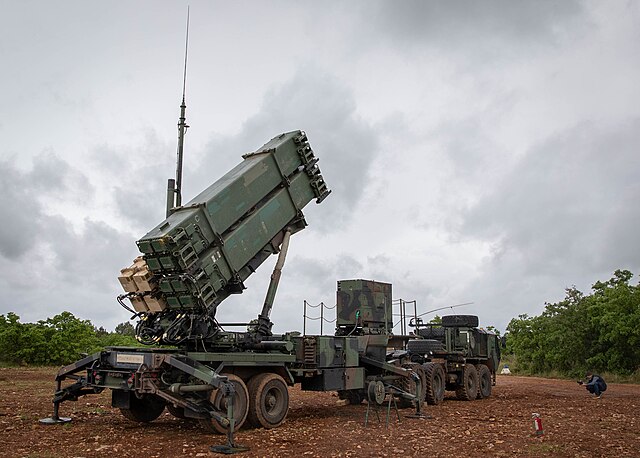
In early July, defense-industry scholar Marc DeVore put a question to two expert groups he chairs, both of which advise the UK Defence Ministry: could Ukraine realistically begin producing Patriot missiles within a year?
Both groups reached the same conclusion. Probably not.
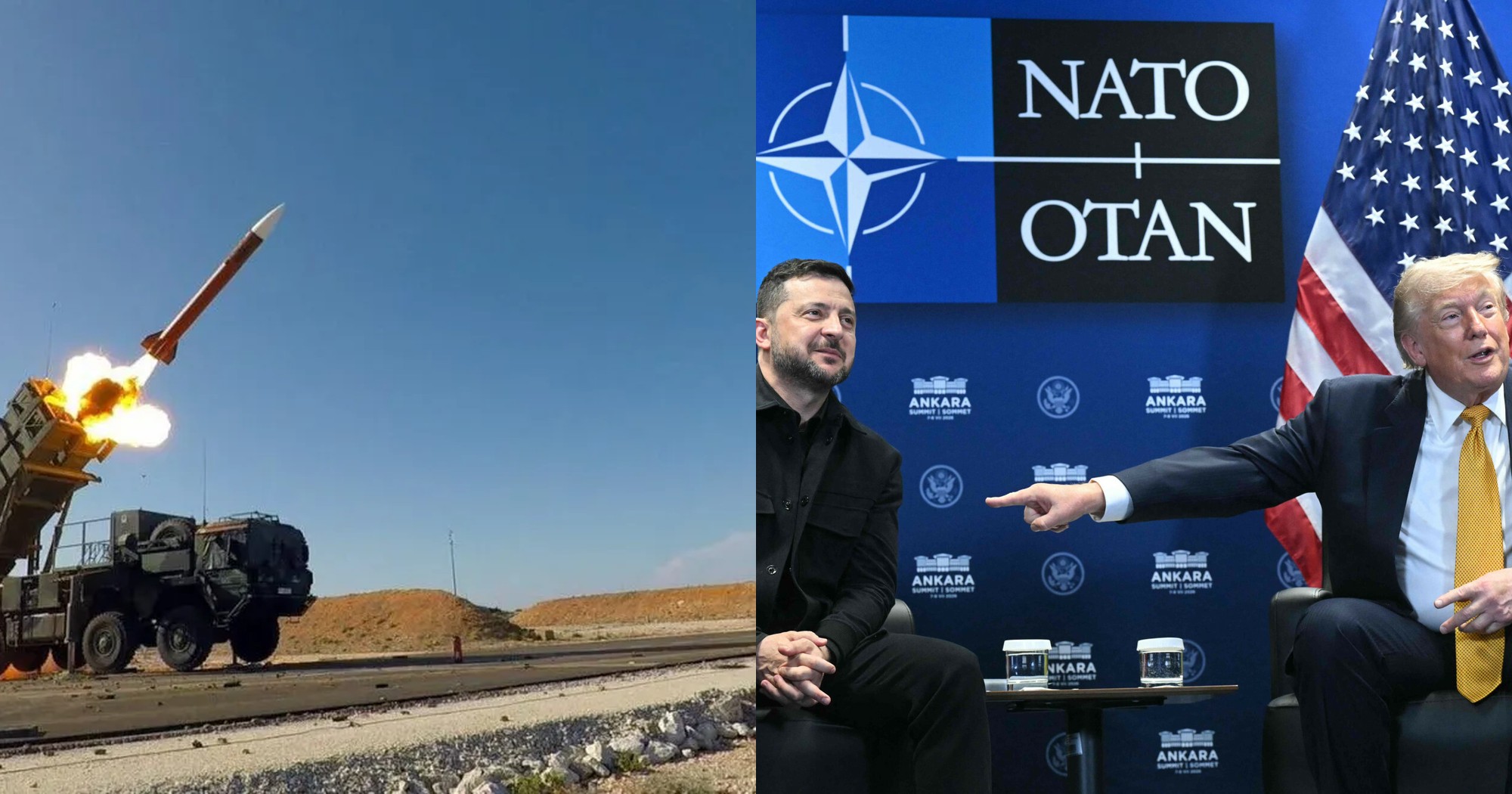
The finding, which DeVore shared with Euromaidan Press, lands days after Donald Trump told Volodymyr Zelenskyy at the NATO summit in Ankara that Washington would grant Kyiv a license to build its own Patriots—the summit’s headline offer to a country whose air defenses downed none of the nearly 30 ballistic missiles Russia fired at it on 6 July.
Engines and guidance
The obstacles DeVore, of the University of St Andrews, describes are physical rather than bureaucratic. “The two big challenges in producing missiles are the engines and the guidance systems,” he told Euromaidan Press.
The Patriot’s guidance package is a closely held secret. Even long-licensed foreign producers still depend on US subcontractors for it, so a license can leave the dependence on American manufacturing fully intact—a point Fabian Hoffmann of the Norwegian Institute for Defence Studies has made as well: final assembly is not the bottleneck. Localizing the supply chain is.
Engines are the harder problem, and Ukraine starts at a disadvantage. Russia struck key parts of Ukraine’s missile industry early in the war, DeVore noted, and engine shortages have constrained efforts to scale up Ukrainian missiles such as the Neptune. Kyiv could convert an existing engine line to Patriot production—but only by opening a shortfall in the deep-strike weapons now hitting Russian refineries and Crimea.
A year, in other words, is the optimistic floor rather than a timetable. On the more realistic reading, a Ukrainian production line runs no earlier than late 2027.
Which is the problem with the offer. Ukraine’s interceptor shortage is not a 2028 problem. Russia builds ballistic missiles faster than America builds the interceptors to stop them—roughly 800 a year against about 600—and a single Iskander can absorb two or three Patriot interceptors.
What the license buys Washington, whether it is an alibi or an admission that the interceptors do not exist, and what a real answer to Ukraine’s ballistic-missile problem would require, is the subject of our full analysis of the Ankara Patriot promise.
Washington said Ukraine’s Patriot shortage was solved. Lockheed and RTX hadn’t been told.
About the Author
