- Ukrainian first-person-view drones can now range a record 110 km
- That requires upgrades to make the drone lighter and smarter
- A $500 FPV can now do the job of a $5,000 fixed-wing drone
A basic first-person-view attack drone might range just 19 km or so before its battery runs out. Certain pricier FPVs with denser batteries and lighter construction can fly as far as 70 km before they, too, run out of power.
But Ukraine’s drone developers keep innovating. And now there’s an FPV that ranges a staggering 110 km. Six times the distance of a basic model.
The distance is the headline. The price is the point. Extending inexpensive FPVs out to 110 km lowers the cost of drone strikes across the logistical zone stretching as far as 200 km behind the disputed gray zone. Before, these “middle strikes” required a fixed-wing attack drone costing thousands of dollars. Now a middle strike is possible with an FPV costing perhaps a tenth as much.
Cheaper middle strikes mean more middle strikes, and more pressure on Russian logistics. Drone raids targeting Russian supply lines have recently helped slow, if not entirely halt, Russian advances as Russia’s wider war on Ukraine grinds into its 53rd month.
Wow! A new FPV strike record — 110 km!
– Unit: 5th Border Guard Detachment

– Drone: @vyriydrone-15
– AI terminal guidance: The Fourth Law 4⃣
Leading manufacturers are choosing autonomy systems from The Fourth Law.
Grateful to our friends at Vyriy for their trust.… pic.twitter.com/dN3Mh7EAyH— Yaroslav Azhnyuk / Ярослав Ажнюк (@YaroslavAzhnyuk) July 10, 2026
Yaroslav Azhnyuk, a representative of Ukrainian defense firm The Fourth Law, revealed the 110-km FPV strike on Friday. “Wow!” Azhnyuk wrote. “A new FPV strike record.” The previous marks, set in late May, were 102 km and 103 km.
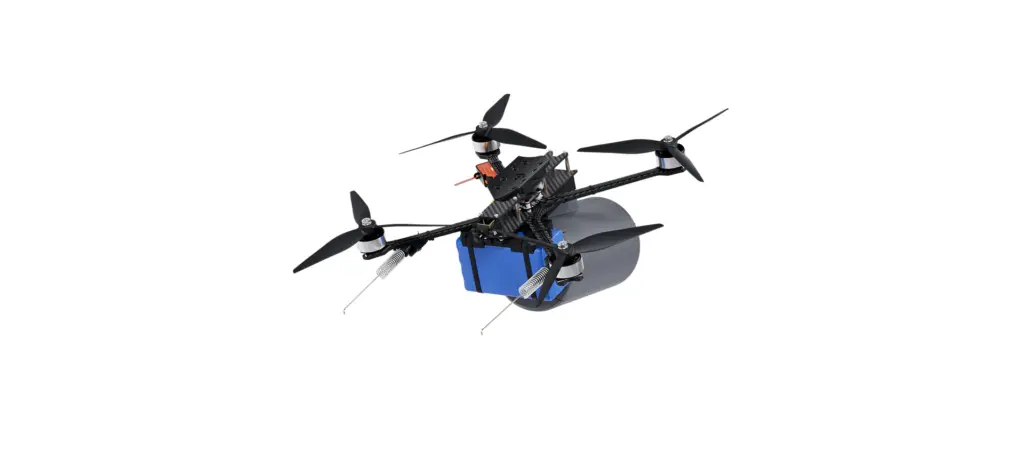
The FPV, flown by the Ukrainian 5th Border Guard Detachment, was a 38-cm quadcopter from Ukrainian manufacturer Vyriy, and it struck Russian logistics.
The record comes at an awkward moment for the manufacturer. Ukraine’s State Bureau of Investigations raided Vyriy on 7 July, days before the strike, after a media outlet owned by Vyriy’s CEO, Oleksii Babenko, published an investigation of alleged corruption and mismanagement inside the Ukrainian 425th Separate Assault Regiment.
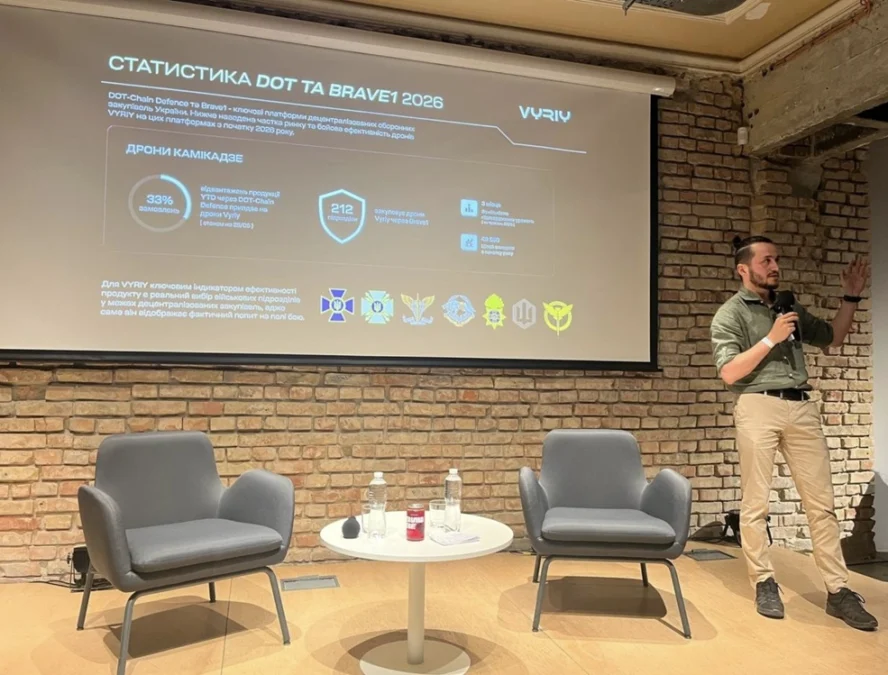
CEO of one of Ukraine’s biggest drone makers just got raided. He also owns outlet that exposed 25 non-combat deaths at military unit
FPV upgrades
According to Azhnyuk, the 15-inch drone boasted numerous upgrades:
- A new, more power-dense battery with a capacity of 40 Ah
- A TFL-1 autonomous targeting module allowing the FPV to home in on and strike its target despite any Russian jamming over the target zone
- A lighter 800-g shaped-charge warhead instead of the usual 5-kg warhead
But even those range-extending enhancements probably weren’t sufficient to take an FPV out to 110 km. At that distance, the drone likely needed a major aerodynamic boost—and that can really only come from an add-on wing. Azhnyuk’s list of upgrades doesn’t mention one, so the wing remains an inference rather than a confirmed feature of this particular flight.
Late last year, Russian and Ukrainian developers got serious about adding wings or ducts to their quadcopters. The ducted models don’t seem to have caught on. The winged models work best.
Haye Kesteloo at DroneXl explained the physics. “Multicopters burn most of their energy just staying airborne, because spinning rotors generate lift the hard way.”
A wing produces lift for free once the aircraft is moving, which is why fixed-wing designs have always dominated long-range strike work. The winged FPV grafts that efficiency onto a quadcopter: the motors mostly handle forward propulsion during the long cruise, and a release mechanism drops the wing near the target so the drone recovers full quadcopter agility for the final attack run.
“The winged-quadcopter approach is the attempt to get fixed-wing reach without giving up the multicopter’s close-in lethality,” Kesteloo concluded.
But the cost is the main benefit. With an inexpensive bolt-on wing, a $500 FPV can now do the job of a $5,000 fixed-wing drone, and strike targets more than 100 km away.
About the Author
