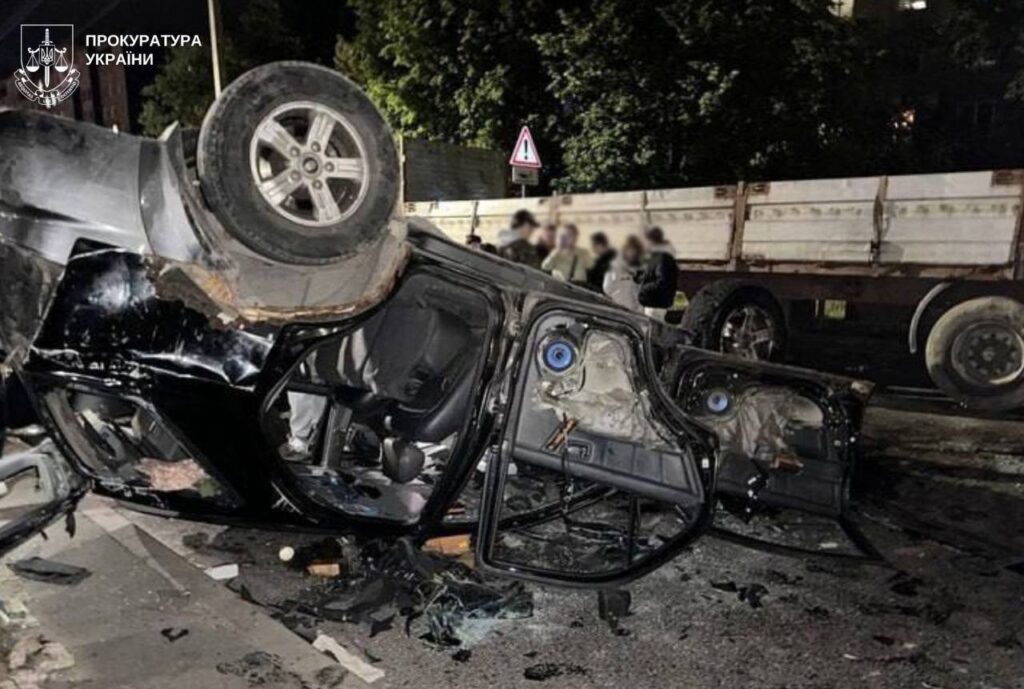
An overturned draft-office car is no longer news in Ukraine. This one was different for the place, and for the response. It happened in Lviv, the heartland of the war effort, and within a day, two of Ukraine’s own oversight officials had blamed not the crowd but the government for a mobilization system it deferred fixing for years and has only begun, haltingly, to reform.
The standoff ran about five hours, into the early hours of 9 July.
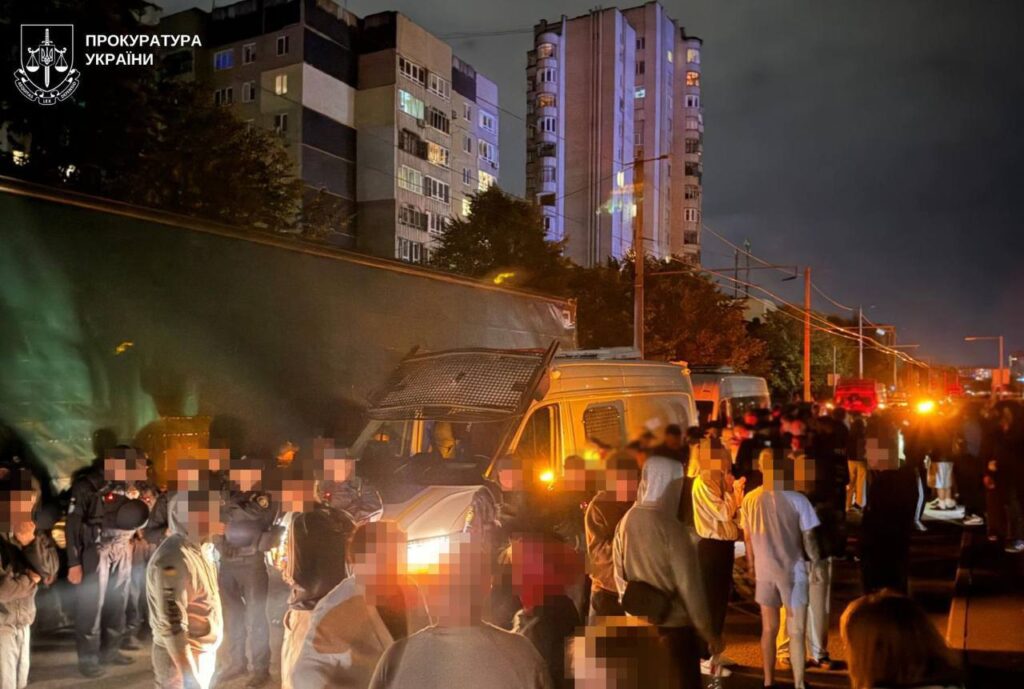
On the evening of 8 July 2026, a crowd of about 200 people in Lviv’s Sykhiv district blocked, smashed, and overturned a car belonging to the city’s territorial recruitment center, after draft officers stopped a man wanted since 12 June for dodging military registration, Lviv Portal reported. The standoff ran about five hours, into the early hours of 9 July; at least two servicemen were hospitalized with light injuries.
The friction is structural. Ukraine drafts about 30,000 men a month—only about half what the army needs, the secretary of parliament’s national-security committee, Roman Kostenko, told Radio NV—so the ranks are topped up by draft officers stopping men on the street, a system Euromaidan Press has argued was left broken because the hardest fixes were deferred.
What happened—and what remains disputed
The recruitment center’s account, from deputy chief Petro Storozhuk at a briefing: draft officers checked the 30-year-old’s papers, found he was on a wanted list, offered to drive him in for a records check and a medical exam, and he got in—only then, they say, did an unknown group block the car and refuse to let it leave.
The district chief said that the footage was incomplete and out of context.
Accounts of how it started diverge. Eyewitnesses told NV the recruiters had beaten the man and dragged him into a minibus; one widely shared clip—which Euromaidan Press has confirmed was filmed at the scene, though not what led up to it—appears to show a recruitment officer getting out of a car and punching a man, The Ukrainians reported.
The district chief said that the footage was incomplete and out of context, that the conflict had begun earlier off-camera, and that, as he saw it, the officer was defending himself; police will make the legal call.
Police said the gunman was a bystander who turned out to be an off-duty serviceman, firing to disperse the crowd, and that the shots hit no one.
Someone fired shots into the air during the fighting; police said the gunman was a bystander who turned out to be an off-duty serviceman, firing to disperse the crowd, and that the shots hit no one, spokeswoman Alina Podreiko told Tvoemisto.
Separately, how many were hurt across the night is disputed—the recruitment center said two servicemen; police reported four members of the security forces.
The 23-year-old charged over the assault on police, told the hearing that he is himself a soldier of the 53rd Separate Mechanized Brigade, absent without leave since February 2026.
Two inquiries followed: a criminal case against the crowd and a review of the officers’ own conduct. By midnight, the man the crowd had gathered to free was sent for a medical exam—in effect, mobilized.
The 23-year-old charged over the assault on police, named in court as Oleh Havrylov, told the hearing that he is himself a soldier of the 53rd Separate Mechanized Brigade, absent without leave since February 2026, formerly a drone operator near Kramatorsk—an account Euromaidan Press cannot independently verify. He faces up to five years.
Police mostly watched as the car was destroyed and sent no one to the next day’s briefing, even as a regional official praised their restraint, Focus.ua reported.
A flashpoint reaches the heartland
Anti-recruitment unrest is not new—a 2024 Kovel crowd that stormed a recruitment office, protests in Vinnytsia, and a wave of attacks on draft centers in early 2025. What is new is the address.
Lviv buries its war dead often and directs much of its budget into the army; its 58,000 residents in uniform make it one of the country’s most mobilized cities, said mayor Andrii Sadovyi, who called the scene “not yet a diagnosis but already a symptom” and noted Moscow most wants Ukrainians fighting each other.
Her team logged nearly 10 million mentions of mobilization in six months, most on Facebook and Telegram, plus AI-generated “soldiers” pushing Russian lines.
Russia has turned its information war from attacking politicians to wrecking the state’s ability to raise an army, wrote Olesia Horiainova, deputy head of the Ukrainian Security and Cooperation Centre. Her team logged nearly 10 million mentions of mobilization in six months, most on Facebook and Telegram, plus AI-generated “soldiers” pushing Russian lines in Ukrainian.
The negativity fills whatever vacuum the state’s silence leaves, she argues—so one clash reads as “total collapse” while the tens of thousands of quiet call-ups each month go unseen. The sharpest criticism, though, came from Ukrainian officials, not bots.
When the state steps back, others step in
As the state hesitated, others moved. A volunteer, Anton Petrivskyi, said he and “active residents” had tracked down participants and filmed their apologies—one pledging on camera to enlist—while withholding parts of the “conversation” so Facebook would not block it. The apologies were extracted not by the police, who were charging the same people, but by self-appointed enforcers.
Two watchdogs, one root
The state’s own answer came a day later, and in words. Condemnation ran from the top down: the head of the Office of the President, Kyrylo Budanov, warned that anyone who strips and beats a soldier of their own army should ask who will defend them tomorrow; the defense ministry called mobilization necessary but its methods in need of work, as LIGA reported.
The human rights commissioner, Dmytro Lubinets, urged the ministry to establish a working group to rewrite the rules.
The two officials whose job is oversight aimed higher. The human rights commissioner, Dmytro Lubinets, urged the ministry to establish a working group to rewrite the rules, warning that when reports of draft abuses go years without a legal response, trust erodes.
The military ombudsman, Olha Reshetylova, blamed the government and local authorities for never settling who stays in the workforce and who goes to the front. Reform has to start with the draft-exemption rules, she said—and she rounded on the politicians and media who exploit mobilization for clicks and stoke hatred of the soldiers who enforce it.
Ukraine did finally move: in 2026, it launched a personnel overhaul—new contracts, higher frontline pay, a phased path out for the longest-serving.
They point from opposite ends at the same gap. Ukraine did finally move: in 2026, it launched a personnel overhaul—new contracts, higher frontline pay, a phased path out for the longest-serving. Yet soldiers panned it as an illusory reprieve, months more service before a short deferment rather than a way home, Ukrainska Pravda reported.
What it has not touched is the recruiters’ side of the system—the street stops and unfixed exemption rules that put a crowd around a car in Lviv in the first place.
About the Author
