Rusal, the Russian aluminum giant whose raw materials have been traced to Russian weapons producers, also supplies a Swedish smelter and was documented as a Tesla supplier in 2022.
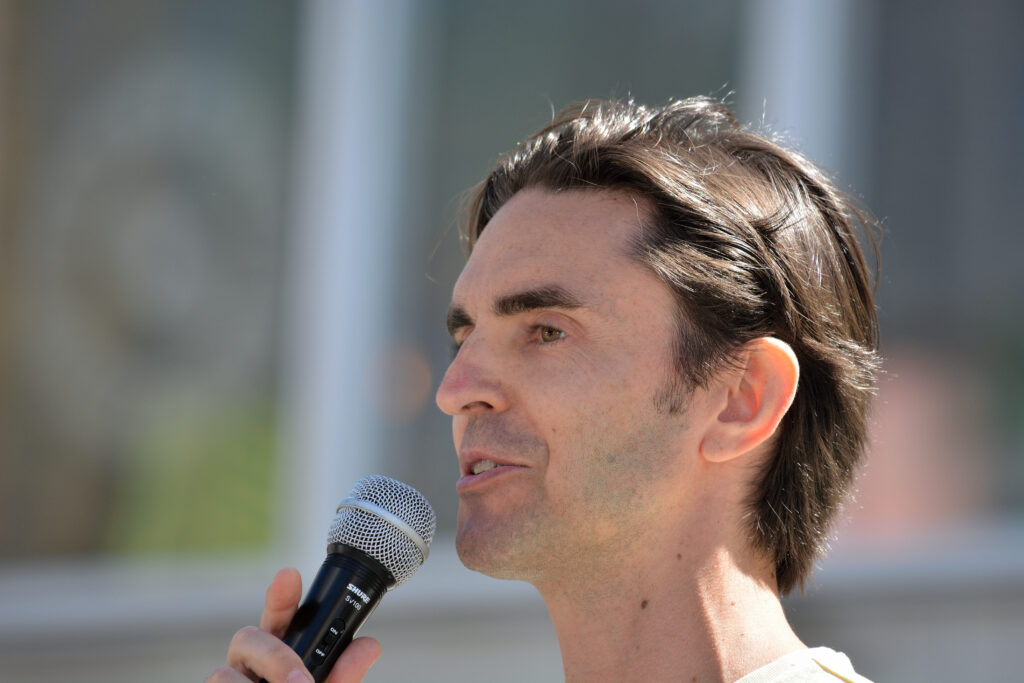
At a regular Ukraine solidarity rally in Uppsala on 6 July, activist Jakob Gottlieb reported that Tesla has never answered whether it still sources from the company—and that the silence hasn’t changed.
Ireland is now under intense pressure to halt alumina exports to Russia.
An OCCRP-led investigation published in March 2026, carried out with The Irish Times, The Guardian, iStories, De Tijd, and others, traced Irish-refined alumina through Rusal smelters to a Moscow trader supplying dozens of EU-sanctioned Russian weapons manufacturers.
The Swedish tax authority Skatteverket has separately ruled that Rusal remains under the effective control of sanctioned oligarch Oleg Deripaska—a finding that, if acted upon, would place all Rusal assets in Europe, including a Swedish aluminum smelter that relies on Irish alumina, under EU sanctions. Ireland is now under intense pressure to halt alumina exports to Russia as it holds the EU Council presidency.
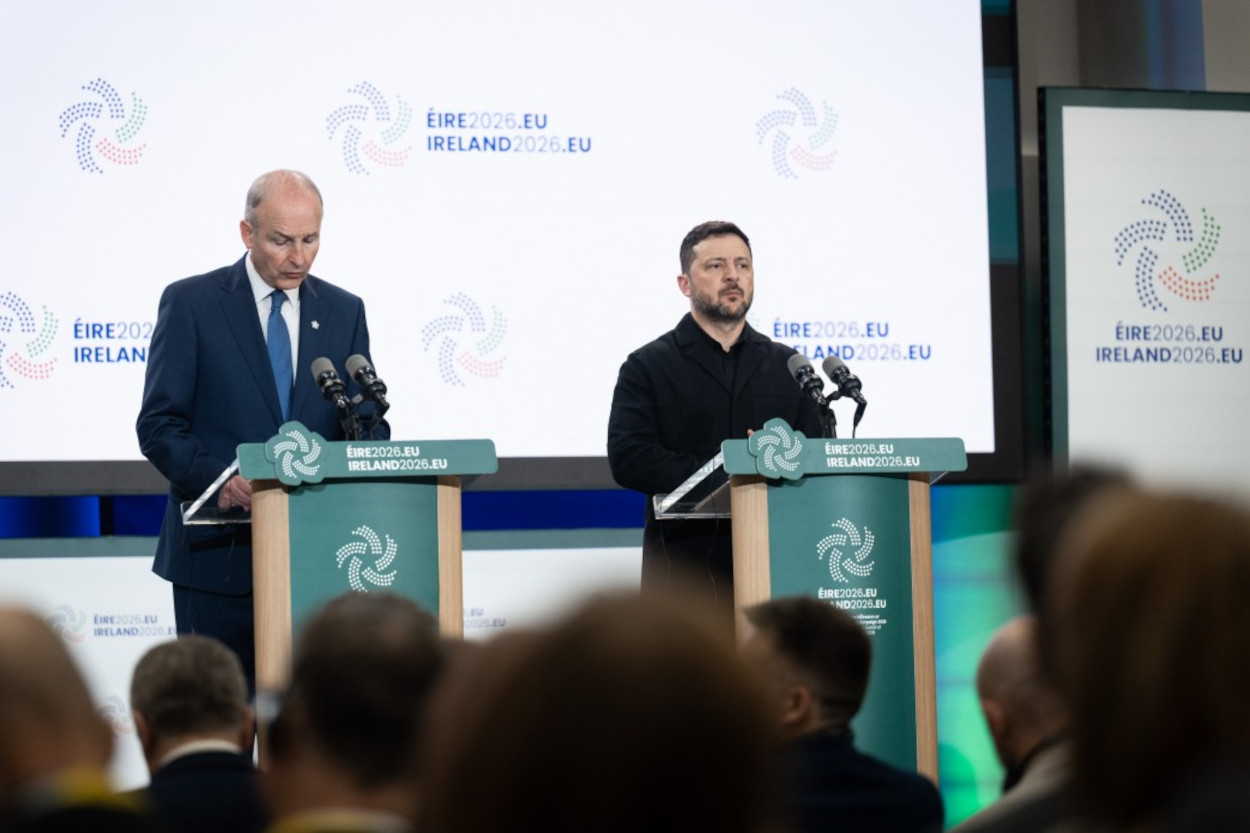
“We do not want materials produced in Ireland to support Russia’s war machine” – Ireland nears decision on alumina exports
Tesla’s connection to Rusal was first documented by CNBC in March 2022, using invoices and internal correspondence showing the company had purchased millions of euros’ worth of aluminum from Rusal since late 2020 for casting and body shells at its Berlin gigafactory. CNBC asked Tesla whether it was taking steps to sever the relationship. Tesla did not reply.
A competitor to Rusal, consulted by Gottlieb, confirmed that such supplier contracts typically span many years.
Gottlieb and a colleague have since contacted Tesla’s press departments in the United States and Europe, as well as sales representatives in Germany and Sweden, asking whether the sourcing has changed.
They received no reply. A competitor to Rusal, consulted by Gottlieb, confirmed that such supplier contracts typically span many years due to the capital investment required to switch suppliers.
“If they were supplying in 2023, chances are very high that the Tesla you want to buy made in Berlin is made with Russian aluminum,” Gottlieb said. The conclusion is his own inference, not independently verified by EP. Tesla has not responded to this article.
The scale of corporate complicity
Gottlieb also presented a comparison that reframes the overall scale of corporate tax flows to Russia. PepsiCo and Mondelez together have contributed an estimated $4 to $5 billion in taxes to the Russian state since the full-scale invasion of Ukraine in February 2022—roughly half of Sweden’s total support to Ukraine over the same period, Gottlieb said. The estimate is based on publicly reported tax data and is his own calculation.
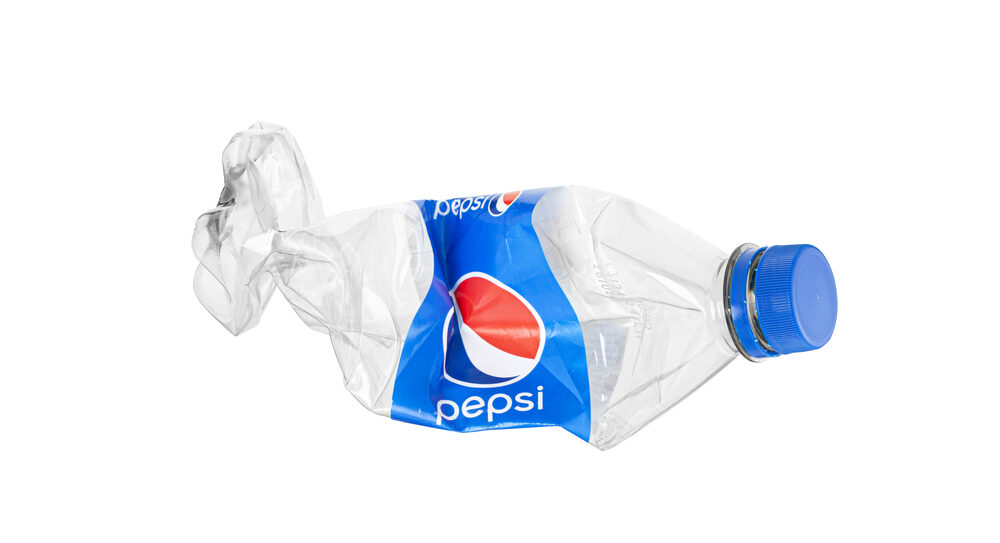
To help consumers act on this information, Gottlieb introduced two free tools: the Leave Russia database maintained by the Kyiv School of Economics, which tracks more than 4,000 multinational companies’ Russia status, and the Push To Leave app, which lets shoppers scan a product barcode to check whether its parent company still pays taxes in Russia.
Espresso House, owned by JAB Holding, whose portfolio includes brands still operating in Russia.
He illustrated the choice with two cafés near the rally square: Espresso House, owned by JAB Holding, whose portfolio includes brands still operating in Russia, is directly on Uppsala’s central square. Gateau, owned by Finnish company Fazer, is one block away. Fazer chose to exit Russia in 2022 despite employing more than 1,000 people there.
A movement with a memory
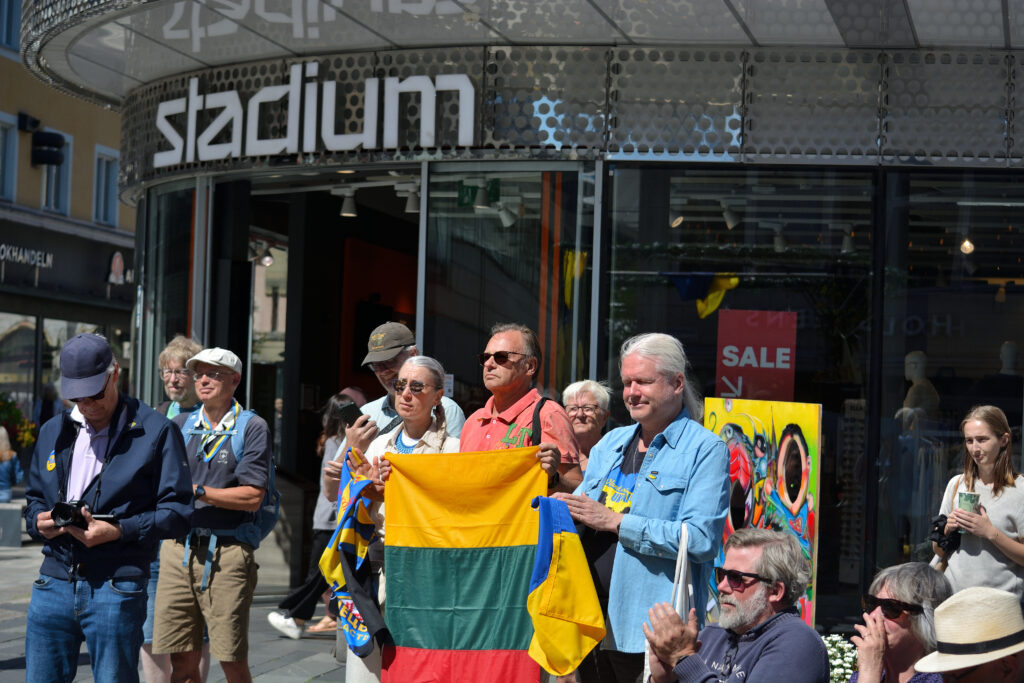
Måndagsrörelsen—“The Monday Movement”—was founded in March 1990 to support the independence of Estonia, Latvia, and Lithuania from the Soviet Union. For 79 consecutive Mondays, demonstrators gathered at Norrmalmstorg in Stockholm; the rallies spread to around 50 Swedish cities at the movement’s peak.
“When Lithuania was fighting to regain its freedom from the Soviet Union, many of the people standing here today were demonstrating every Monday at Norrmalmstorg, Stockholm.”
When the Baltic states regained independence in 1991, the gatherings ended. A granite monument, “The Source of Freedom,” was installed at Norrmalmstorg in 1994. On 28 February 2022—four days after Russia’s full-scale invasion—the Monday rallies began again.
Marius Domeika, a Lithuanian participant who attended the Uppsala rally carrying the Lithuanian flag, was direct. “When Lithuania was fighting to regain its freedom from the Soviet Union, many of the people standing here today were demonstrating every Monday at Norrmalmstorg, Stockholm,” he said. “Today we are free, and we value that freedom deeply. That’s why we stand with Ukraine.”
“It made me think more carefully about which brands I support and how my own choices can make a difference.”
Marco Selander, whose son Edvard Selander died fighting for Ukraine, attends the gatherings regularly. After hearing Gottlieb’s presentation, he said the scale surprised him. “It made me think more carefully about which brands I support and how my own choices can make a difference,” he said.
The next Uppsala rally takes place on 3 August 2026, with Magdalena Andersson, leader of the opposition and former Swedish prime minister, confirmed as a speaker.
Read also
-
Scan, switch, sanction—the app turning Western shoppers into Russia’s exit enforcers
-
Russian oil revenue jumped 52%—Moral Rating Agency lays out how to make Russia poor
-
Ukraine’s reserves fell for four months. Oil eased for one, and they grew back.
About the Author
