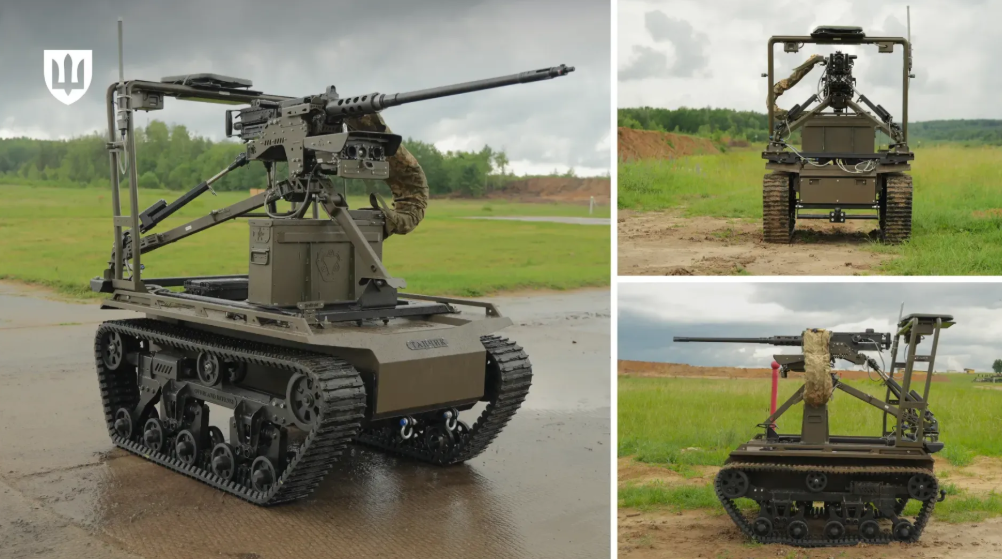
Ukraine’s Ministry of Defense has codified the new Tanchik Droid 12.7 ground robot. The ministry said the robot is designed for remote battlefield observation, reconnaissance, and destruction of enemy infantry and unarmored or lightly armored vehicles. Operators control it from a safe shelter using a secure communication channel.
The Tanchik joins Ukraine’s rapid codification of ground robots. Ukraine has codified 67 new ground robot models in the first half of 2026 alone. The Defense Forces have received 1,028 ground robotic complexes valued at $11.7 million through the DOT-Chain Defense marketplace.
Ukraine plans to contract 25,000 more ground robots by the end of H1 2026 and 50,000 units by year-end, with the strategic goal of moving all frontline logistics onto robots.
Design draws on combat experience
The developer designed the Tanchik Droid 12.7 specifically for high-intensity warfare, drawing on real combat experience with domestic and foreign ground robots.
The main task, per the ministry, is to preserve soldiers’ lives on the first line by taking over the most dangerous missions in high-fire-density areas.
Ukrainian forces captured a Russian position for the first time using only drones and ground robots in April 2026.
In the three months preceding that operation, Ukrainian ground robots completed more than 22,000 missions across systems including Ratel, Termit, Ardal, Rys, Zmii, Protector, and Volya.
Ukrainian brigades now use ground robots to move ammunition, fuel, food, drone batteries, and blood for transfusions through Russian “kill zones” reaching up to 20 kilometers deep on the most intense sectors.
Connectivity remains the main constraint
Ukraine’s Defense Ministry adviser Serhii “Flash” Beskrestnov flagged in May 2026 that ground robots operate in a much more challenging communication environment than aerial drones.
Terrain, urban infrastructure, tree lines, and cover constantly interfere with the control signal, and a robot that loses its link drops out of the mission.
The DOT-Chain Defense marketplace, built by the Defense Procurement Agency, lets combat units choose systems and quantities themselves while the agency handles contracts, payments, and logistics.
That has cut delivery from months to weeks.
Read also
-
This Ukrainian UGV, beloved by Ukrainian intel, is now winning over NATO countries and global defense giants
-
Standing beside Zelenskyy, Trump promised Ukraine Patriot license. But missile on Ukrainian soil is still months away
-
Czech government that campaigned against arming Kyiv will now buy it American weapons for Ukraine
About the Author
