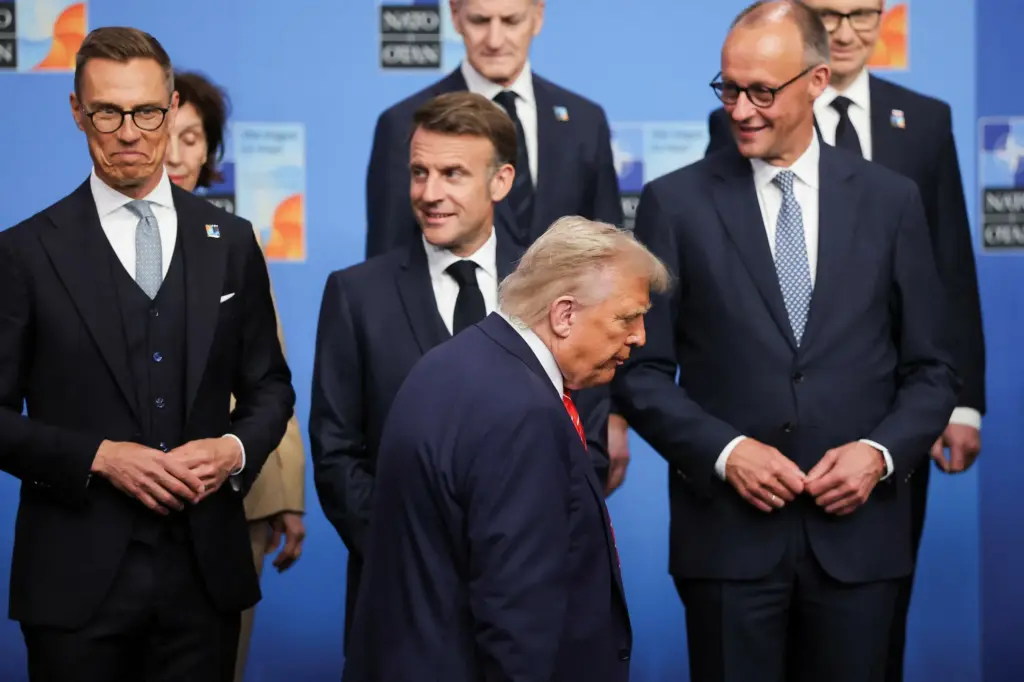
Ukraine wants the final declaration of NATO’s summit in Ankara on 7-8 July to describe it as a contributor to Euro-Atlantic security rather than only a recipient of assistance, the head of Ukraine’s mission to NATO, Alyona Getmanchuk, said at a closed briefing in Brussels on 2 July, DW reported.
Ankara will be the first summit Ukraine attends “in this new role,” Getmanchuk said, and Kyiv wants the communiqué to reflect it. The ask lands at an awkward moment. The same summit was meant to ratify a binding metric requiring each ally to spend 0.25% of GDP on military aid for Ukraine—until the UK, France, Spain, Italy, and Canada blocked it in May. Ukraine is pressing for elevated status in a document whose commitments to Ukraine its largest economies just pared back.
What Ukraine now does inside NATO
Getmanchuk said the relationship has shifted from one built mainly on Western military aid to one increasingly defined by practical integration and Ukraine’s own contribution to Alliance security. She pointed to the NATO-Ukraine Joint Analysis, Training and Education Center (JATEC) in Poland—the first joint institution the two have run—Ukrainian troops taking part in exercises based on Article 5 scenarios, growing interoperability, Ukrainian defense firms entering NATO programs and procurement, and a rising number of Ukrainian specialists inside Alliance structures.
The specifics are concrete. Through JATEC, Ukraine took part in NATO exercises under Article 5 for the first time, and for the first time acted as the opposing “red team” in others, Getmanchuk said earlier this year. She has argued the reframing more bluntly elsewhere—writing in the Telegraph in March that Ukraine, by holding back Russia, is “the only country that is actually implementing NATO’s Strategic Concept.”
The ask beneath the ask
Getmanchuk said it is politically important for Ukraine to be recognized as a security contributor, not solely as a recipient of aid—wording she wants the Ankara declaration to carry.
She also said a record number of members now back Ukraine’s membership, which she tied to the Alliance drifting toward what she called “NATO 3.0″—Europe taking the lead in guaranteeing its own security and leaning less absolutely on the United States. That framing matches the summit’s own organizing reality: the US drawdown from Europe and the burden-sharing fight are the questions Ankara was called to answer.
Beyond weapons, Getmanchuk stressed, Ukraine increasingly needs predictable, long-term financial commitments from partners—the kind that let Kyiv plan defense-industry production years ahead, not just receive finished arms.
Read also
-
Kyiv death toll climbs to 30 as rescuers dig for three still buried under a nine-story block
-
Ukrainian drones disabled 13 Russian power stations across occupied territory in 48 hours, commander says
-
“We do not want materials produced in Ireland to support Russia’s war machine” – Ireland nears decision on alumina exports
About the Author
