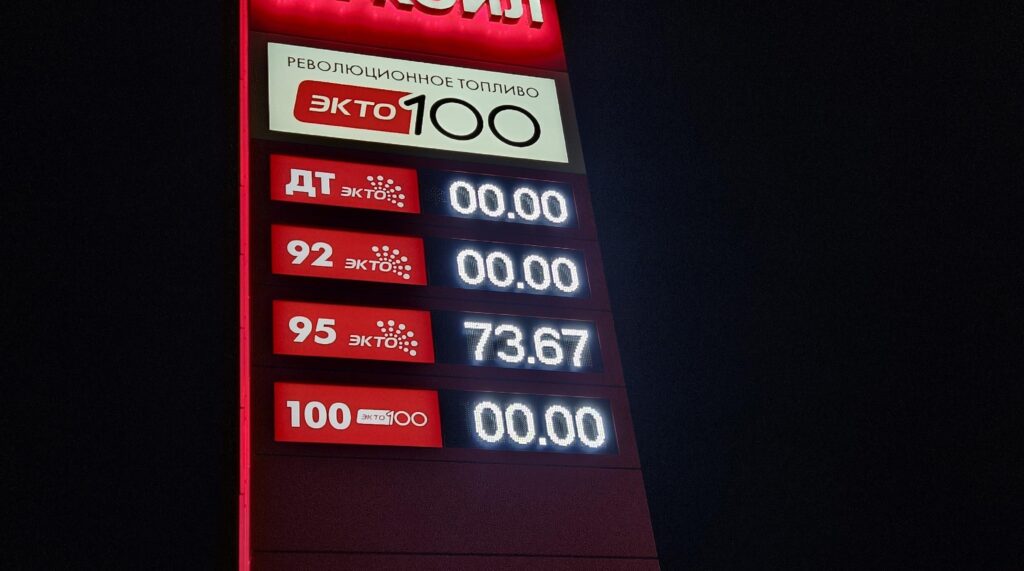
On 16 June, the Saratov regional assembly’s industry committee raised the possibility of convening a session on the fuel shortage. Stanislav Denisenko, a deputy of the Liberal Democratic Party of Russia (LDNR), argued against it.
The problem, he said, was being artificially inflated by “hostile YouTube channels.” He had personally checked the filling stations. There was no shortage. His proposed solution was to block VPN access so that Russians could not reach the channels spreading panic.
Olga Alimova, a KPRF deputy in Russia’s State Duma, told a Saratov party meeting that residents were tired of having their real problems silenced.
Denis Bulanov, a Communist Party of the Russian Federation (KPRF) deputy, replied that the Kommersant article documenting the national fuel crisis was available without a VPN.
Two weeks later, Olga Alimova, a KPRF deputy in Russia’s State Duma, told a Saratov party meeting that residents were tired of having their real problems “either silenced or replaced with formal reports.”
On 30 June, by which point more than 55 of Russia’s regions were reporting fuel supply problems or government-imposed restrictions, according to Radio Free Europe/Radio Liberty’s Siberia.Realities—the Samara regional assembly voted on whether to put the crisis on its agenda. Deputy Maxim Fedorov had proposed the discussion. The vote was 14 in favor, 19 against, and one abstaining.
Gennady Kotelnikov explained that the government was already handling it, that committees had discussed it, and that “the situation has stabilized, but problems remain.”
Assembly speaker Gennady Kotelnikov explained that the government was already handling it, that committees had discussed it, and that “the situation has stabilized, but problems remain.” The region had been under a rationing order for six days: 40 liters of gasoline per car, 100 liters of diesel. Sales into canisters were suspended.
Manual mode
For most of the past four years, Vladimir Putin largely managed to shield the population from the immediate economic consequences of the war, Politico wrote on 2 July.
About 20% of Russians have income tied to military service or war production, Euromaidan Press has reported—wages in that sector have risen while the rest of the population absorbed inflation and cuts to civilian services. The fuel crisis is different—it is immediate and personal for civilians with no connection to the front.
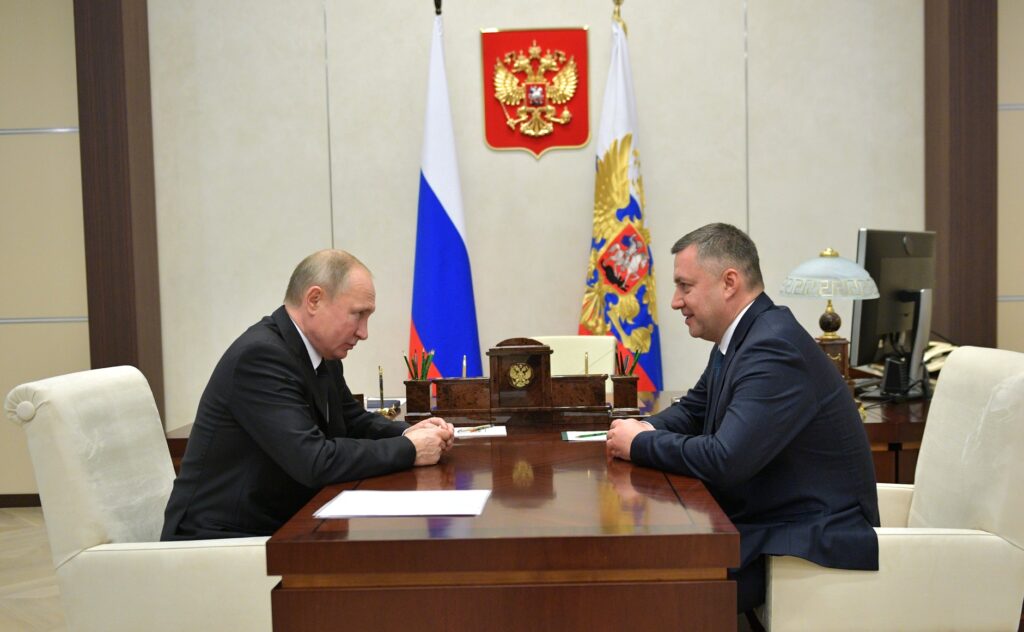
In Irkutsk Oblast, governor Igor Kobzev published a post on Telegram explaining the problems but not the cause, merely stating that there are disruptions across the country and that his region had shifted to “manual mode,” determining fuel volumes for each recipient individually. Siberia.Realities reported that the original post contained a reference to the Ukrainian drone strikes, which was later removed.
What followed in Kobzev’s public communications was logistical: 6,000 tons of fuel from refineries across the country were moving to the region under existing contracts, to be distributed across more than 20 districts with few or no Rosneft filling stations.
Kobzev returned without saying how the crisis would end.
He declared a state of heightened readiness on 28 June, called on residents and organizations to reduce driving, and flew to Moscow to brief Deputy Prime Minister Alexander Novak. He returned without saying how the crisis would end. “Honestly,” he wrote on 1 July, “despite all the measures taken, the situation with fuel in the region continues to be very difficult.”
Siberia.Realities reported that in late June, an ambulance leaving Baykalsk—a town of 13,000 without a maternity ward, 150 kilometers from Irkutsk—needed a pickup truck carrying a fuel drum to follow it, because the stations on the route had run dry. The baby was born on the highway.
The worst single-day queue documented by his team: nearly 100 cars backed up simultaneously.
In Pskov Oblast, Mikhail Vedernikov sent his own staff to verify whether the stations actually had fuel, then publicly reported what they found. The worst single-day queue documented by his team: nearly 100 cars backed up simultaneously in the Kuninsky district in the far south-east of the oblast.
Vedernikov negotiated a dispensation for holders of boat registration documents to fill jerry cans and announced that, from the following day, residents could purchase five liters in certified containers for household use—a regional emergency staff decision binding on all stations.
Irkutsk Oblast sits on oil fields and hosts the Angarsk Petrochemical Company (ANKHK), one of the country’s largest refining facilities, which should supply the region’s needs.
Irkutsk activist and Yabloko party member Pavel Kharitonenko posted on Telegram that Kobzev’s emergency flight to Moscow pointed at the structural problem: Irkutsk Oblast sits on oil fields and hosts the Angarsk Petrochemical Company (ANKHK), one of the country’s largest refining facilities, which should supply the region’s needs and send the surplus elsewhere. Instead, Rosneft—the refining monopolist in the oblast—supplies fuel only through its own station network, squeezing independent operators out of the market.
“We must understand and accept that the main cause of what is happening is the war.”
“Why can’t the governor sort this out?” Kharitonenko asked. “It’s very simple: he was installed here by Moscow in uncontested elections and works for Moscow bosses, not for the residents of the region.”
Russian economist Sergei Aleksashenko, quoted by Siberia.Realities, stated: “We must understand and accept that the main cause of what is happening is the war. As long as the war continues, Ukrainian drone strikes on Russian refineries will only intensify.”
30 liters, if you’re lucky
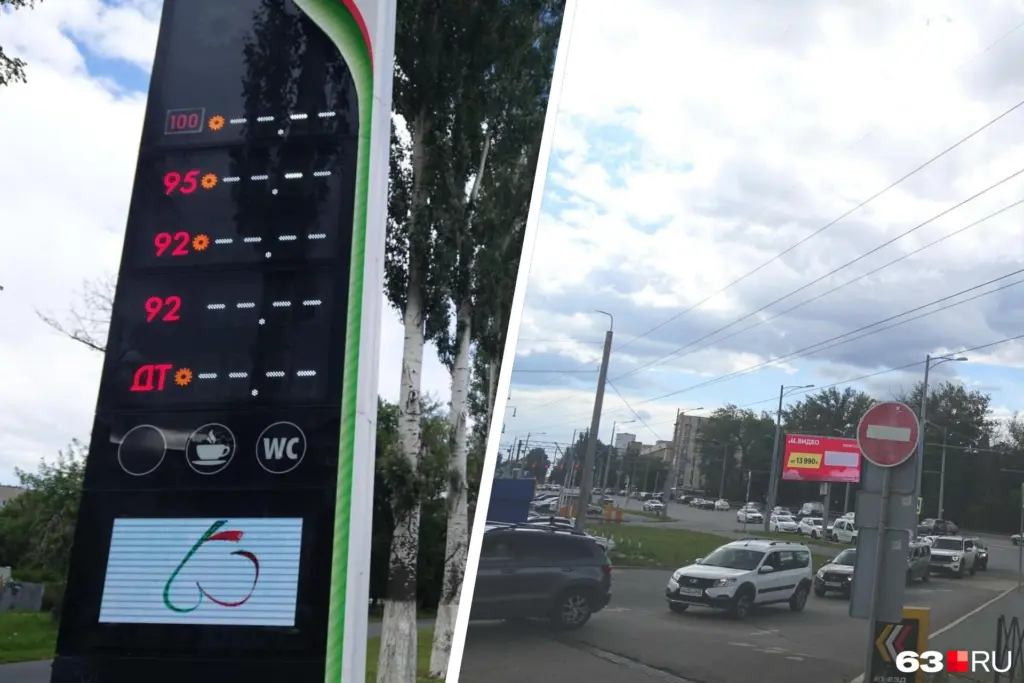
A reporter from the Samarska Gazeta joined the queues over the weekend of 28–29 June. At a Rosneft filling station, the limit was 30 liters per fill. The AI-95 grade was unavailable; the reporter took AI-92 instead. Two nearby Tatneft stations had their nozzles marked as broken.
“Another thing we noticed,” the paper wrote, “fewer cars on the roads.”
When the pump moved to the next driver in line, it ran dry. “Another thing we noticed,” the paper wrote, “fewer cars on the roads. This may be connected to the vacation season, or to drivers deciding to wait out the hard times.”
In the week of 23–29 June, Samarastat recorded a 10% rise in AI-92 prices, to 73.68 rubles ($0.95) per liter, and an 8.74% rise in AI-95, to 78.50 rubles ($1.02). At smaller independent chains—Olvi, Roza Mira, Irbis—the T-Bank price-tracking app showed AI-92 at 112 rubles ($1.45) and AI-95 at 116 rubles ($1.50) per liter.
The regional Ministry of Industry advised residents who considered the prices unreasonable to contact the Federal Antimonopoly Service.
Governor Vyacheslav Fedorischev said on 29 June that rationing could be lifted early if the situation stabilized. The regional Ministry of Industry advised residents who considered the prices unreasonable to contact the Federal Antimonopoly Service. The Antimonopoly Service said companies set prices based on market conditions.
Into the kindergartens
In occupied Sevastopol, governor Mikhail Razvozhaev told a 30 June government session that the city had reduced the number of working kindergartens from 74 to 24. The cause was not budget pressure. It was fuel and electricity constraints. The remaining 50 could not be kept running.
Food prices on the peninsula have roughly doubled at some stores, with goods being repriced at the checkout counter every few hours as supply chains fail to keep pace, according to Ukrainian media monitoring Crimean social media.
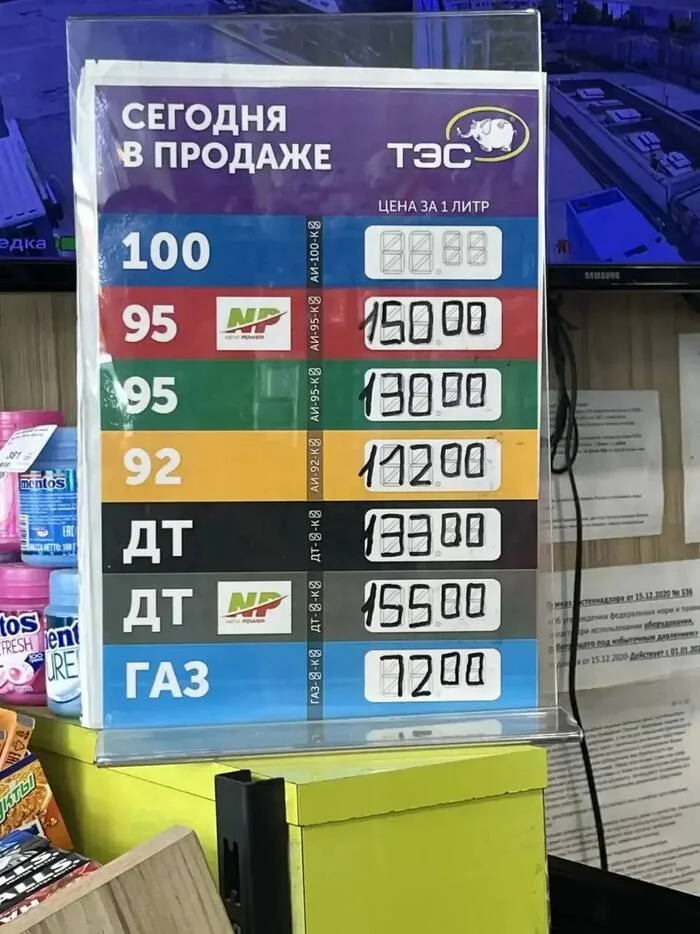
The fuel station chain TES dispenses 20-liter allocations by QR code—obtaining one, is “an internet lottery with minimal winners.”
Ukraine’s Center for National Resistance documented shortages of sugar, flour, cereals, salt, and pasta in stores across Crimea as early as 8 June, with some retail chains introducing purchase limits per person.
Gasoline at official filling stations—when available—has passed 200 rubles ($2.59) per liter in Sevastopol. The fuel station chain TES dispenses 20-liter allocations by QR code—obtaining one, the outlet noted, is “an internet lottery with minimal winners.” Resellers charge 400 rubles ($5.17) or more.
The market the state left behind
In Irkutsk, a black market for fuel opened at 150 rubles ($1.94) per liter at the start of the shortage and reached 350 rubles ($4.53) by the end of it, according to Ukraine’s Foreign Intelligence Service.
Sberbank’s deputy chairman warned businesses of fraudulent commercial offers impersonating major oil company suppliers.
In Sevastopol, two residents lost nearly 90,000 rubles ($1,164) in one day to scammers offering fuel without a queue: a 33-year-old woman transferred 5,500 rubles ($71) to a supplier who vanished after receiving payment; a 32-year-old man lost 83,000 rubles ($1,074) in the same scheme.
In the Penza region, Sberbank’s deputy chairman warned businesses of fraudulent commercial offers impersonating major oil company suppliers; the bank said it had already prevented 18 million rubles ($233,000) in corporate losses.
Into the loan book
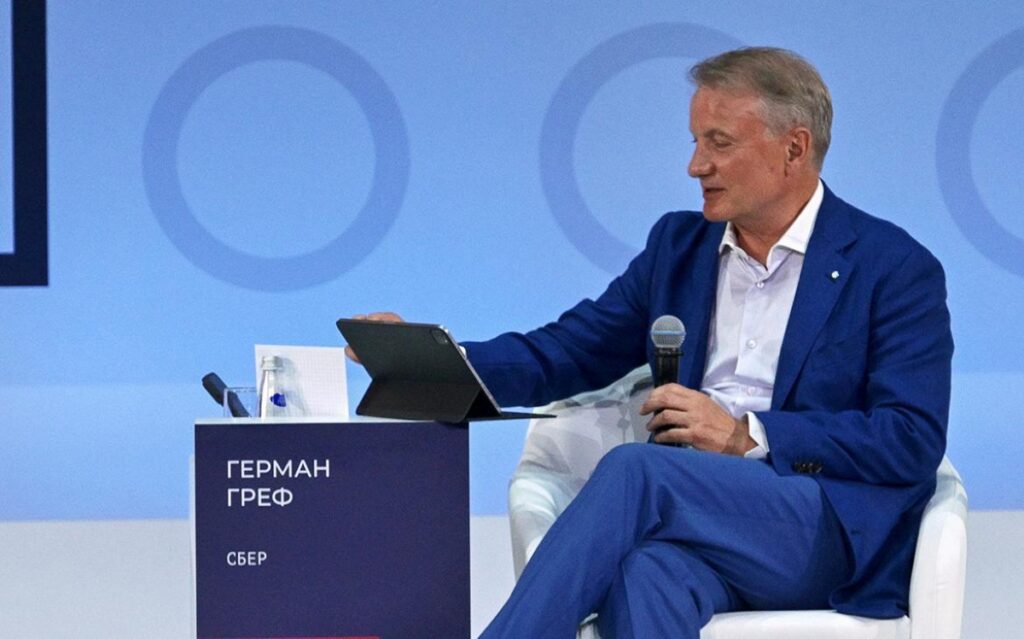
The fuel shortage has reached Russia’s corporate loan book. Sberbank CEO German Gref told Russia’s Financial Congress that his credit committee had become “a committee on problem assets” as more companies sought debt restructuring.
The Bank of Russia’s April data put problem corporate loans—including risky restructurings—at 11.2 trillion rubles ($145 billion), or 11.6% of the entire corporate portfolio, with the oil and gas sector among the hardest hit.
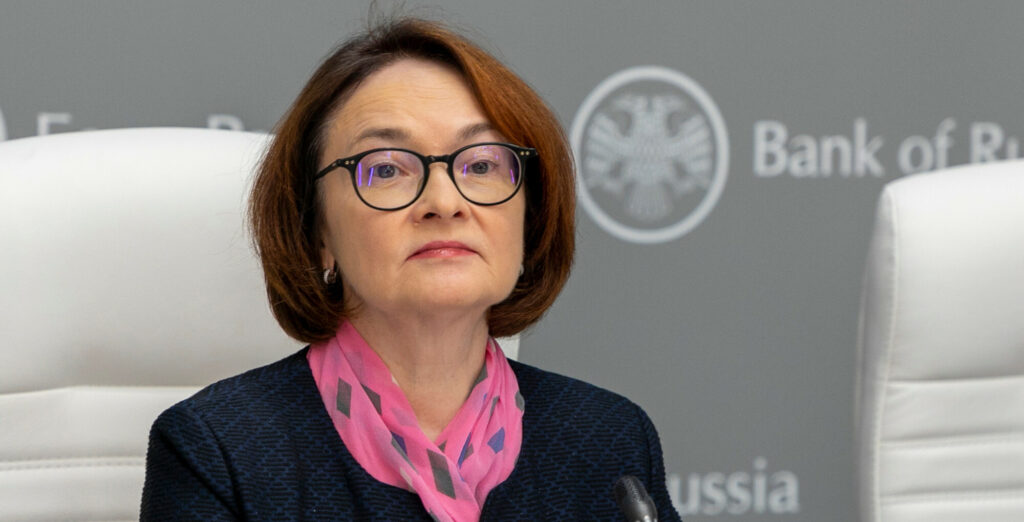
Gref linked the mounting pressure directly to the war. Central Bank of Russia (CBR) governor Elvira Nabiullina described the fuel situation as “of course, concerning” but “temporary,” saying the CBR would watch for secondary inflationary effects—rising fuel prices causing people to expect broader price increases across the economy—before deciding on further rate moves.
Repairing the damaged equipment is complicated by Western technology sanctions.
At its 19 June meeting, the CBR cut its key rate by only 25 basis points to 14.25%, half the reduction markets had expected, citing pro-inflationary risks from the fuel market.

Ukraine carried out at least 30 strikes on Russian oil assets in May alone—16 of them on fuel-producing facilities, hitting eight of Russia’s 10 biggest refineries—the highest monthly toll since the full-scale invasion began. The Ukrainian Ministry of Defense said 11 refineries were struck in June.
Before the June strikes, Energy Intelligence estimated that around one-third of Russia’s refining capacity had been knocked out. Repairing the damaged equipment is complicated by Western technology sanctions: Ukraine has targeted specialized imported components, and sourcing replacements around the restrictions has made repairs slow and expensive, Euronews reported.
Prime Minister Mikhail Mishustin signed a decree permitting the sale of lower-grade Euro-3 gasoline—with sulfur content up to 150 mg per kilogram—through the end of 2026.
On 2 July, Prime Minister Mikhail Mishustin signed a decree permitting the sale of lower-grade Euro-3 gasoline—with sulfur content up to 150 mg per kilogram, against the previous Euro-5 standard—through the end of 2026. The government described it as a “preventive measure to prevent destabilization of the domestic motor fuel market.”
Ukraine’s Foreign Intelligence Service has reported widespread accounts of engine damage in newer turbocharged cars, particularly Chinese models, from lower-grade fuel already in circulation.
About the Author
