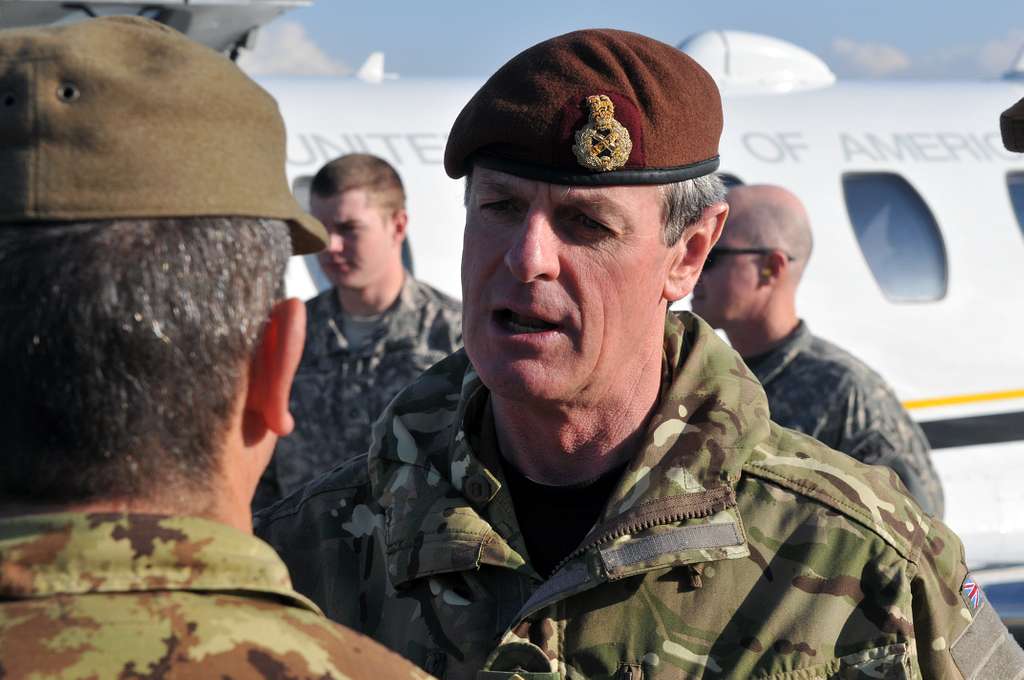
The man who was once NATO’s second-in-command, and who reported directly to an American general, now says the United States can no longer be relied on to defend Europe—and that the alliance has to start rebuilding itself without it.
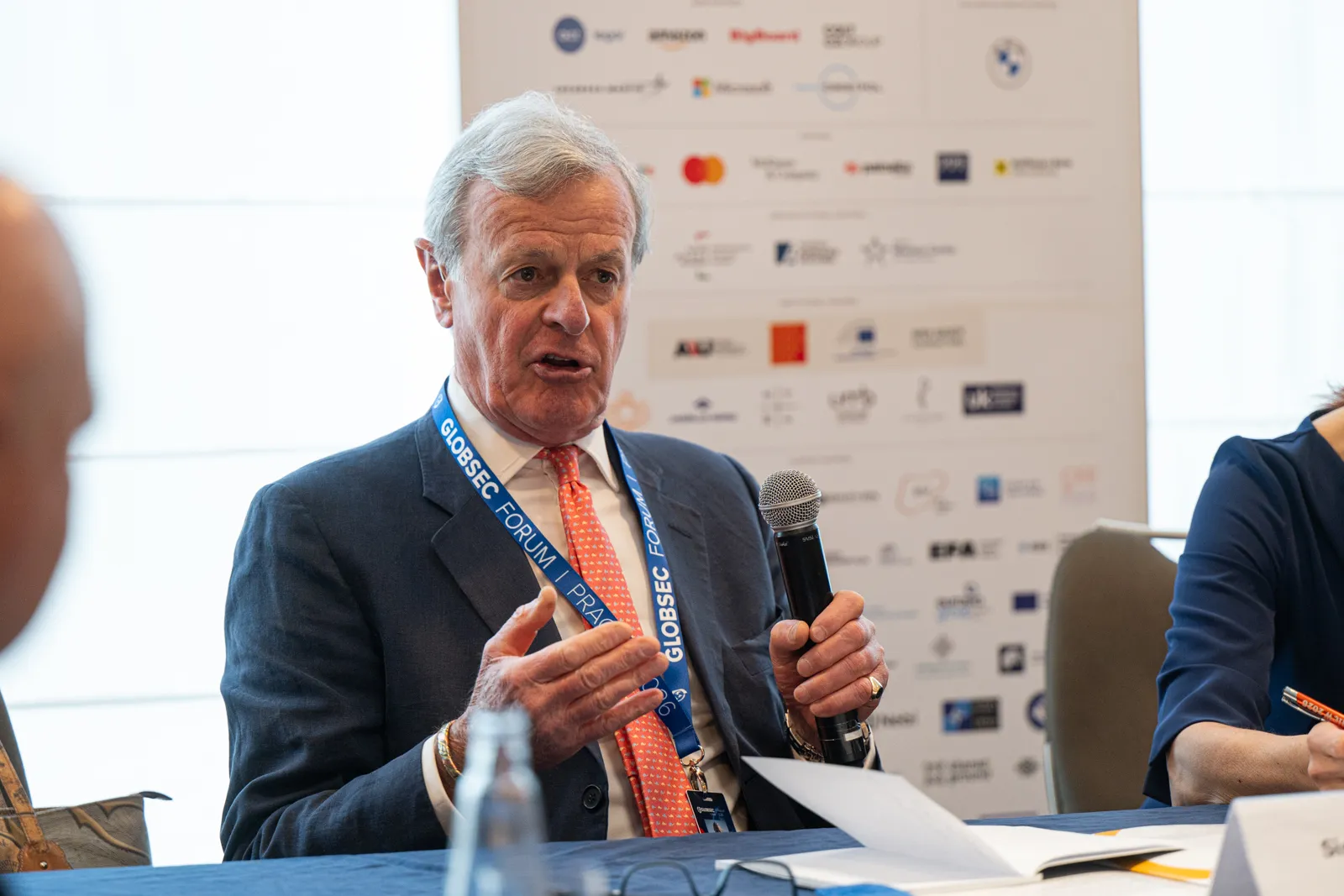
Sir Richard Shirreff, former Deputy Supreme Allied Commander Europe, told Euromaidan Press at the GLOBSEC conference in Prague that Washington under Donald Trump has become “an inconsistent predator and a bully,” and that the seventy-seven-year certainty underpinning the alliance is gone.
“NATO has remained strong for 77 years because of that total certainty that whatever President was in the White House, America would, no ifs, no buts, come to the aid of a NATO member attacked,” Shirreff said. “Under Trump, that’s gone.”
His evidence: the US threat to seize Greenland, the territory of Denmark, a NATO ally. “Who is going to trust America after America threatened, under Trump, to attack Greenland?” he asked. “The Danes were preparing to fight America, they were putting out blood supplies, and Denmark’s allies were preparing to support…”
NATO’s former second-in-command says what the alliance won’t: only Russia’s defeat ends the war
“Europeanize NATO”
Coming from a former DSACEUR—the deputy commander is by tradition European, reporting to an American Supreme Allied Commander—the conclusion is unusually blunt. “It is a hell of a thing for a former DSACEUR to say,” Shirreff acknowledged. “I have the greatest respect, admiration for our American colleagues and comrades… But we have to see the world as it is, not as we’d like to see it.”
What follows from it, in his account, is not a rupture but a managed transition. “NATO should be saying, ‘We are going to start the planning process to Europeanize NATO.’ It doesn’t mean breaking links with America. No. It means maintaining strong links with America, but it needs a drawdown plan to cover the gap as Europe has to build up strategic capabilities and enablers hitherto provided by America.”
Those “enablers”—satellite intelligence, air defense, strategic lift, command systems—are the capabilities Europe has leaned on Washington to supply for decades, and cannot replace overnight. “That’s going to take time,” Shirreff said. The alliance he describes is “a Europeanized alliance—and Canadian—and absolutely Ukraine as an integral part of it too.”
He is not alone in the diagnosis. Shirreff pointed to Canadian Prime Minister Mark Carney, who told Davos in January that the old order had ruptured. “Carney was right at Davos when he said this is a rupture,” Shirreff said. “But where I would differ with him: it’s a rupture, but it needs a transition.”
Talking, not planning
The gap Shirreff identifies is the one between acknowledgment and action. European capitals, he says, now recognize the problem—but recognition has not become a plan.
Asked whether anyone in European capitals is actually preparing for a US drawdown or merely talking about it, his answer was flat: “They’re certainly not planning about it, but they should be. However, they are absolutely acknowledging that.”
It is the same critique he levels at the alliance’s spending pledges—the promise to reach defined defense-spending targets by 2035. “It’s easy to talk ‘blah blah blah’ funding,” he said. “But let’s see the spreadsheet, let’s see the money, the plan.” NATO, in his reading, is on a “deterrent footing” it did not have before 2022—troops in the Baltics, Poland, and Romania, a reinforcement plan for the east—but the harder work of building a Europe that can stand without American enablers has barely begun.
Shirreff’s wider argument—why he believes only Russia’s defeat ends the war, and what a NATO strategy to achieve it would look like—runs in our full interview.
About the Author
