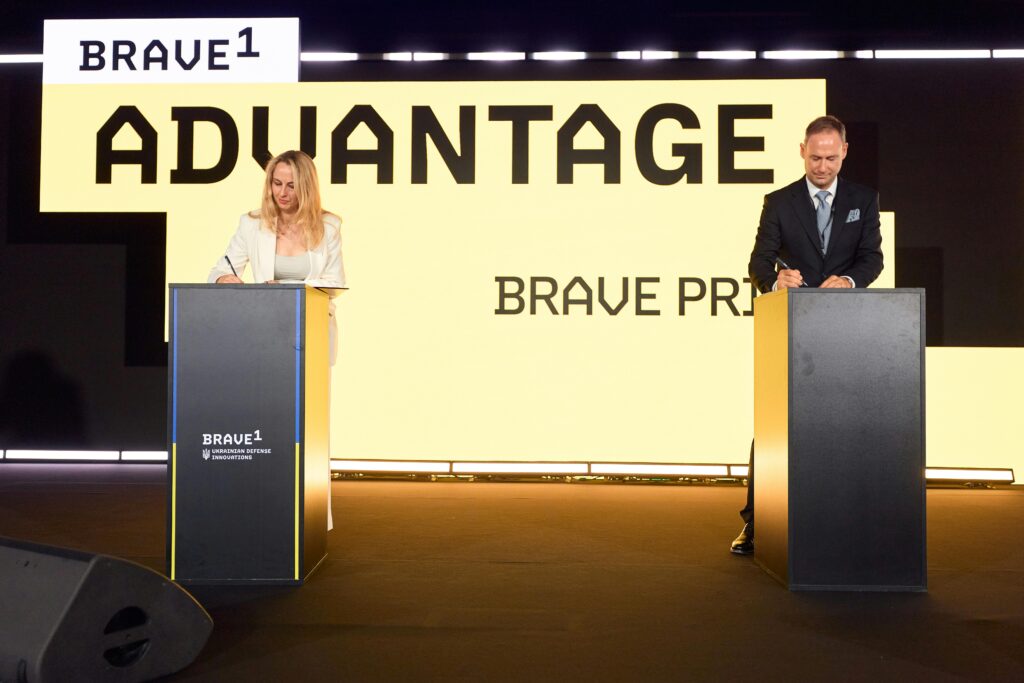
Airbus Defence and Space and Ukraine’s Brave1 defence technology cluster signed a memorandum of understanding on 1 July, marking Brave1’s first industrial strategic partnership with a Western company since the cluster launched in April 2023, and putting a major European aerospace corporation directly inside Ukraine’s live-fire R&D loop.
The partnership, announced by Airbus, spans the full development arc — from initial research through to modernising equipment already in active use. Airbus’s technologies will integrate into Brave1’s “Test in Ukraine” framework, which gives foreign manufacturers structured access to frontline performance data and feeds it directly back into design cycles. The cluster has processed over $235 million in procurement orders and, as of June 2026, counted more than 3,600 registered developments, 300 NATO-codified items, $50 million in defence innovation grants disbursed, and more than $65 million in additional investment attracted to Ukraine’s defence sector.
“In Ukraine, research and development cycles are measured not in months or years, but in days,” said Iryna Zabolotna, Brave1’s chief operating officer.
She added that partnering with a global leader like Airbus allows us to combine their decades of deep aerospace expertise with our agile, combat-tested R&D approach.
Jo Mueller, a member of the executive committee of Airbus Defence and Space, framed the deal: “Collaborating with Ukraine on defence means effectively working on Europe’s collective security.”
What “Test in Ukraine” means in practice
The framework Airbus is joining gives foreign manufacturers a structured pathway: send equipment to Ukraine, conduct remote training, and receive performance feedback from armed forces units with direct frontline experience. Companies can test on-site with real-time adjustments, or commission Brave1 specialists to run the tests and deliver a results report. Real-time dashboards give manufacturers verified data on impacts, strike distances, and failure modes, giving companies performance intelligence they cannot generate in peacetime testing.
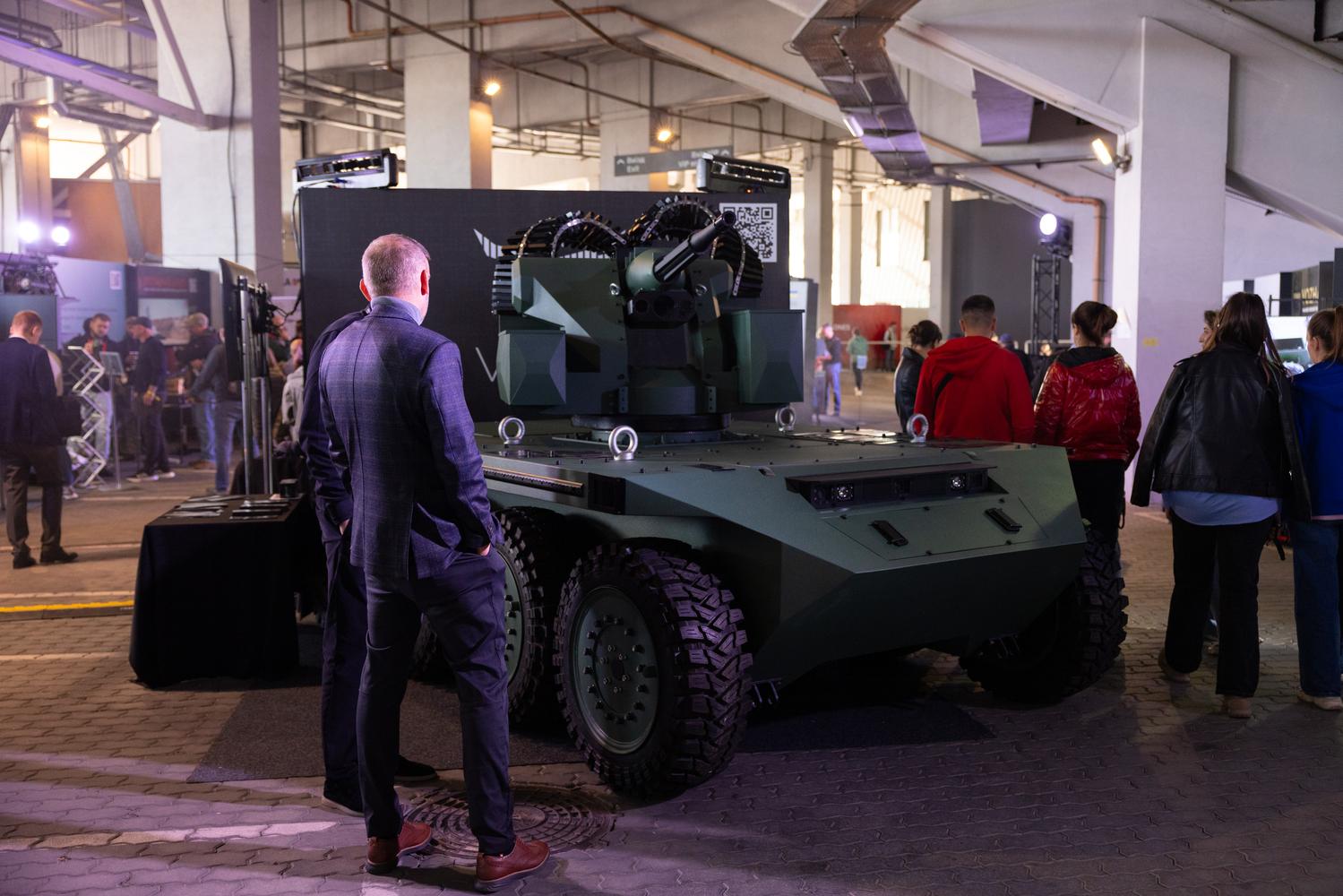
Brave1’s priority areas span air defence, drone interceptors, AI-guided targeting, countermeasures against Russian glide bombs, naval unmanned systems, ground-based electronic warfare, and AI-assisted fire control for howitzers. The Airbus agreement establishes joint task forces spanning the full development arc from research to active-equipment modernisation.
Airbus will also serve as a key partner at the Defence Tech Valley summit in Lviv. Euromaidan Press previously described the 2025 edition as the world’s biggest defence tech summit, drawing over 5,000 participants from more than 50 countries.
Brave1’s expansion toward global industrial alliances
Brave1’s chief operating officer Iryna Zabolotna said the Airbus deal falls under a new “Brave Prime” initiative — Brave1’s expansion from launching defence startups toward forging global industrial alliances. The combat data loop at the cluster’s core — where operational performance feeds directly back into development cycles — is what Brave1 says compresses R&D from months into days, giving partners access to battlefield insight unavailable in peacetime testing regimes.
On 27 June, the Ukrainian government introduced a unified framework called Brave International for working with international partners on defence innovation, establishing joint grant funds on a matched-contribution basis with parity oversight boards and expert panels. The Airbus MoU arrived four days later.
About the Author
