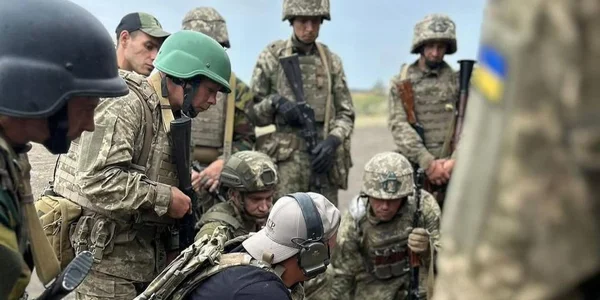
Twenty-five recruits of Ukraine’s 425th Separate Assault Regiment Skelia died during training, before reaching the front, according to a two-month Babel investigation published 23 June 2026. Ukraine’s State Bureau of Investigations (SBI) opened a criminal case the next day. The regiment’s commander was suspended. A General Staff commission arrived at the unit.
What Babel found
Babel correspondent Kateryna Lykhohliad spent nearly two months investigating non-combat deaths at Skelia’s training centers. Between late autumn 2025 and spring 2026, she documented 25 deaths. Most of the dead had been in the regiment less than a month. The official cause of death in the majority of cases was pneumonia. The investigation rests on testimony from more than 30 witnesses, primarily relatives of the dead and about 10 Skelia soldiers who had either fled the unit or were still serving.
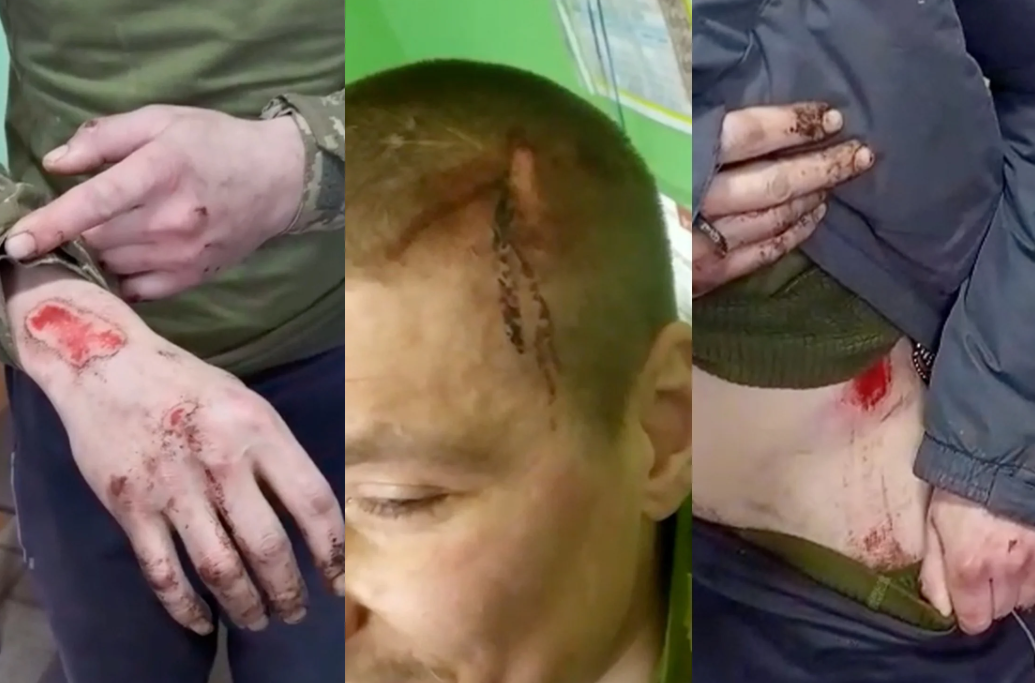
The most explicit testimony came from Oleksandr Semenov, who arrived at a hospital in Kropyvnytskyi on 23 January 2026 with head wounds, abraded palms and lower back, bruised and broken fingers, and handcuff marks on his wrists. A hospital doctor filmed him. On camera, Semenov said he had witnessed at least nine suicides in four days at a Skelia training center, naming one victim. He described being tied to a quad bike and dragged across the ground. He died shortly after in the hospital. Official cause: pneumonia.
Who died and how
Of the 25 deaths Babel documented, the investigation distinguishes two categories: deaths from illness, predominantly pneumonia and cardiac events, and deaths bearing markers of violence.
In at least three named cases, post-mortem examinations found multiple fractured ribs, blunt chest trauma, and minor bodily injuries inconsistent with natural causes.
- Volodymyr Tsukanov, 32, mobilized 15 January 2026, died 11 February. A forensic examination found multiple fractured ribs and blunt chest trauma. Investigators suspect Skelia junior sergeant Anatolii Kucher, who initially acknowledged striking Tsukanov three times in the chest with his left foot, saying he had miscalculated his force before changing his account entirely.
- Vitalii Karat, 38, mobilized 25 February, died 14 March. The regiment claimed he fell from a pine tree while attempting to go absent without leave. A forensic finding of multiple fractured ribs and blunt chest trauma similar to Tsukanov’s contradicts that account. His sister told Babel he had said before his death that he had been beaten continuously.
- Dmytro Koval, 50, mobilized 6 March, died 21 March in a Skelia vehicle. His wife did not immediately recognize him in the morgue; she identified him by a birthmark. The body showed bruising on the face, neck, arms, legs, groin, and back. Three witnesses described watching him being beaten daily for refusing to eat. A preliminary forensic conclusion listed unspecified cardiomyopathy and described the bruising as minor bodily injuries. His family obtained a court order for a second examination.
Witnesses across multiple training center locations described overlapping conditions: recruits escorted to bathrooms in armed groups, isolation in cells alongside people in drug withdrawal, recruits restrained with tape, mined perimeters around training grounds with warning signs, and guards firing live rounds into the ground or air to enforce compliance. When Babel asked the regiment’s civil-military cooperation chief Andrii Suray about the mined perimeters, he said:
“If somewhere it says ‘mines,’ you don’t need to check it with your foot.”
What the regiment says
Skelia disputes the systemic framing. Its spokesperson, former journalist Oleksii Bratushchak, told Babel:
“We are genuinely outraged when we are trying to build a functional unit, and then, because of certain incidents, we have this terrible reputation.”
Suray acknowledged that violence does occur within the regiment but insisted it is neither systemic nor part of official policy. He said that some servicemembers resort to unauthorized methods to enforce compliance from recruits, adding that such problems exist across the military and that the regiment works to combat them. According to Suray, no one had ever been ordered to beat recruits.
The regiment confirmed 25 non-combat deaths but disputed several specific accounts, including Semenov’s testimony about nine suicides in four days, which it said reflected events gathered across the entire regiment over six months.
The institutional response
The SBI opened proceedings under Part 5 of Article 426-1 of Ukraine’s Criminal Code — abuse of power by a military official causing grave consequences — the day after Babel’s 23 June publication. The regiment’s commander, Hero of Ukraine Yurii Harkavyi, was suspended pending investigation. The Verkhovna Rada’s human rights commissioner launched a review. A General Staff commission is operating inside the unit.
The Office of the Military Ombudsman had been monitoring Skelia for over a year before Babel published. Its first deputy head, Ruslan Tsyhankov, told Babel the office had established that medical care in at least the Saltan case was inadequate. He noted that Skelia leads all units in complaint volume, 5.1% of the ombudsman office’s total complaints, and that even this figure undercounts real conditions, since recruits at Skelia have significantly less phone access than those at other units. The commander-in-chief stripped eight military units of the right to conduct their own basic training in June 2026. Skelia was not among them.
The threat and the media coalition’s response
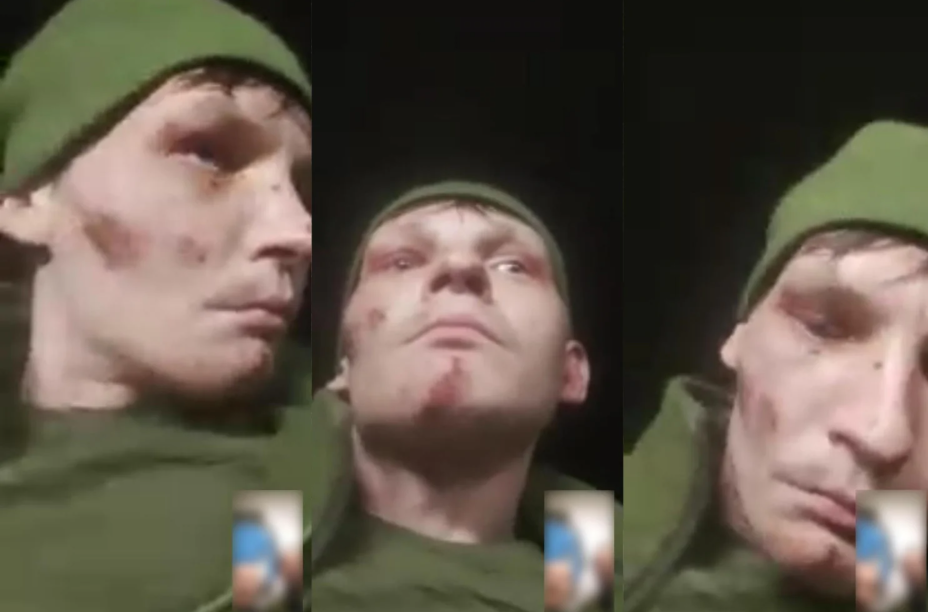
On 25 June, two days after Babel’s publication, Mykola Kharkhan, a serving Skelia soldier, shared a video in which he called Lykhohliad a “media killer,” accused the outlet of acting in the aggressor country’s interest, and said those responsible would have to regurgitate the money. Babel said it considers the remarks threats and intends to file a complaint with the police.
A statement signed by Mediarukh and a coalition of Ukrainian media organizations, published on 1 July by Detector Media, demands that the Prosecutor General, Interior Minister, and SBI open proceedings under Article 345-1 (threats or violence against a journalist) and Article 171 (obstruction of journalistic activity). It asks the National Police to provide security for Lykhohliad and Babel editor-in-chief Kateryna Kobernyk. The coalition also called for the threats to be investigated jointly with a March 2025 incident in which a Sky News camera crew’s vehicle was fired on, which the statement suggests may indicate a pattern of pressure on journalists covering Skelia.
“A journalistic piece can be analyzed, fact-checked, publicly debated, and refuted with facts. But it cannot become grounds for threats, harassment, or the discrediting of its authors,” the statement reads.
Ombudsman head Olha Reshetylova, who has been intervening in Skelia cases for over a year, said that she believes the command leadership was at least aware of what was happening. She added that if the leadership was not aware, it would indicate poor command responsibility and ineffective leadershi
Read also
About the Author
