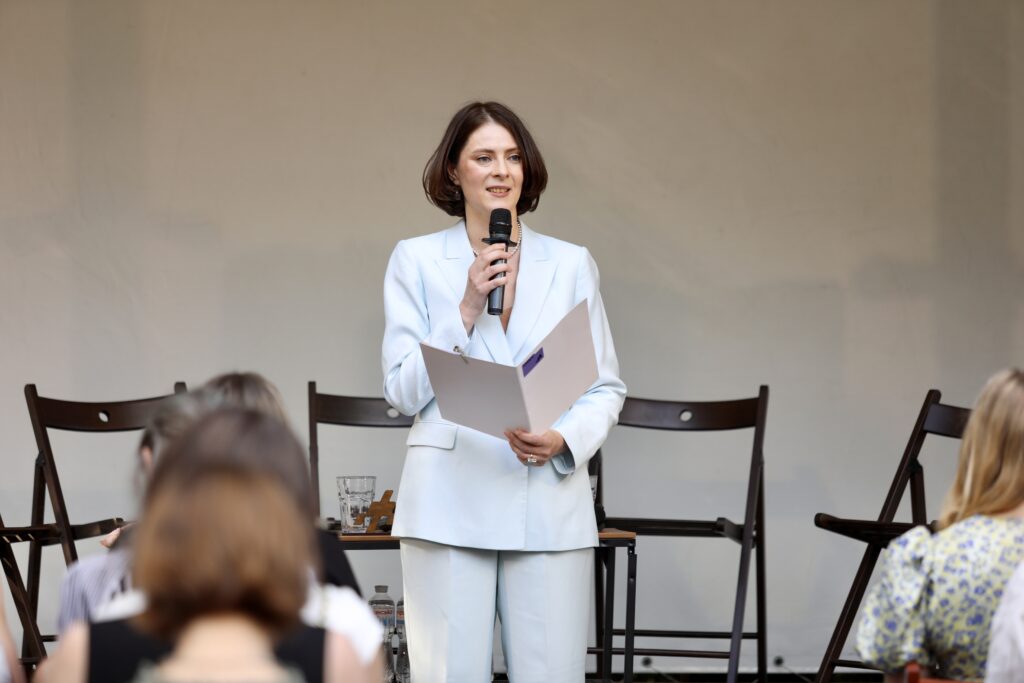
INDEX: Institute for Documentation and Exchange launched in Lviv in 2024 with an unusual premise—that the fastest way to change how the world understands Ukraine is to bring the world to Ukraine and keep it here for a while.
The institute documents civilian experiences of Russia’s war against Ukraine and runs fellowships and residencies that pair Ukrainian researchers and cultural practitioners with peers from abroad.
She came home at the start of February 2022, just before the full-scale invasion.
Its head, Sasha Dovzhyk, was born in Zaporizhzhia shortly before the Soviet collapse, into the generation that grew up with Ukrainian independence. She studied at Kyiv-Mohyla Academy, then took her master’s and PhD at Birkbeck in London, and worked at the Ukrainian Institute London.
She came home at the start of February 2022, just before the full-scale invasion, worked as a fixer for foreign correspondents, and returned for good in 2023. She now lives in Lviv.
Euromaidan Press spoke with her about what INDEX is trying to fix.
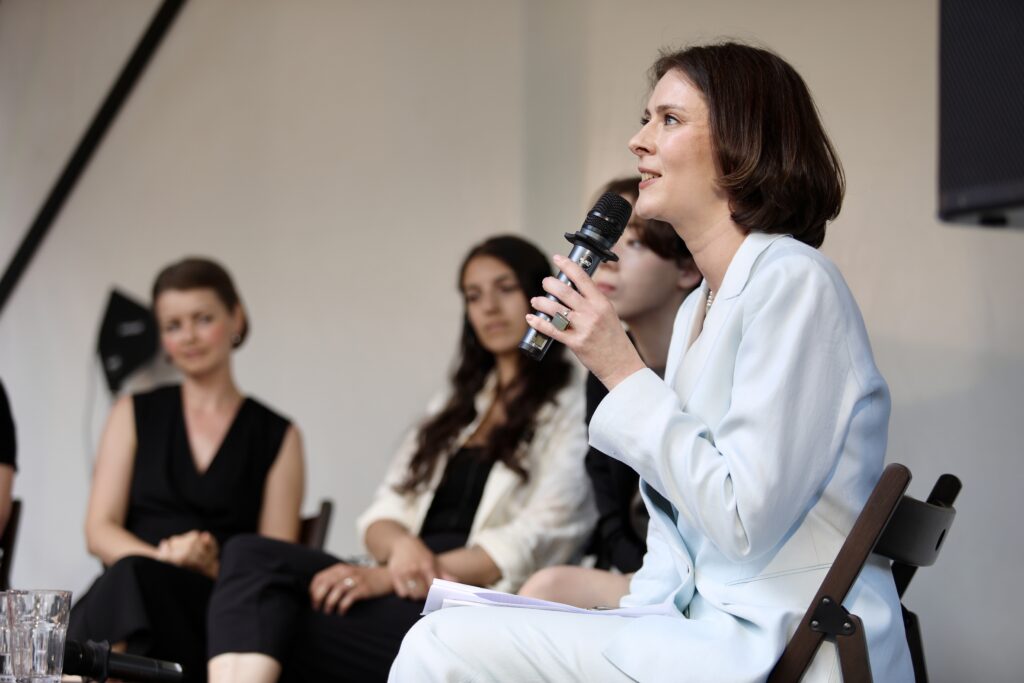
Why the world has to come to Ukraine
Peeter Helme: You worked as a fixer before you founded INDEX. What did that teach you?
Sasha Dovzhyk: When journalists come here for three days, it doesn’t matter how smart or erudite they are—they just don’t get it. People need to spend more time here. They need to develop networks to be embedded in Ukrainian society and social efforts in order to understand what Ukrainian resistance actually is. Through that slow work of introducing them to our context, we can hope they write better stories and make art that feels truthful to us.
With international and Ukrainian fellows working side by side, we try to produce a more nuanced understanding of what Ukraine is today.
And it matters in the other direction too. For Ukrainians still in the country, it’s important to see that the outside world is coming to meet them on their own terms. Our veterans, our Ukrainian fellows—they see international scholars and practitioners coming to learn from them, and through them.
In that laboratory format, with international and Ukrainian fellows working side by side, we try to produce a more nuanced understanding of what Ukraine is today and what Russian aggression means for us.
Peeter: The name INDEX suggests an indicator, a way of locating something. What does the institute help people locate?
Dovzhyk: We’re locating Ukraine on the map for people coming from outside, and pointing toward a more just future for our country—toward epistemic justice. We want the stories of Ukraine and the history of this war told through the insider’s perspective and knowledge.
They know big Russia. They don’t know what Ukraine is.
We’ve lived through Russian colonialism and imperialism for centuries, so we know what it means when your story is told for you by the oppressor. And we know from the first eight years of this war what it means when your story doesn’t resonate abroad because nobody knows who you are. They know big Russia. They don’t know what Ukraine is. We’re trying to give the Ukrainian perspective the resonance it deserves.
Peeter: Aren’t you worried this becomes extraction—a foreigner comes, gathers material, then goes off to explain Ukraine on their own terms?
Dovzhyk: The model INDEX tries to create is precisely the alternative to that extractivist model. People come for three months; many have later moved to Ukraine. When they leave, they do so with more than professional contacts—they build intellectual friendships that keep them in check over the longer term.
A Russia-centered view still dominates the Slavic departments at the universities.
And they find a community that will fight alongside them for epistemic justice, because the work of one person who sees the problem and comes here to correct it can be very isolating. A Russia-centered view still dominates the Slavic departments at the universities.
On their side, they provide platforms for the Ukrainians they start working with. We often witness the beginning of long-term projects—five-year projects that employ Ukrainians in international research.
One of our fellows, Johana Kotišová, began work at INDEX in 2024 on the value of emotions in international reporting, then won a roughly €1.5 million ($1.7 million) European Research Council grant at the University of Amsterdam and hired five people, two of them Ukrainians.
Why Russia is still the default interpreter
Peeter: But why is Russia still treated as the default interpreter of Eastern Europe—even after it’s common knowledge that it lies, manipulates evidence, and weaponizes history?
Dovzhyk: Russia worked for a very long time to reach the position it holds today. It’s not the past ten or thirty years—it’s centuries of colonialism, and in the 20th century, that was financed by oil and gas money. They take resources from the countries they dominate, and they understand the value of cultural influence.
Ask anyone what Moscow is, what Russian ballet is, and they’ll have a pretty good idea.
They’ve invested enormous money and human resources into producing an image of Russia that is now in the heads of every person in the West. Ask anyone what Moscow is, what Russian ballet is, and they’ll have a pretty good idea.
That cultural image is fully formed. We don’t have the same resources to draw on. We were overshadowed by our imperial neighbor for centuries, so we have to be creative.
If people know who you are—if they’ve read a book, if they have a friend here—it’s harder for them to disregard your existence.
In Ukraine’s case, I think we were only recognized as the autonomous political nation we are after the full-scale invasion, because of Ukrainian resistance. Now we have a chance to build a new familiarity with Ukraine and Ukrainian culture, and to make it a household word. If people know who you are—if they’ve read a book, if they have a friend here—it’s harder for them to disregard your existence, or to grow bored with the war.
Peeter: At what point does familiarity with Russia stop helping someone understand Ukraine and start distorting it? We have to know the enemy—but can we be too familiar with it?
Dovzhyk: I don’t think we should stop studying Russia. It depends on where you study it from and which voices you listen to. If you keep going to Moscow, your picture of Russia will be the same as it’s been for 300 years.
You look for resistance in Ukraine, in Georgia, not in Moscow.
If you want to know what Russia is, talk to the nations it colonized. You look for resistance in Ukraine, in Georgia, not in Moscow. That’s how you start to understand what Russia actually is.
Peeter: Ukraine became visible through war, destruction, and suffering. Is there a risk that foreign audiences consume Ukraine as an experience of trauma, and how do Ukrainians tell the truth about the war without being reduced to objects of compassion?
Dovzhyk: You’re right, and it’s a problem. What shakes our fellows most is that two things are true at the same time. Ukraine is surviving a genocide—there are war crimes here daily, huge destruction, huge loss, a country in grief.
Our resistance today is the result of a long tradition of resistance.
And at the same time, we have the best coffee, book festivals with tens of thousands of attendees, and a flourishing cultural life. Showing that complexity matters. So does the longevity of our history: we did not spring into existence in 2022. Our resistance today is the result of a long tradition of resistance. The fact that the world didn’t notice it doesn’t mean it wasn’t there.
We’re educated by the dissidents, who were educated by the Executed Renaissance, who were educated by a generation before them, and so on. This country has been fighting for its existence and its recognition for a very long time.
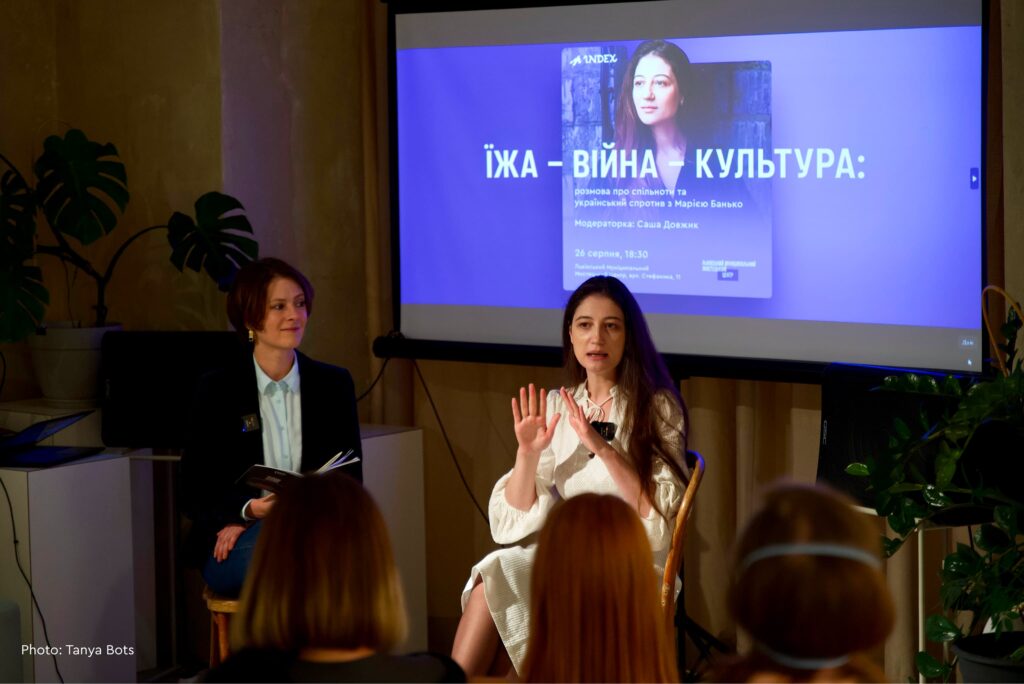
Documenting people without turning them into exhibits
Peeter: Documentation preserves evidence and testimony, but it can also turn people into objects of observation—pieces in a museum. How does INDEX keep Ukrainians as active interpreters of their own experience?
Dovzhyk: It’s one of the rules of oral history: you don’t ask a person only about the most traumatic thing. You ask how they grew up, what shaped them, and you let them tell the story on their own terms.
We try to do the same. We don’t concentrate only on the person standing in front of their destroyed house—we want the story of the community, and we bring the community into the telling.
There’s no Geneva Convention that covers civilians captured by the aggressor—they’re not prisoners of war; they simply shouldn’t be there.
The latest example is civilians in captivity. There’s no Geneva Convention that covers civilians captured by the aggressor—they’re not prisoners of war; they simply shouldn’t be there. When you focus on the scale of it, people lose attention, because the scale is hard to comprehend. So you tell personal stories.
We work with people whose loved ones were held in Russia for years. We don’t talk to them for two hours—we talk to them for days. We ask them to write their own narrative, we publish it, and we bring our community in to help tell it.
We want people to keep their dignity and their voice.
One of our veteran fellows is turning it into a visual narrative—a comic—that tells these stories most strikingly—without making them sensational. We want people to keep their dignity and their voice. That’s our basic approach to every problem.
Peeter: But foreign journalists often come here for sensation.
Dovzhyk: The ones chasing sensation aren’t our audience. We’re interested in people who can spend the time and attention to hold the complexity—who come back, and come back again.
It’s a process of embedding a person into the networks that can help their research.
Charlotte Higgins is the example I use: she’s part of our community now, and we see her several times a year. It’s a process of embedding a person into the networks that can help their research.
That way, you don’t produce a flash in the news—you produce a book that will tell the story of Ukrainian resistance for decades. I truly believe it will be in libraries and on curricula for years to come.
Peeter: What should foreign audiences start asking about Ukraine that they rarely do?
Dovzhyk: Our memory culture. Our relationship with our dead is very specific: there’s a strong emphasis on continuing the work of the people this aggression has taken. There’s grief and loss, but also a sense of responsibility to carry on their work.
Your dead push you into the future, because you carry the responsibility to live for those who can’t.
The Victoria Amelina Fellowship is one small example; there are dozens of similar initiatives. I created a project called “People of Culture Taken Away By The War”—portraits of cultural figures who were killed, each with a paragraph on how their initiatives are being kept alive by the people close to them.
Your dead push you into the future, because you carry the responsibility to live for those who can’t. And Ukrainians should look outward too—to the strategies other communities have developed against similar threats, and talk to each other beyond the echo chamber of Ukraine.

Peeter: How do you do that in practice?
Dovzhyk: Bring them here. Create the connections on the ground. For many Ukrainians—men who can’t leave the country—building bridges abroad isn’t possible. So organizations like INDEX have to bring our allies into the country and build those grassroots connections here. For the world to know you, you have to invite the world into your home and make it welcome.
But those longer works will shape the memory of this war, and it matters that they’re told by people with direct experience of it.
And then there is the Ukrainian bookshelf. We should all be filling it—with the books, films, and cultural work that require time and take years. It’s natural to concentrate on short-term tasks because there are so many.
But those longer works will shape the memory of this war, and it matters that they’re told by people with direct experience of it. This is the work nobody can do for us.
Read also
-
“There are no small literatures”: an American scholar on Ukraine’s battle for culture and truth
-
Russia hits Taiwan too—and three democracies are comparing notes on public media
-
A Ukrainian project wants you to 3D-print a waterer for thirsty city birds
About the Author
