- Ukrainian forces are striking deeper inside Russia, and inflicting more lasting damage
- The key is heavier munitions packing bigger warheads
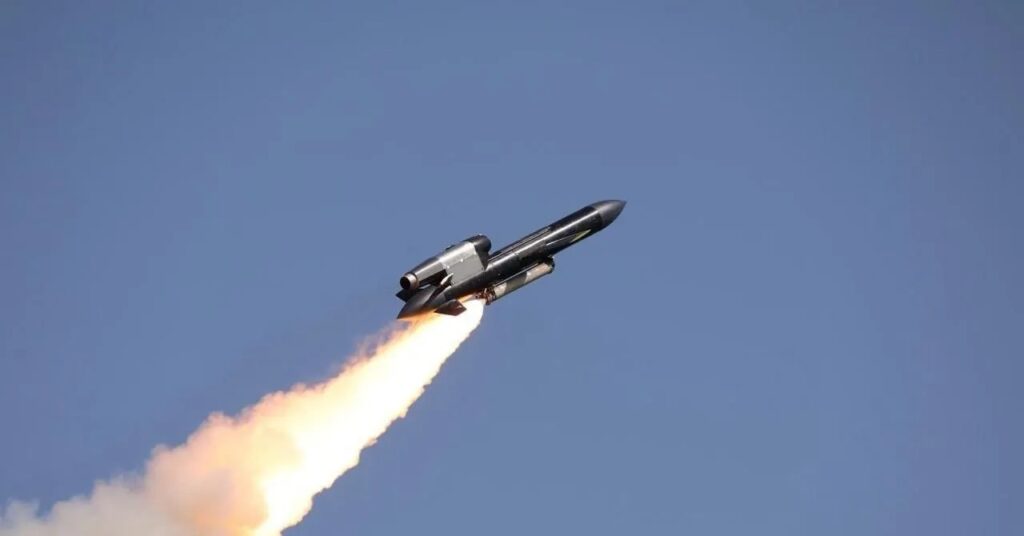
- Most notably, the Fire Point FP-5 cruise missile, which is finally finding its targets
Ukrainian forces are striking deeper and harder inside Russia and Russian-occupied Ukraine, shifting the momentum of the wider war in their favor. One key? Bigger warheads on better drones and missiles.
Two things changed at once. The warheads grew heavy enough to leave damage that lasts, instead of dents a Russian factory could patch in a week. And Ukraine’s drones have peeled back the air defenses that used to stop the shooters from arriving. Heavier warheads decide what a strike does once it lands; the thinning air defenses decide whether it gets there at all.
On Saturday, footage circulated depicting two Ukrainian Fire Point FP-5 Flamingo cruise missiles striking the Titan-Barrikady missile plant in Volgograd, in southern Russia 500 km from the Ukraine front line.
Both of the six-ton cruise missiles slammed into the sprawling factory, which produces artillery and mobile launchers for ballistic missiles.
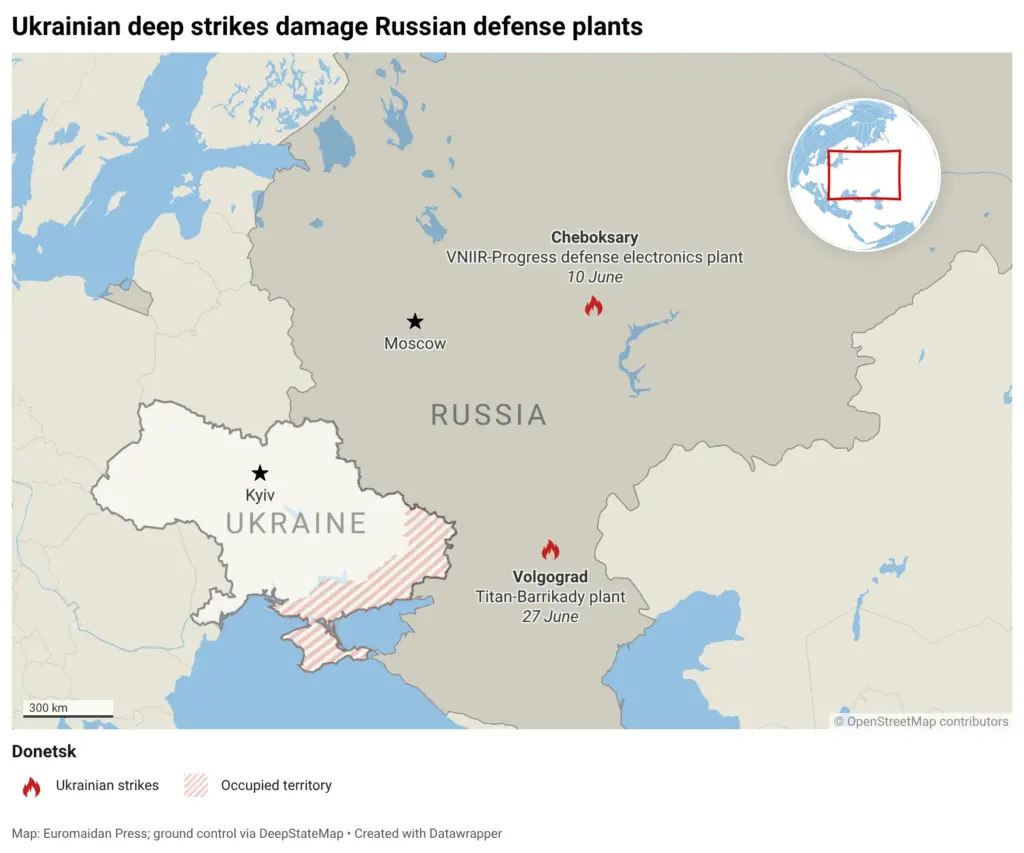
The strike on Titan-Barrikady is just the latest in a chain of Ukrainian deep strikes targeting refineries and defense plants on Russian soil. Perhaps most dramatically, on 10 June five Flamingos targeted the VNIIR-Progress defense electronics plant in Cheboksary, in western Russia 900 km from the front line.
Two of the missiles struck the plant, punching right through anti-drone protections and inflicting major blast and fire damage.
Ukrainian drones and missiles have been hitting targets inside Russia since early in the 52-month wider war, but the current strikes are different—and the back-to-back Flamingo hits are indicative. The recent strikes are more damaging than ever.
The Flamingo delivers an 1,150-kg warhead as far as 3,000 km. Other Ukrainian munitions travel nearly that far, but none explode with the same force.
There’s been a “quiet but meaningful shift in Ukraine’s long-range campaign,” explained Michael Bohnert, a researcher at California think tank RAND. “Warhead sizes on strike drones have increased significantly.” On cruise missiles, too.
Higher impact
“To even any casual observer,” Bohnert added, “Ukrainian strikes have been having a higher and higher impact over time.”
It is due to many factors, including better planning and the destruction of Russia’s missile defenses. A major driver comes from larger warheads. Earlier drone strikes used warheads in the few tens of kilograms of explosives.
While enough to damage a small pipe or other metal object, these lacked the punch to hit through the thicker steel and concrete that are part of factories and other infrastructure. Basically, they could damage a specific target if they hit it but needed a direct strike. Missing by a few feet or hitting on the other side of a wall would cause minimal damage. Repairs could be made quickly.
As Ukrainian drones ranged deeper inside Russia in late 2024 and early 2025, Ukrainian analysis team Frontelligence Insight observed a problem. Drones were hitting refineries and other targets, but causing little lasting damage.
“One contributing factor, as our team has assumed, is the relatively small warhead size of certain Ukrainian drones such as the [An-196] Liutyi,” Frontelligence Insight concluded.
The lightweight warheads, weighing just tens of kilograms, were the consequence of a deliberate choice by Ukrainian developers to pack as much fuel as possible into a drone’s airframe in order to maximize its range. “Given the long distances these drones must travel, increasing their warhead size would require adjustments to weight, fuel capacity and overall design,” Frontelligence Insight noted.
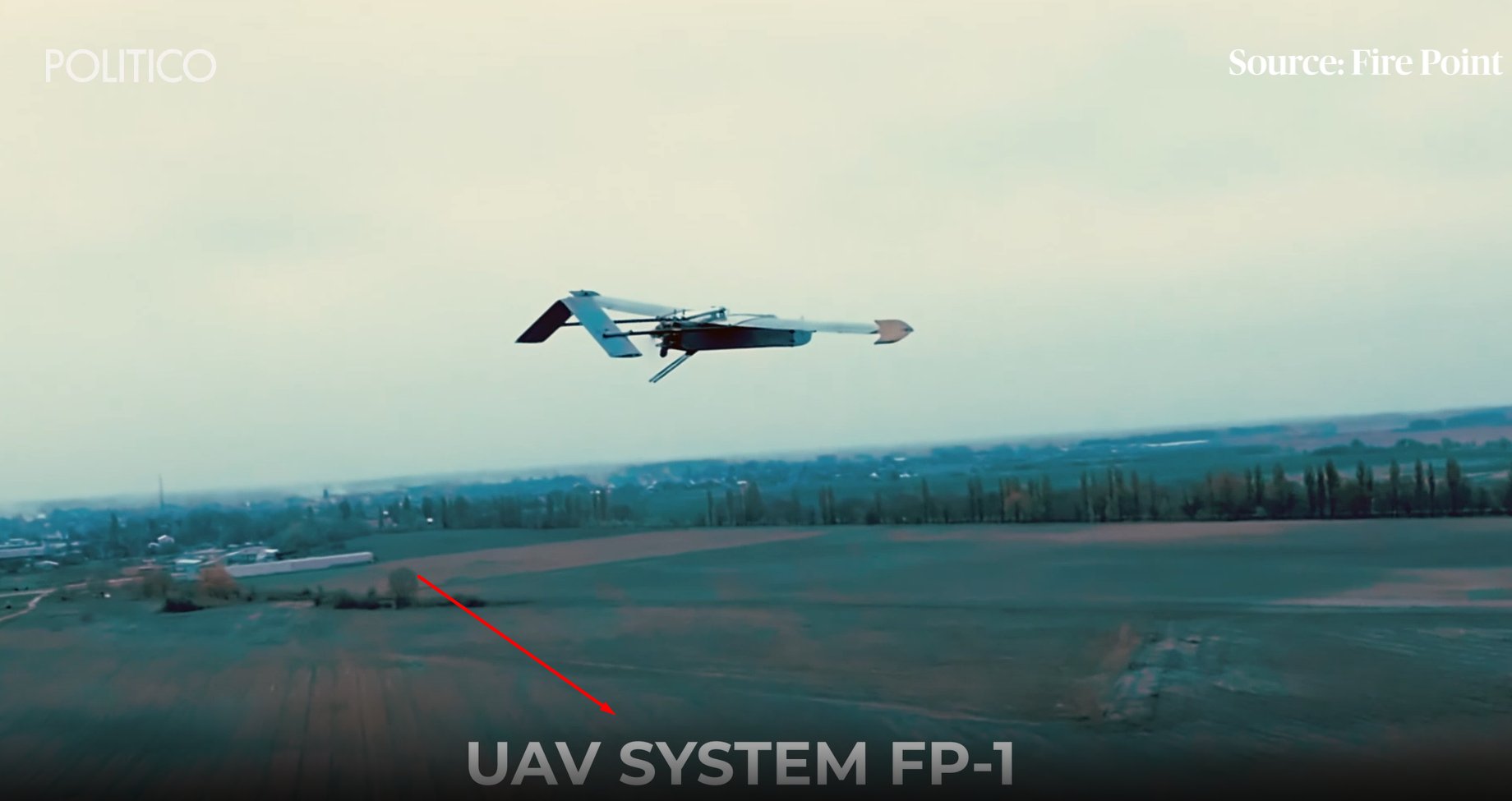
The introduction of the Fire Point FP-2 drone last year was an inflection point. The initial version of the $50,000 FP-2 packed a 105-kg warhead. Fire Point later tweaked the FP-2 to squeeze in a 158-kg warhead. FP-2s now routinely blast hardened Russian targets such as buildings and warships.
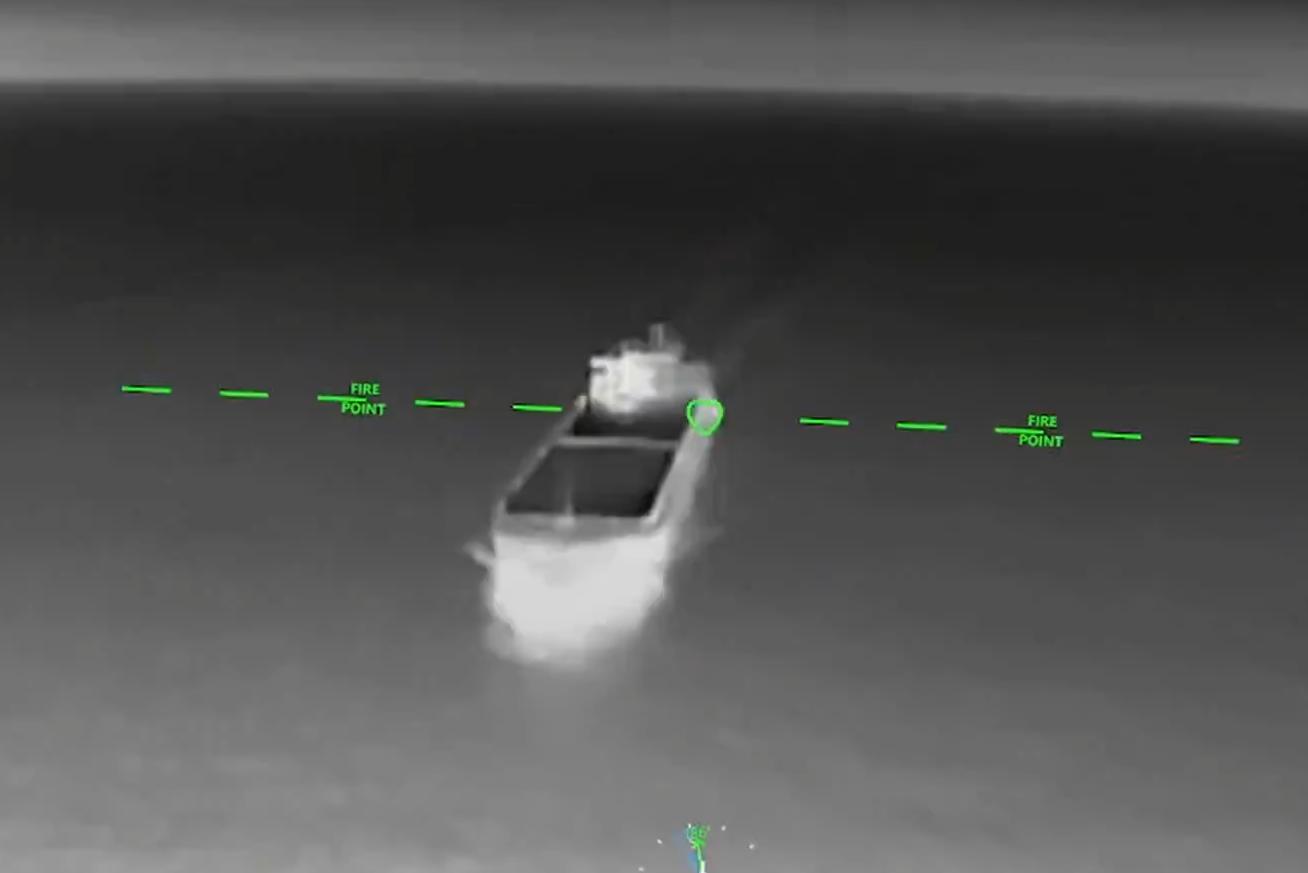
And it’s not alone. Other newer Ukrainian deep-strike munitions also combine decent range with a heavier warhead. The Behemoth drone packs two separate warheads, one weighing 40 kg and another weighing 35 kg. The bigger warhead blasts a hole in a target. The smaller one explodes inside it.
But the FP-2 and Behemoth still suffer from limited reach: just 200 km and 300 km, respectively. With its jet propulsion, the $500,000 FP-5 cruise missile combines a big warhead with long range.
It took a year of near misses for Fire Point to get the FP-5’s self-contained inertial navigation to work properly. But now that it does, the giant missile is blowing up Russian factories at a weekly rate.
Their flight paths into Russia cleared by relentless drone strikes on Russian air defenses, Flamingos can now strike across western Russia. No factory or refinery within 3,000 km of the border is safe. And every strike can now inflict lasting damage.
About the Author
