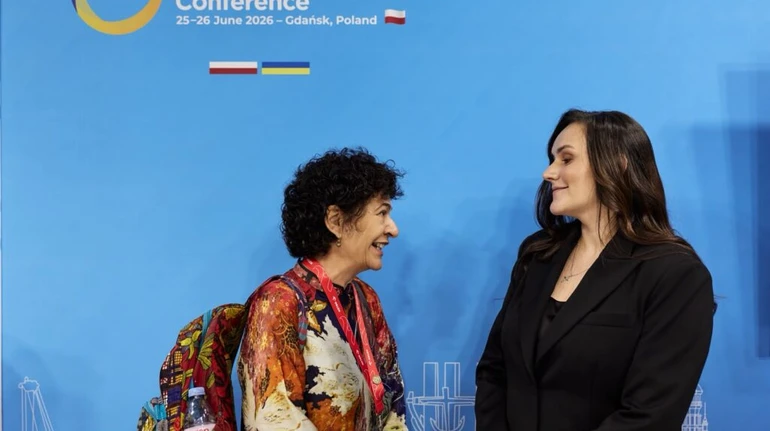
The European Union has allocated €2 million to expand a program protecting Ukraine’s documentary heritage and ensuring digital and inclusive access to information, the Ukrainian Ministry of Culture reports. The initiative was announced by UNESCO at the Ukraine Recovery Conference (URC2026) in Gdańsk, with financial backing from the EU and the government of Flanders.
The program builds on a 2025 project focused on preserving Ukraine’s Jewish documentary heritage, extending its scope to the country’s documentary heritage as a whole, including that of national minority communities, according to the Ministry of Culture.
What the program covers
The initiative targets support for archives, libraries, and other memory institutions, including those in frontline regions; development of digitization systems and long-term digital preservation; support for the documentary heritage of national minorities; open-access provision; and strengthening democratic resilience and countering historical falsification.
It will be implemented in cooperation with Ukraine’s Ministry of Culture, the State Archival Service of Ukraine, and other partners.
Ukraine’s Vice Prime Minister for Humanitarian Policy and Minister of Culture Tetiana Berezhna said the country’s recovery depends on the ability to protect “what makes us a nation” and to invest in those who will shape its future. “I am grateful to UNESCO, the European Union, Flanders, and all our partners for supporting Ukraine’s documentary heritage. Together we are preserving historical truth, strengthening resilience, and creating new opportunities for future generations,” Berezhna said.
URC 2026 was co-hosted by Poland and Ukraine and took place in Gdańsk on 25 and 26 June. The Ukrainian delegation was led by Prime Minister Yuliia Svyrydenko, while Poland’s Prime Minister Donald Tusk co-chaired the event; European Commission President Ursula von der Leyen and German Chancellor Friedrich Merz also attended. The conference brought together heads of state and government, international and financial institutions, business leaders, local authorities, and civil society organizations to coordinate reconstruction efforts and mobilize investment for Ukraine. The Gdańsk Conference closed with 160 agreements and €10 billion.
About the Author
