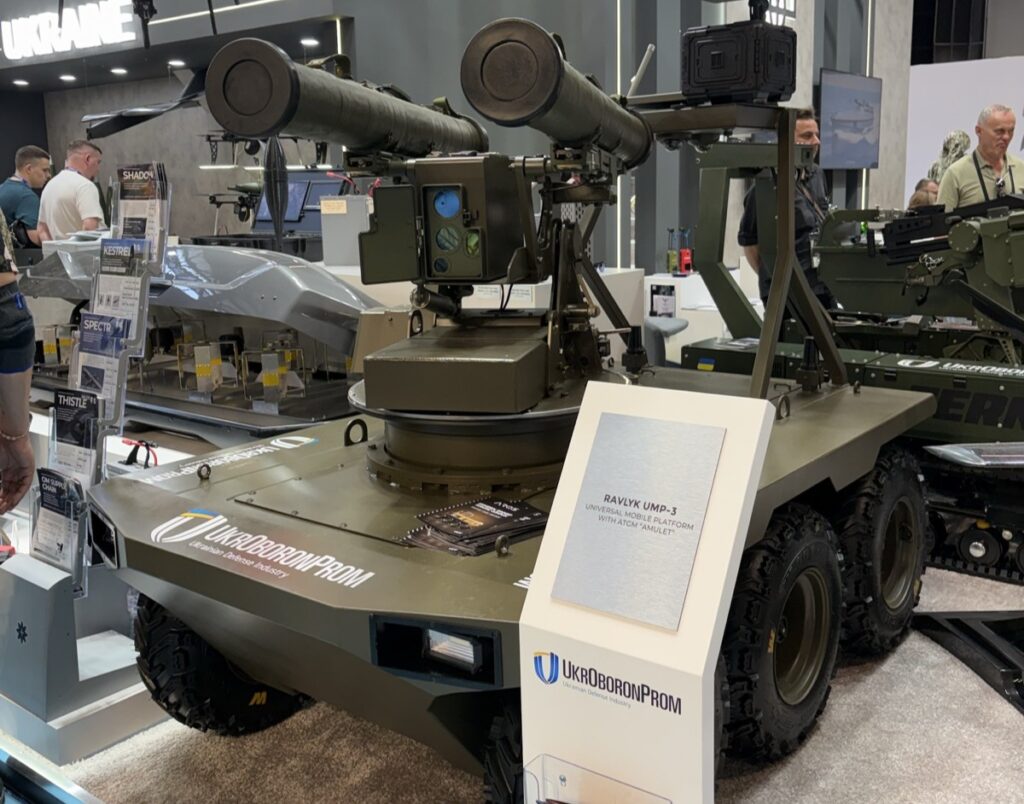
Ukrainian uncrewed ground vehicles are winning fans all around the world, as evidenced by the Eurosatory 2026 arms expo in France, where the latest model of the Ravlyk UGV made a splash.
The invitation to the biggest arms expo in Europe was already a huge deal for Ukrainian Unmanned Technologies, a small company of 40 people. Then, in quick succession, they licensed the Ravlyk to French construction firm Haulotte, entered negotiations with defense giant KNDS, and were invited to demonstrate their UGV at a French military base in front of reps from a dozen NATO countries, from Europe to North America.
“It was amazing,” Olexiy Severyn, Commercial Director for Ukrainian Unmanned Technologies said in an interview.
“You won’t believe—six or seven countries were asking for details: this is impressive stuff, we need more information, technical specifications, how to buy from you.”
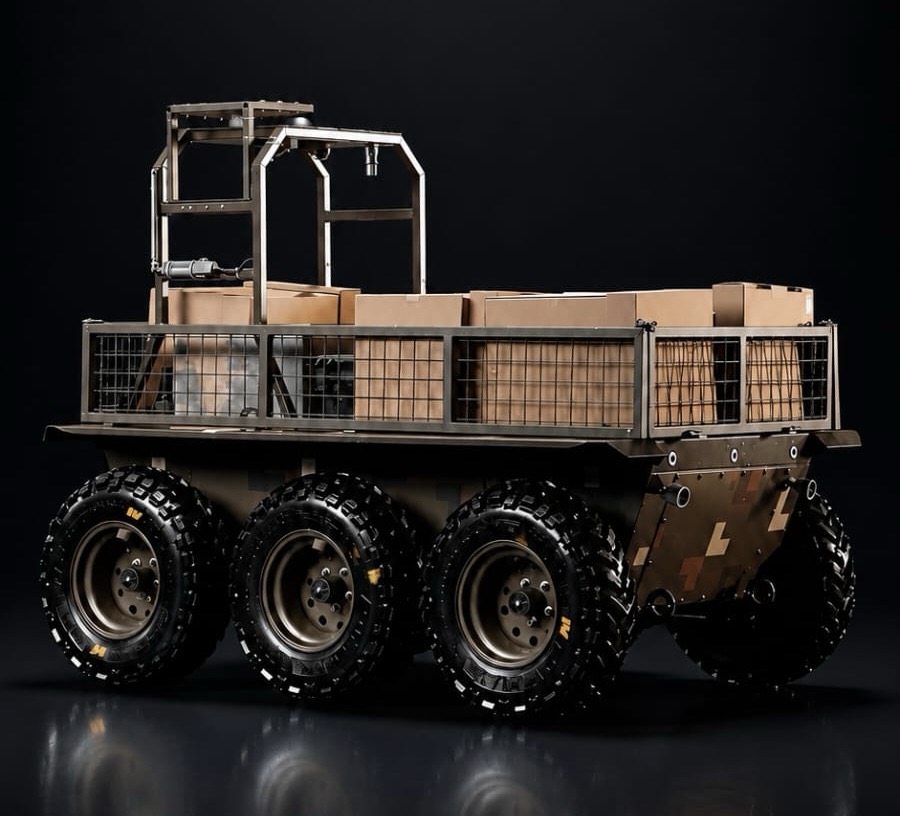
The Ravlyk (Ukrainian for “snail”) is a big, heavy-duty mech on six wheels, which can be configured for logistics, attack, or signals roles. It can carry and drag over three metric tons and return to base even after getting three of its wheels blown off—each wheel is actuated by a separate motor. It can mount a variety of weapons, from machine guns to rocket launchers.
This combo of capabilities made Ravlyk the darling of Ukraine’s General Intelligence Directorate (GUR). “When they tried it for the first time, they loved it,” Severyn said, showing several videos of GUR forces using it. “It was love at first sight and they’re our best customers as of now.”
The client list is expanding. UGVs existed before the full-scale war but their use exploded in 2026 as a solution to Ukraine’s chronic personnel shortages and battlefield casualties. According to operator interviews, they are quite effective. Over 50,000 missions were completed as of January; the number of units employing them doubled from 117 to 230. Ukraine plans to procure 50,000 units this year.
Ukrainian Unmanned Technologies recently signed a deal with the Armed Forces of Ukraine for 500 units and are negotiating for 900 more. The company has joined the DOT-Chain marketplace, and is collaborating with a variety of Ukrainian firms like Ukroboronprom, which installed Amulet anti-tank weapons on the Ravlyk’s frame.
Now, foreigners want in on the action. Haulotte will produce the Ravlyk under license for civilian applications, while KNDS is eyeing a deal that, among other things, may see Western weapons turret-mounted on the Ukrainian UGV. Defense ministries from Spain, Greece, Italy, and elsewhere, are also curious about what this machine can do for them.
Heavy warhorse of UGVs
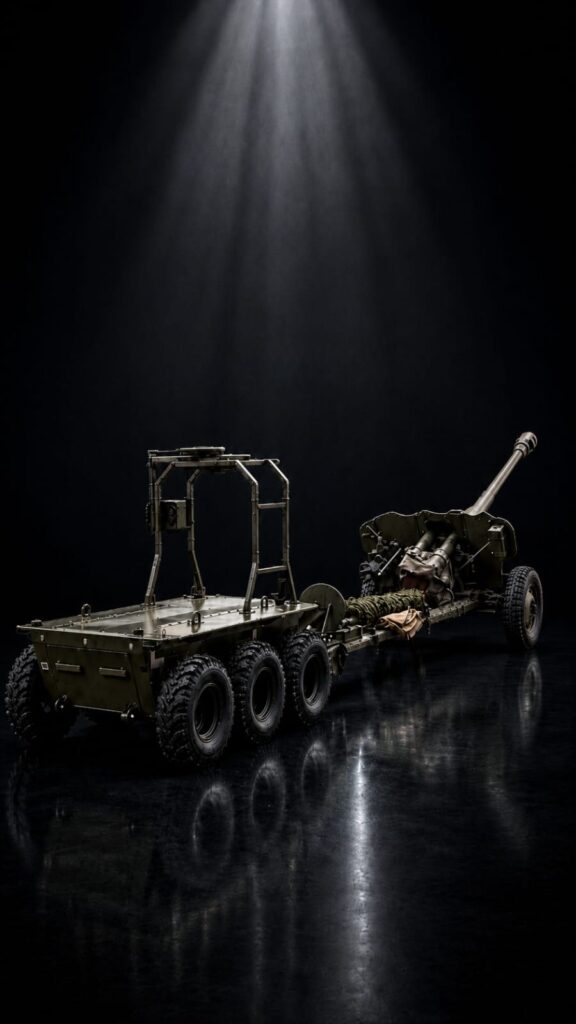
The unit’s heavy-duty nature predisposes it well towards its most common role: carrying heavy things on its back, and/or towing them behind in a wagon or sled.
“When we are talking with artillery guys, they would ask how many shells can you deliver, because they didn’t believe in UGVs,” Severyn said. “They say it’s like 45 kilograms for one shell for the 777 artillery piece. We say well, you can place 10 shells on the Ravlyk directly and you can tow 65 behind it.”
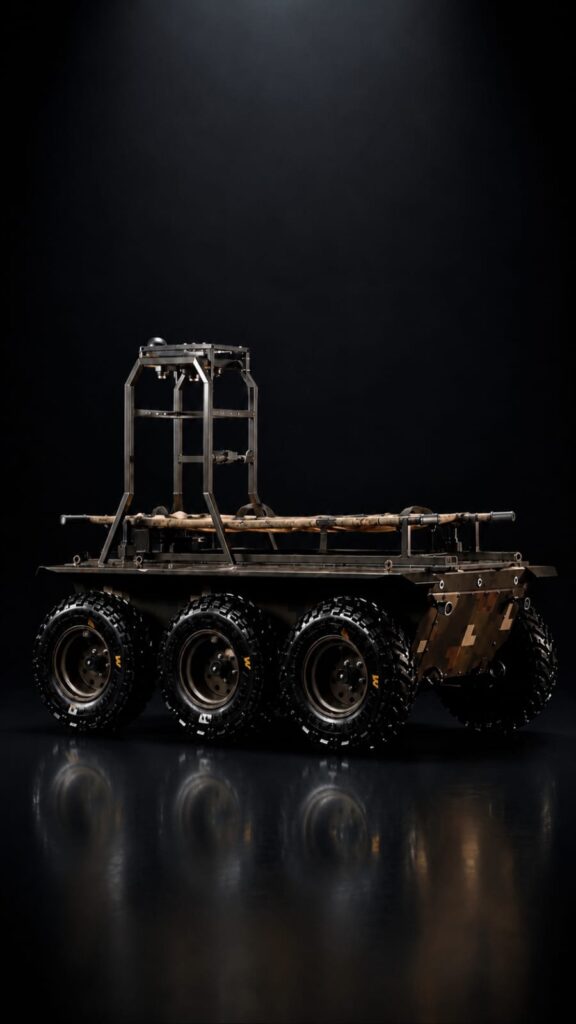
The unit is also roomy enough to evacuate two casualties on its way back to the rear, he said. Some troops say logistics UGVs are far from ideal for medical evacuation, but they serve in a pinch, and are often the most practical option available to warfighters. Severyn showed a video of the Ravlyk evacuating a wounded GUR officer in 2025—the officer survived.
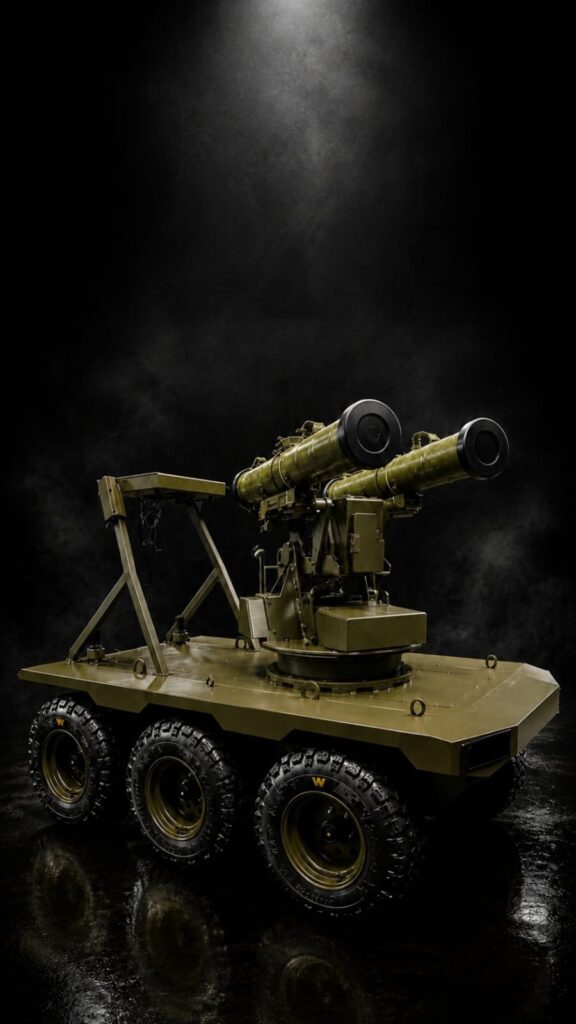
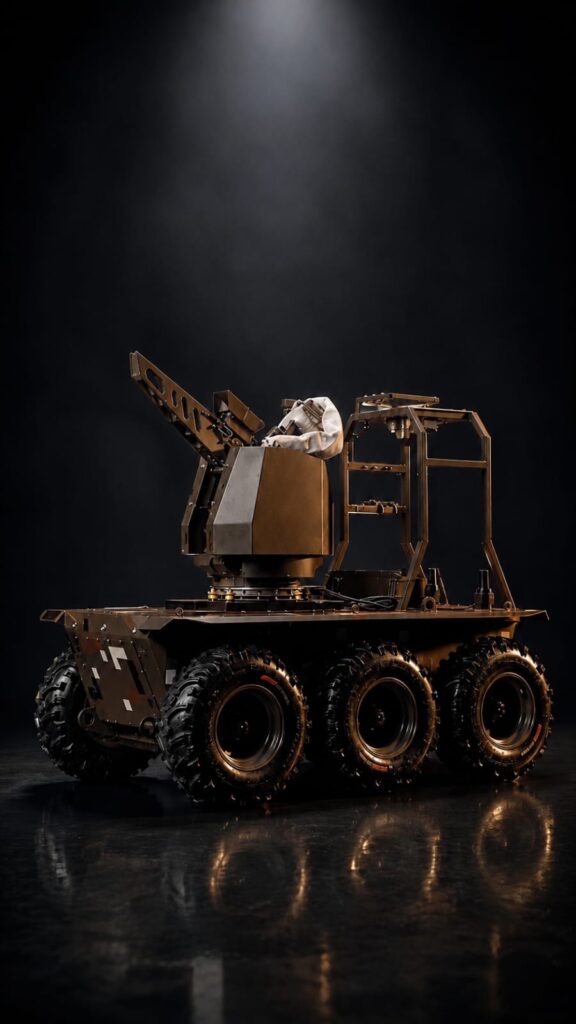
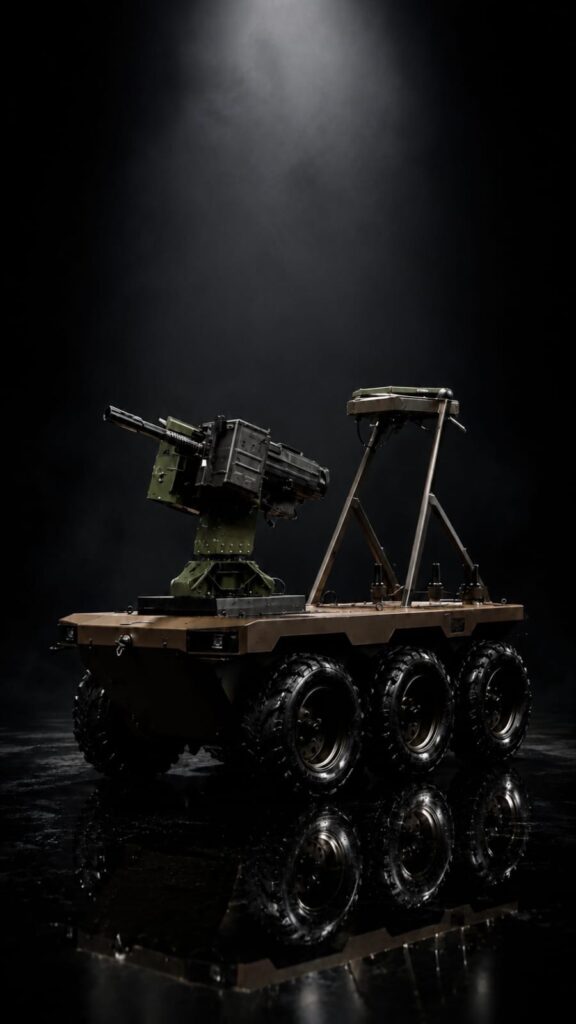
However, Severyn believes that the platform has “huge potential” outside this role, which is already being explored by putting a variety of systems on its back, like turrets for the Browning 50 caliber machine gun, grenade launchers, rocket launchers, and anti-drone weapons.
“We held a number of meetings with colonels all over Ukraine and we are trying to tell them that they should use it in collaboration with infantry.” The robot can distract the enemy, suppress, or draw fire.
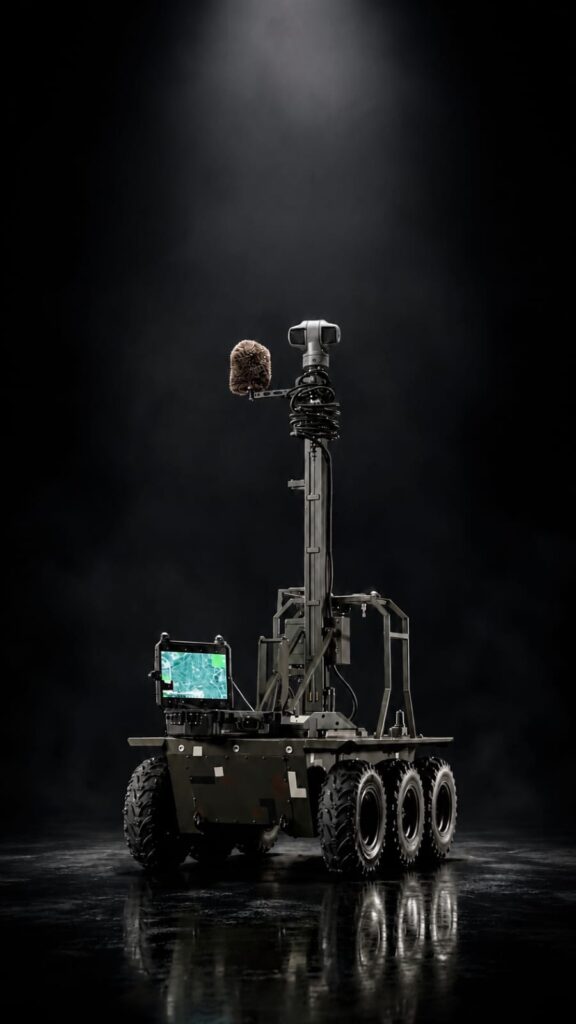
UGVs like the Ravlyk can also mount antennas and signal repeaters for combined operations and UAVs, cameras for reconnaissance, jammers for electronic warfare, or passive radar systems that cannot be tracked by the enemy.
Most of these addons are made by different companies, requiring close cooperation to harness the strength of both. However, the codification requirements inherent to the partnerships sometimes get unwieldy, which is why Ukrainian Unmanned Technologies is trying to create their own toppings for the UGV.
Third gen improvements
The third gen model boasts 25% more battery capacity, with a total operating range of 55 kilometers on a single charge—that number drops to 40 when fully loaded. The wheels are better protected, the battery and the processing unit are more widely spaced for survivability, and the front and rear have more armor. The form factor was slightly changed up as well.
“We received a kind of funny inquiry from our American friends. They said okay, Ravlyk is good stuff. Can it look a bit sexier?” Severyn said. “So the third gen, it looks sleeker and we used this (to install) additional protection.”
The top speed remains capped to 13 kilometers per hour, as faster speeds run into steering issues when operating at a distance. The Ravlyk has two separate remote controls: those meant to be used up close, and ones that use Starlink to control at a distance of kilometers.
Due to how military procurement works, the Ravlyk doesn’t come with Starlink built in. However, it has a space specifically designed to slot in a Starlink terminal, which the company provides to units free of charge.
All these solutions come at a price. The Ravlyk costs 2.5 million hryvnias (about $60,000) per unit. Severyn said commanders regularly ask why they should shell out that amount when UGVs that cost 500,000 hryvnias (about $11,000) are on the market—these tend to be smaller platforms. On the other hand, the recent armed forces contracts suggest that attitudes may be shifting.
Future plans
With mass adoption of UGVs come mass teething troubles, not just of the machines, but of the entire system. Ukraine is scrambling to build training centers, write the doctrine, and create logistics pipelines for spare parts, UGV operators said in prior interviews. The Ravlyk is caught up in this chaos, affecting how quickly units can get replacement batteries, wheels, inner electronics, and so on.
“All the guys are asking us: please add a second battery into the package,” Severyn said. Swapping batteries takes very little time in the field but “to buy an additional battery, it’s all the circles of hell, 2-3 times harder than just to buy the unit,” because they have to go through multiple layers of military bureaucracy.
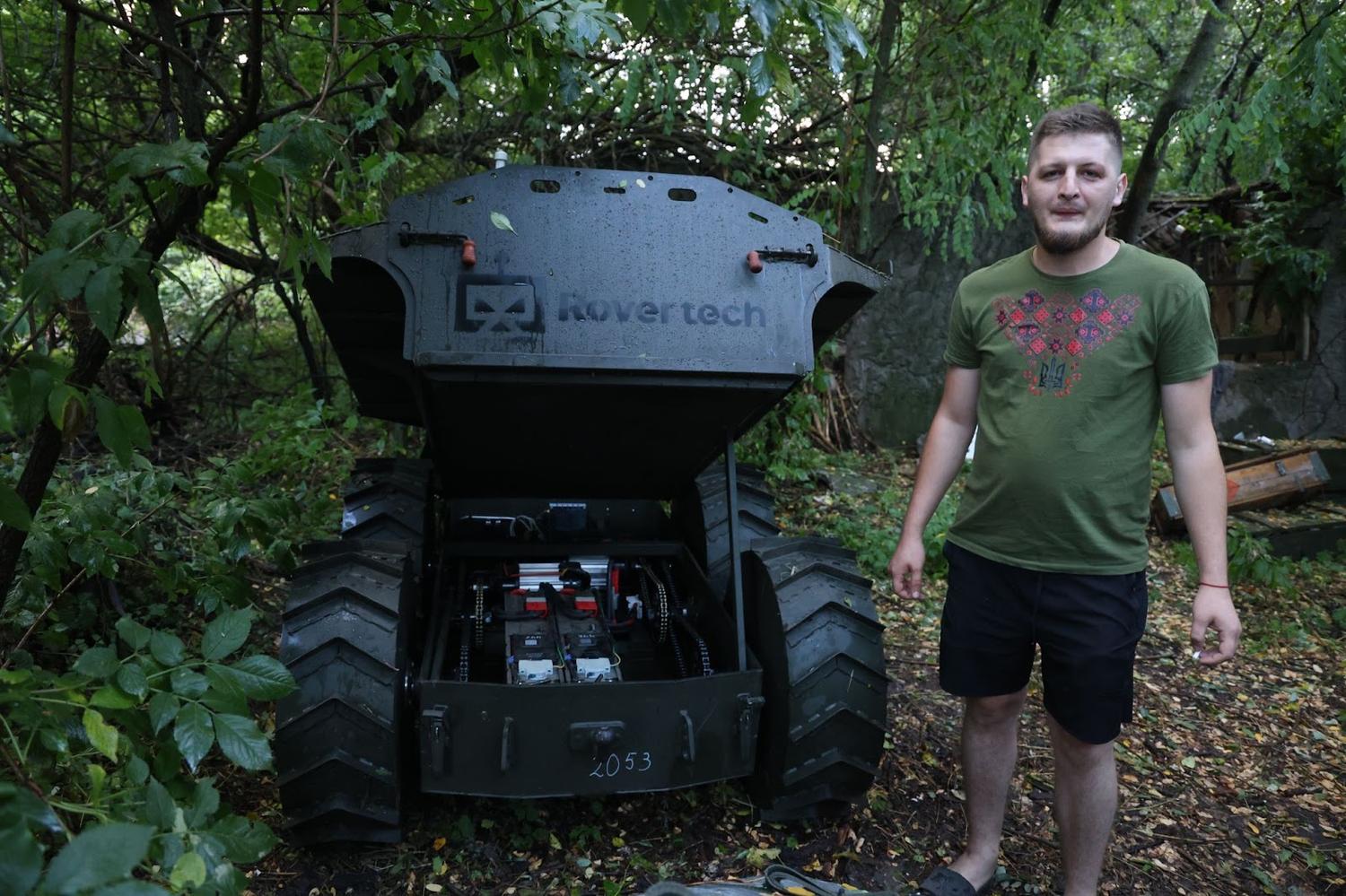
“We have to replace wheels for free at our own expense, just so units can get them repaired on time,” he added. “In the improper way it takes one week to bring them back to the front line. In the proper way it takes a month or two months.”
To remedy this, the company is going to launch multiple different packages, from bare bones to ones that come with multiple spare parts. They’re also working to certify the battery as a separate piece of tech, to make it easier to buy on the market.
In the medium term, they are looking to pounce on the foreign interest by launching international sales, while also expanding sales to the Ukrainian military. Severyn says they also want to help create a UGV marketplace, where soldiers or officers can enter the specs they need and get a list of models.
And eventually, the company hopes that the Ravlyk, forged in the fires of war, can find civilian applications such as fighting fires.
About the Author
