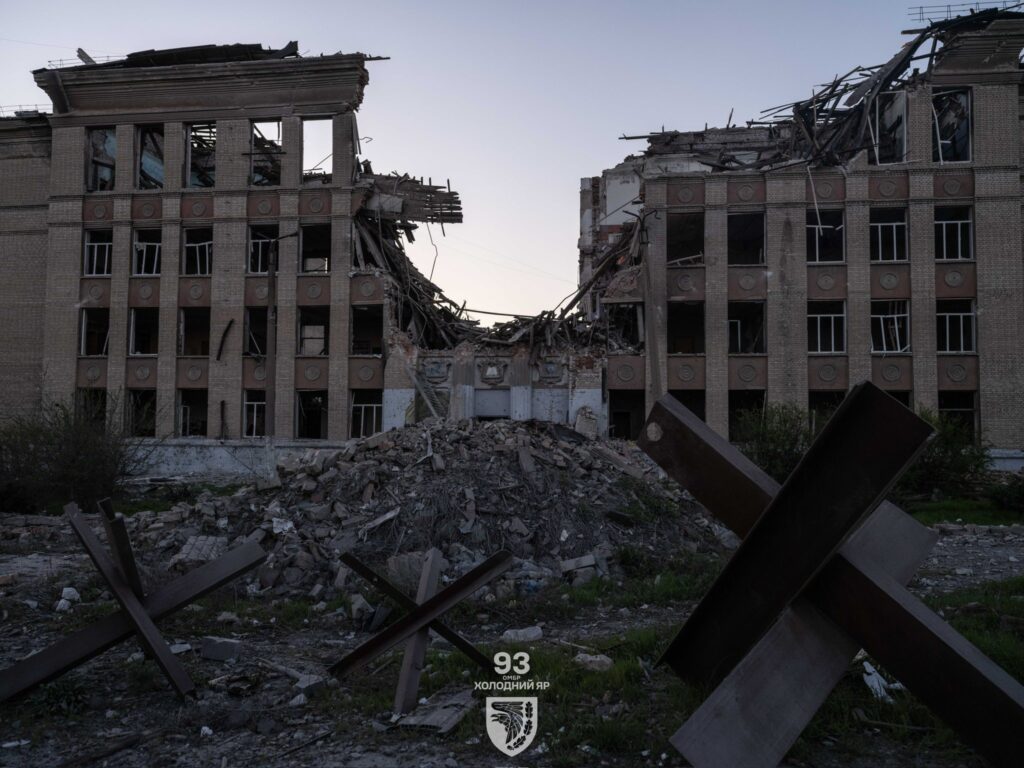
- After a long siege, Kostiantynivka is on the verge of falling to Russian forces
- To capture the city, the Russians bombed it from the air and cut its supply lines
- Russian infiltration sealed Kostiantynivka’s fate
- How much the city’s coming fall actually matters depends on how well the Ukrainians can defend north of its ruins
Last fall, the Russian Center Group of Forces laid siege to Kostiantynivka, a city with a pre-war population of 67,000 in eastern Ukraine’s Donetsk Oblast.
Eight months later, the city is on the verge of falling to Russian infiltrators. “We are nearing the end of the battle for the city, the fall of which could be staggered until mid-summer,” mapper and analyst Clément Molin wrote a week ago.
“This is Russia’s first strategic victory of the year,” Molin added. And a welcome one in Moscow.
That’s because 2026 has been a hard year for Russia. Overall, Russian advances in Ukraine have practically ground to a halt in recent months. Russian forces’ daily rate of advance was 13.2 square km per day in 2025, but just 2.9 square km per day in the first four months of 2026, according to the Institute for the Study of War in Washington.
Meanwhile, Ukrainian drones and missiles are striking harder and deeper across occupied territories and into Russia itself. In March, for the first time, Ukraine launched more one-way attack drones at Russia and occupied territories (7,500) than Russia launched one-way attack drones at Ukraine (6,500).
“The character of the war is shifting in favor of Ukrainian forces, at least for now,” ISW noted.
But that hasn’t saved Kostiantynivka, where the Russians have long held a significant manpower advantage, and where the terrain is unforgiving to the defender.
Long siege
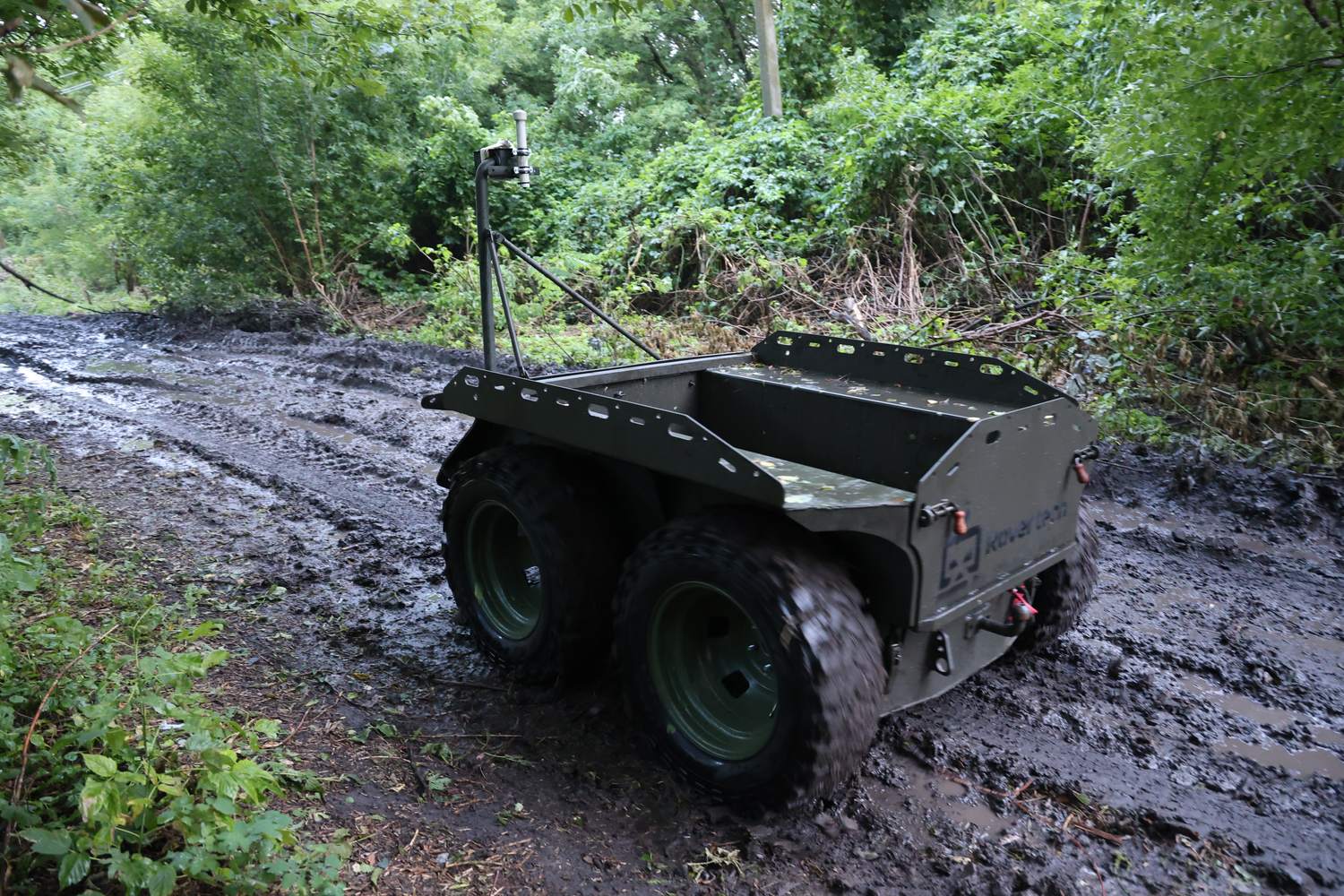
In preparation for the coming siege of Kostiantynivka, the Russian air force began bombing the city with thousands of KAB precision glide bombs every month. Russian drones turned the main road into town from the northwest into a kill zone, eventually forcing the Ukrainian garrison to get supplies almost entirely via aerial drones and ground robots.
But troops rotating into and out of positions in Kostiantynivka still had to brave Russian bombs, drones, mines, and artillery. Holding Kostiantynivka isn’t as costly for Ukraine as capturing Kostiantynivka is for Russia, but Russia can spare the manpower. Ukraine can’t.
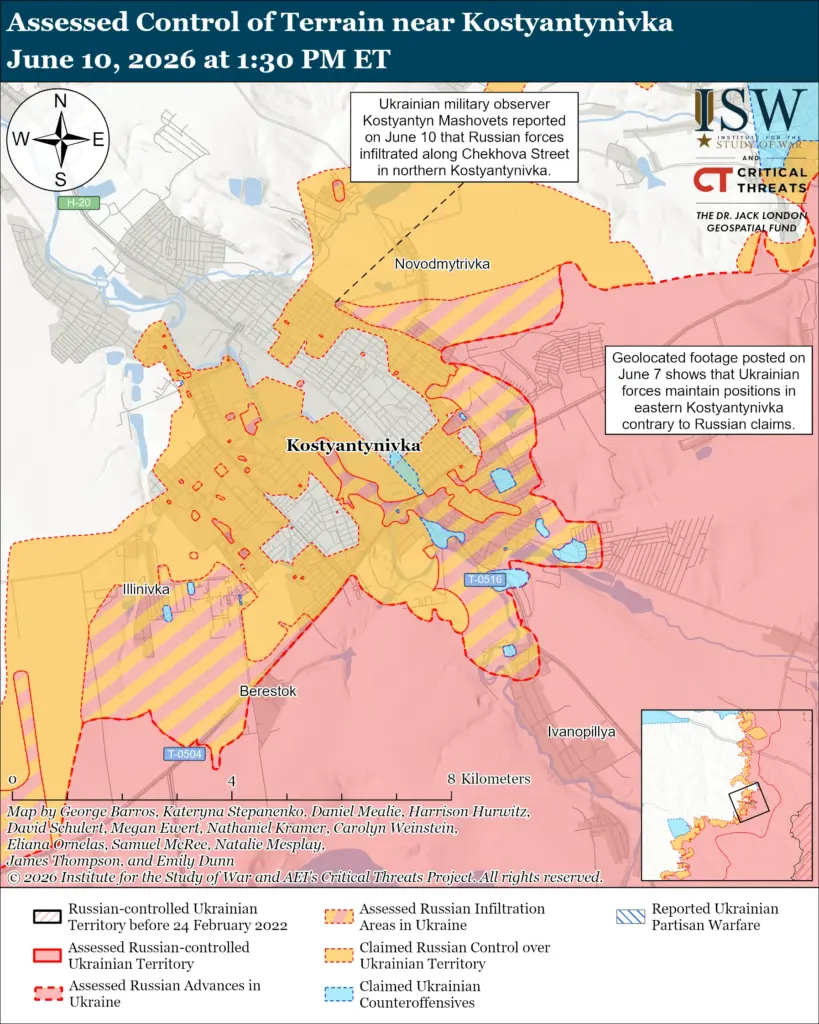
As the Ukrainian garrison’s supply lines frayed, the Russians closed in on Kostiantynivka through the spring and then, this summer, began infiltrating the city in small teams, traveling on foot in hopes of avoiding Ukrainian air power.
Once the Russians were entrenched in Chervone District in southern Kostiantynivka, the city’s fate was all but sealed. “From here, small groups of Russian infiltrators are able to accumulate and spread outwards, deeper into the city,” AMK Mapping noted.
In early June, Ukrainian troops began pulling back in order to avoid encirclement. “The city is already treated as lost,” some Ukrainian soldiers wrote apparently in early June. Ukrainian forces still control the very northern outskirts of Kostiantynivka, but the southern outskirts are firmly under Russian control, and the central part of the city is a chaotic gray zone.
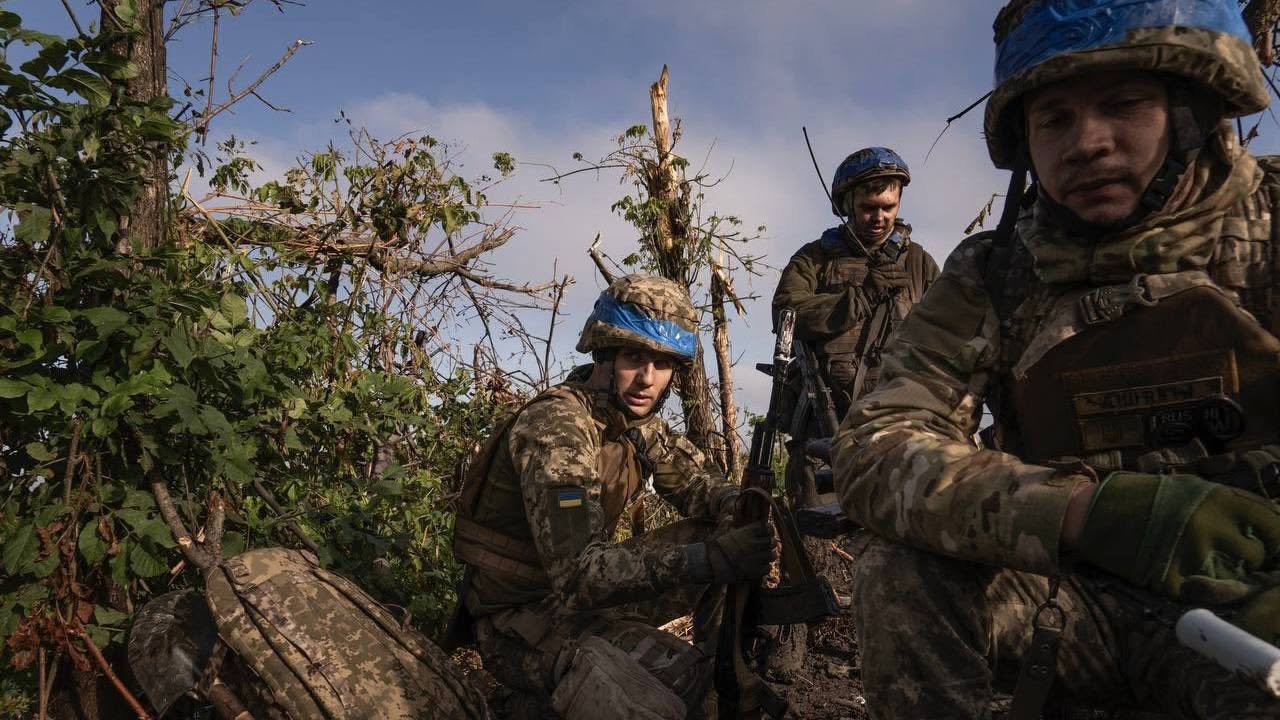
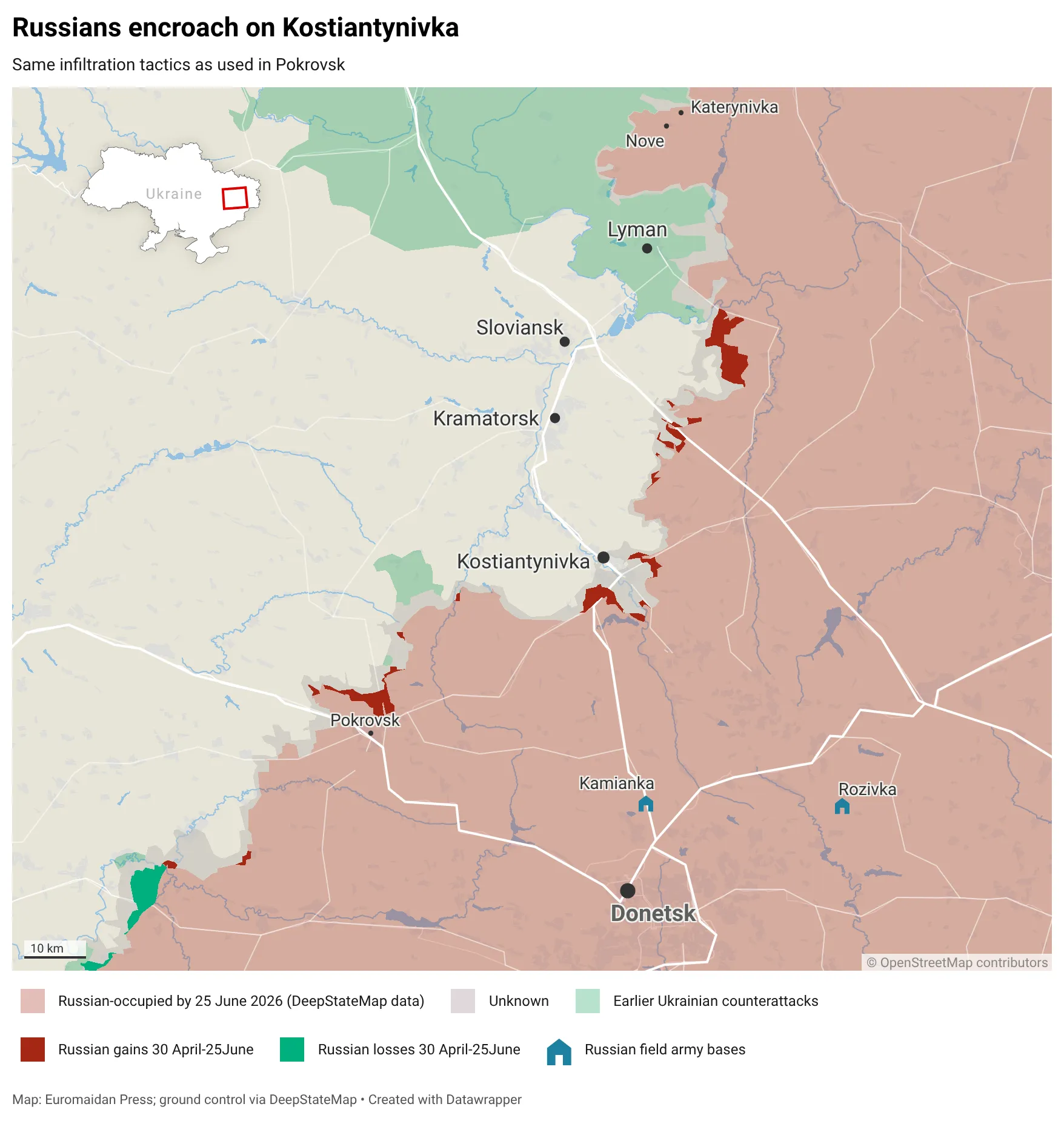
Kostiantynivka is, by now, largely devoid of civilians. Its value lies in what it protects. For months after the fall of nearby Myrnohrad and Pokrovsk, Kostiantynivka complicated Russian efforts to march on Kramatorsk and Sloviansk, the last big free cities in Donetsk Oblast.
Now the ruined Kostiantynivka no longer fulfills that purpose. But it may not need to. Cities are good for infantry-based defense, but open fields (where there’s nowhere to hide) are good for drone-based defenses. Now that Ukraine has pivoted to a drone-centric defensive strategy, some commanders actually prefer to fight out in the open rather than fortifying inside cities.
It’s still a long march for Russian troops hoping to lay siege to Kramatorsk and Sloviansk from the south: 16 km as the crow flies. How much Kostiantynivka’s fall actually matters in the long term depends on how effectively the Ukrainians can defend those 16 km.
Given the slowdown in Russian advances, friends of a free Ukraine eagerly anticipate the day Russian advances effectively halt. ISW explained it “has long argued that Putin’s theory of victory assumes that Russian forces will be able to win an attritional war, provided that Russian forces continue gradual creeping advances indefinitely.”
“Ukraine’s complete halting of Russian advances would invalidate Putin’s theory of victory and impose difficult decisions on the Kremlin,” ISW added.
The long battle for Kostiantynivka was an opportunity to stop the Russians cold. But that opportunity is now lost for the Ukrainians. A new opportunity to stop the Russians awaits just north of the city.
About the Author
