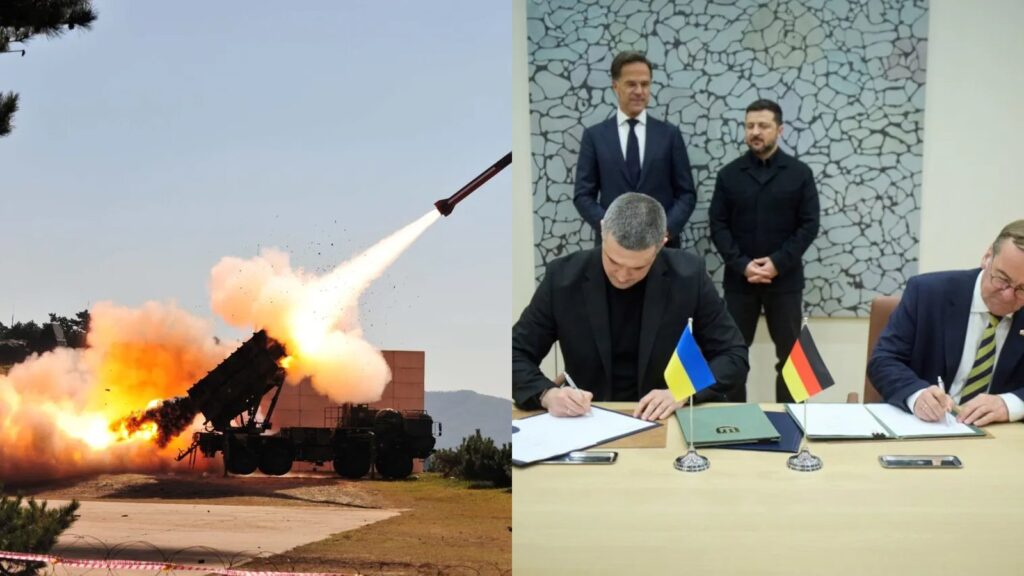
May 2026 was the deadliest month for Ukrainian civilians since 2022, with at least 274 killed and 1,763 wounded, according to the UN’s monitoring mission — a 93% jump from a year earlier. Long-range missiles and drones striking cities far from the front were the single biggest cause.
The toll keeps climbing because of a gap in Ukraine’s sky. In May, Ukraine shot down about 92% of Russian drones, but only around half of the cruise and ballistic missiles Russia fired, according to Ukrainian Air Force data. Ballistic missiles are the hardest to stop, and those that get through cause much of the killing.
That gap is why President Zelenskyy spent the spring pressing allies for more Patriots and urging Europe to build an anti-ballistic shield of its own.
What was decided in Ramstein
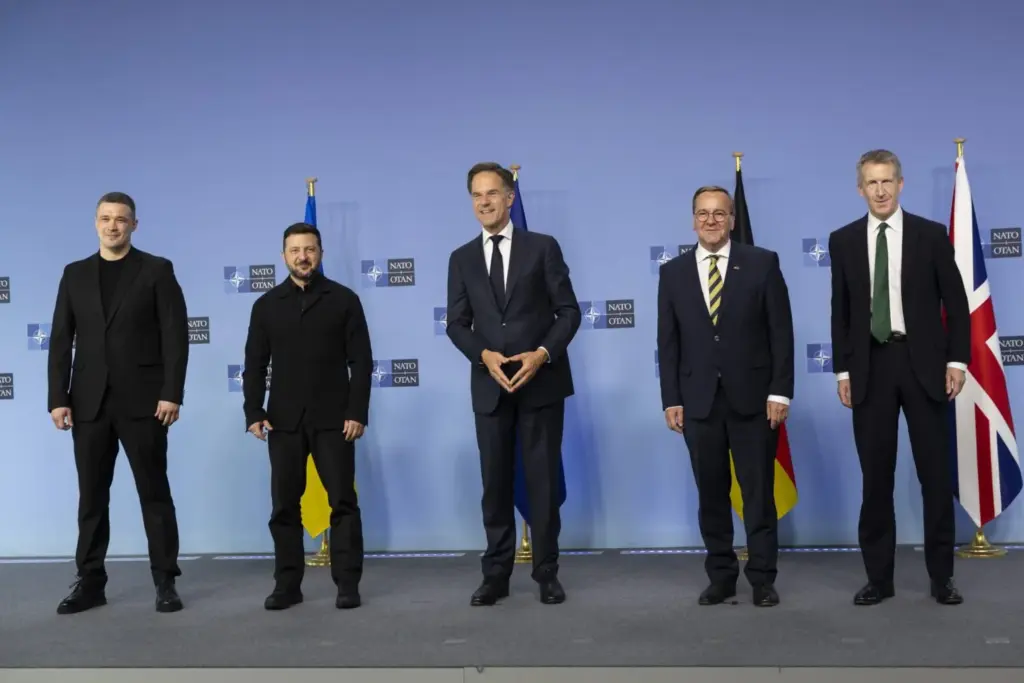
On 18 June 2026, Ukraine found partial relief in Brussels. The biggest contribution of the Ramstein group’s 35th meeting is a set of record air-defense pledges: $4 billion in military aid, including roughly $1 billion for Patriot interceptors. That money will ease Ukraine’s immediate shortage.
Addressing the meeting, Zelenskyy named the problem the spending is meant to answer. “Russian ballistic missiles remain a problem, and we need an answer to that problem,” he said.
Ukraine and Germany also signed an agreement to jointly develop Freya, Ukraine’s bid to build its own ballistic-missile interceptor. German Defense Minister Boris Pistorius said seven German companies are interested in the project. But the new air-defense money flows to the American Patriot system, not to Freya—the very system Ukraine is trying to rely on less.
The meeting was far from a panacea for Ukraine’s air-defense woes. Its relief is narrower: faster Western interceptors now, and a German partnership that moves Freya forward, but not money for Freya itself, as several experts noted in response to Euromaidan Press.
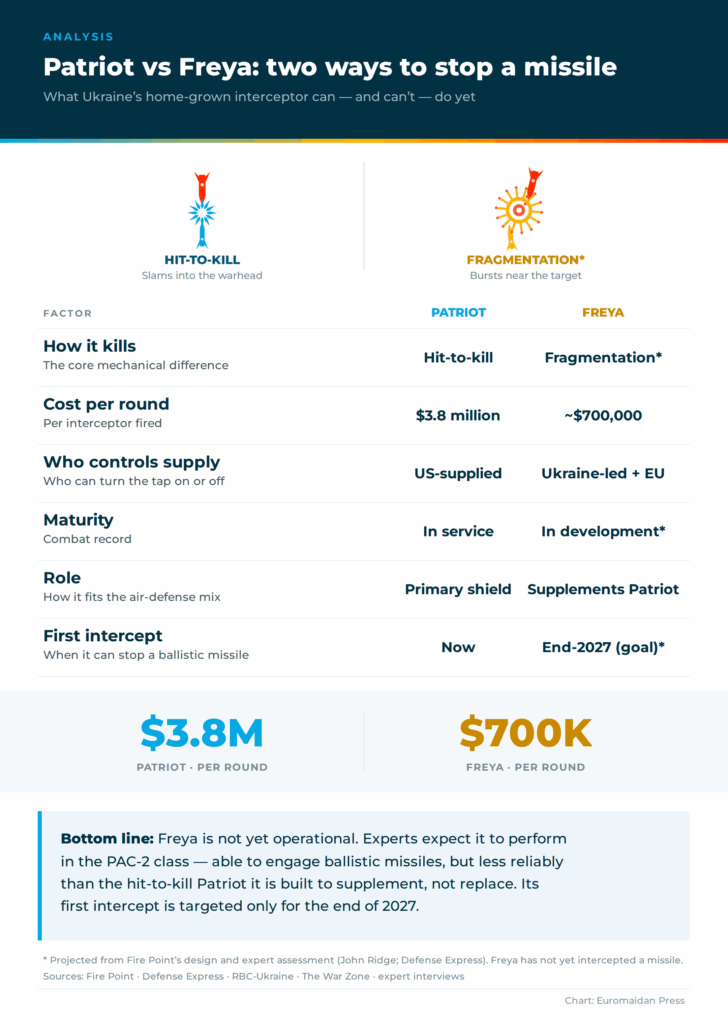
Freya remains the longer bet—a domestic interceptor that, if it works, would cost roughly $700,000 per round, a fraction of the $3.8 million Patriot missile it is meant to supplement.
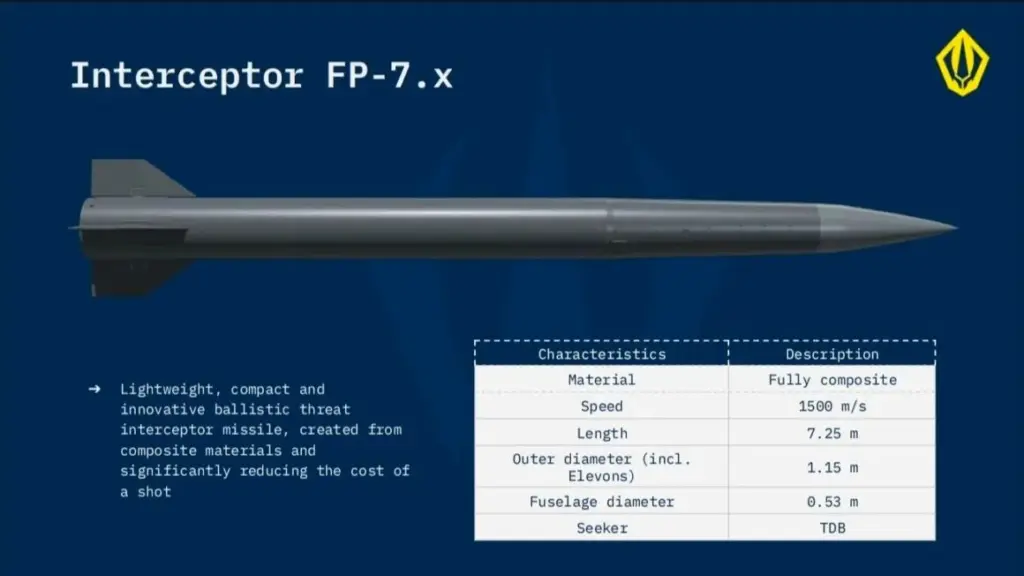
Fire Point aims to start serial production as early as August 2026—building airframes and storing them until German infrared seekers arrive—with a first ballistic intercept targeted for the end of 2027.
What are Ramstein-format meetings, and what do they do for Ukraine?
The Ramstein format—named after Ramstein Air Base in Germany, where the US hosted the first meeting in April 2022—is a catch-all term for the Ukraine Defense Contact Group (UDCG), one of the main fora through which Ukraine’s partners coordinate military aid. Membership is relatively informal, as any participating country is considered a member.
Bringing together 57 countries that meet roughly once a month, UDCG coordinates weapons, training, and funding for areas like air defense and drones. Over four years, the loosely knit group’s members have committed more than $150 billion in military aid.
The US led it at the start, although the UK and Germany have taken the lead since US President Donald Trump took office in 2025.
Why the pledge matters, even if it isn’t enough
In the short term, the Brussels pledge could help Kyiv by “[moving] Ukraine up the queue for Patriot interceptors,” says Anton Zemlianyi, a Senior Research Fellow at the Ukrainian Security and Cooperation Center.
The $4 billion, Zemlianyi told Euromaidan Press, could allow the Pentagon to redirect interceptors promised to other buyers, compensate buyers for the wait, or draw from existing Western stockpiles. Moving existing interceptors to Ukraine more quickly would provide air-defense support “here and now,” but it would leave Kyiv dependent on Western stockpiles and Western political decisions.
These interceptors are expensive, take years to develop, and are hard to build well, thus causing recurring shortages right now.
Indeed, the world’s supply of anti-ballistic interceptors is concentrated in very few hands. Marc DeVore, a Senior Lecturer in international relations at the University of St Andrews and an expert on arms production, noted that there are only “five or six producers in the world” capable of making such systems. As of now, the US remains Ukraine’s primary supplier.
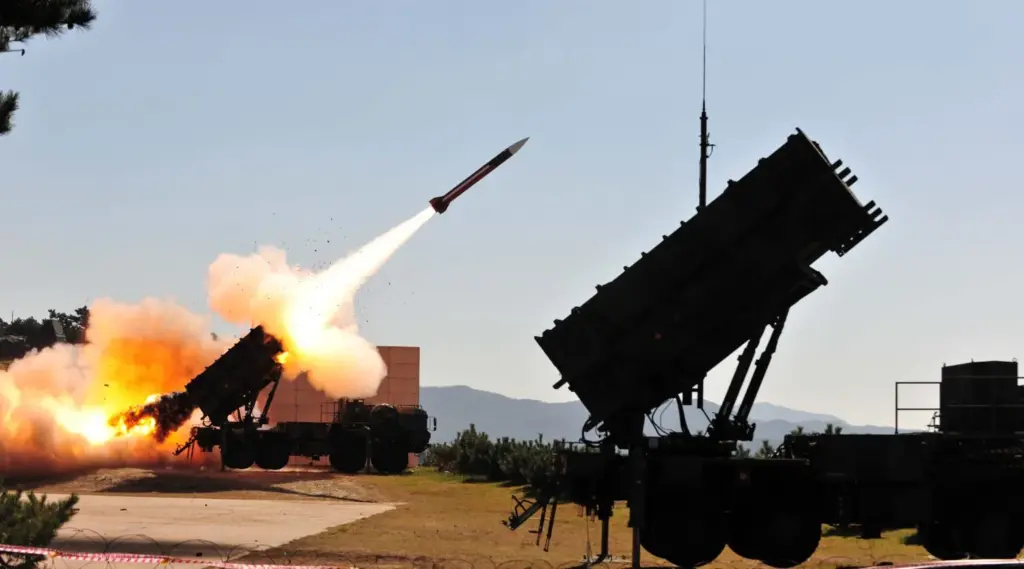
Europe’s only serious alternative, the Franco-Italian SAMP/T, is unlikely to fill Ukraine’s air-defense gaps anytime soon. Production is limited to around 100 missiles a year. As DeVore notes, even if output rises to the planned 300 annually by 2028, that would still be less than half of current US Patriot production — and those missiles would also have to compete with European naval demand. Hence, Ukraine may need to look beyond Europe and the US.
DeVore posits that Japan and South Korea could be future sources of interceptors for Ukraine.
That is why Bohdan Popov, an expert at United Ukraine, cautions that money is not a quick fix.
The pledge, Popov says, addresses only “10 percent” of Ukraine’s problems: it cannot immediately create enough Patriot launchers or PAC-3 interceptors to close the country’s air-defense gap.
The pledge’s longer-term value lies in what it could help Ukraine build. Popov argues that Kyiv needs either its own anti-ballistic interceptors or a PAC-3 production license from Washington. “Both of these cases can make the situation much better,” he says. But either path requires engineers, foreign investment, and research. If Ukraine is to move from dependence to production, Popov adds, “money is king.”
Freya: Ukraine’s bid to break Europe’s anti-ballistic bottleneck
Beyond money, the other important outcome of the Brussels meeting, Freya, might prove to be a boon for Ukraine’s air defense. The Freya project represents the “first concrete step toward overcoming Ukrainian and European dependence” on American interceptor technology, particularly on the Patriot, as Zemlianyi noted.
More primitive in its mechanics than the Patriot, the Freya system is a “Frankenstein” project, as Zemlianyi characterizes it, melding the Ukrainian Fire Point FP-7X interceptor missiles with off-the-shelf electronic components from various EU countries.
Such a combination plays to the Freya project’s advantage, as Ukraine can provide a missile that has already been field-tested and that is both cheaper and easier to mass-produce.
Rather than affordability, the main obstacle facing Freya was European partners’ reluctance to help. Fire Point’s chief executive Iryna Terekh told journalists in Paris that Ukrainian arms makers are “significantly less afraid of the Russians than of European bureaucracy.”
“We are significantly less afraid of the Russians than of European bureaucracy.” — Iryna Terekh, Fire Point CEO
However, according to Zemlianyi, the agreement Ukraine and Germany signed in Brussels suggests that reluctance is easing, and that Freya should roll into operation within the “next 6–12 months, or perhaps sooner.”
Where Freya falls short
Despite the optimism surrounding the project, Freya should not be mistaken for a one-to-one equivalent to the Patriot system. Zemlianyi qualified his own timeline, stating that developing a domestic analog to the Patriot in a short time is a “pipe dream.” Instead, Freya should be seen as a stopgap to stem the loss of Patriots.
John Ridge, an open-source analyst and expert on missile defense, noted that even if Ukraine succeeds in building its own anti-ballistic interceptor, it will fall somewhat short of Patriot’s capabilities.
“I’d expect Ukraine should be able to field something in the ballpark of PAC-2’s level of capability but not PAC-3 or PAC-3 MSE,” Ridge wrote to Euromaidan Press.
The difference between those two classes is how each missile stops its target. PAC-2 interceptors, including the GEM-T variant designed for tactical ballistic missiles, explode near the incoming missile and hit it with fragments. That can knock a warhead off course, but may not destroy it outright.
PAC-3 missiles do the harder job: they hit the incoming threat directly, making them more reliable against fast ballistic missiles such as Iskanders. A Freya system in the PAC-2 class could still engage ballistic missiles, but less reliably than the hit-to-kill Patriots it is meant to supplement.
Beyond combat efficacy, technological challenges might dampen Freya’s rapid deployment. When asked about Freya’s deployment timeline, DeVore provided a blunt response: “I’d be very happy if Freya were a truly operational system by December 2027; I’m fairly doubtful it’ll be by December 2026.”
DeVore noted that ballistic-missile interception is far harder than other challenges Ukraine has faced and mastered, such as drone production. Any anti-ballistic interceptor would need to perform very high-G maneuvers and be integrated with radar and guidance systems capable of steering it onto the target — capabilities that require extensive research, field testing, and fine-tuning.
What needs to accompany the $4 billion and Freya
The sheer number of missiles Russia launches at Ukraine means that no interceptor program can knock out every single Kremlin missile.
“The goal is fewer missiles for Russia to fire,” averred DeVore.
Thus, DeVore argues, the Brussels pledges and Freya have to be paired with efforts to stifle Russian ballistic missile production at the source.
Russian Iskanders, for instance, still rely on Western dual-use components that Russia cannot easily replace. These components could be targeted by tighter, better-coordinated secondary sanctions. Amplifying Ukraine’s long-range strikes on the factories and launch sites would further reduce the threat.
“Ballistic missiles require qualified craftspeople, so striking factories, destroying jigs, and wounding or discouraging workers from showing up could have a greater impact on missile production,” noted DeVore.
In that light, the $4 billion and Freya are not a cure but a wager to buy Ukraine more time in the sky while reducing Russian missile production on the ground. Defending Ukraine’s skies, in DeVore’s view, means working both ends of the problem at once—fielding more interceptors while shrinking the arsenal they are built to stop.
This material was produced as part of a project by the Institute of Mass Information with the support of the Ministry of Foreign Affairs of the Netherlands. The content of this publication does not reflect the official position of the IMI or the Kingdom of the Netherlands.
Read also
-
Russia can launch up to 30 ballistic missiles against Ukraine in a single salvo. Here’s why that changes everything for 2026
-
Not enough Patriot missiles to stop 60 Russian Iskanders a month — the Iran war is draining what’s left
-
Ukraine assembles a European coalition to stop Russian ballistic missiles
-
The Freya air defense system could take down Russian ballistic missiles. Can Ukraine build it?
About the Author
