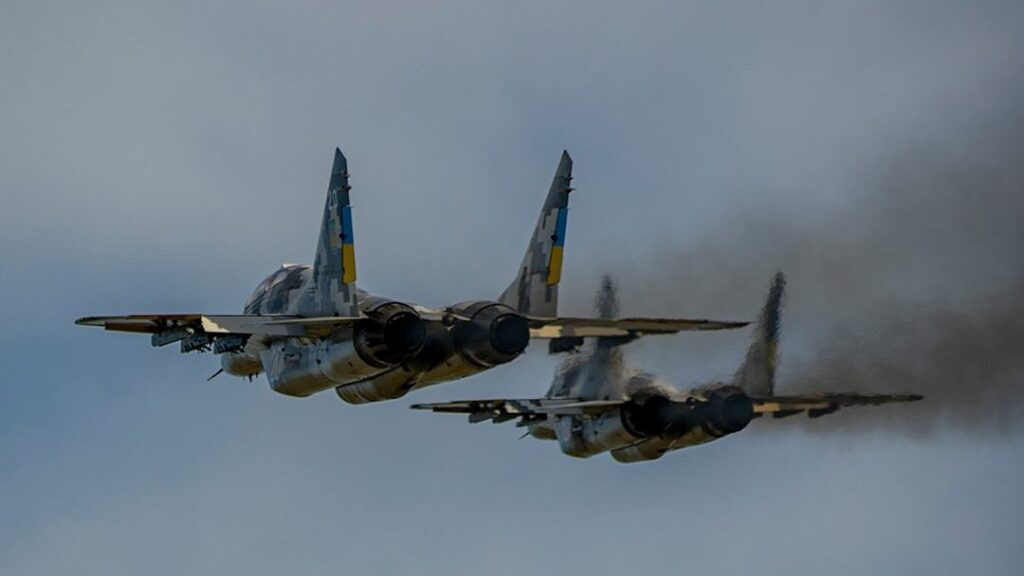
Drones have been highly effective in dismantling Russian logistics at middle ranges. But most mid-strike drones have payloads between 5 kg like the Hornet and 75 kg like the Behemot. There are big boys like the FP-2, which can carry a 200 kg warhead over 300 km, but they’re better spent on deeper targets.
Sometimes the mission calls for planting 250 kg of explosives into a hardened target in the near-rear. Drones can wound a fortified bunker or a reinforced command post but it takes a bigger boom to obliterate them.
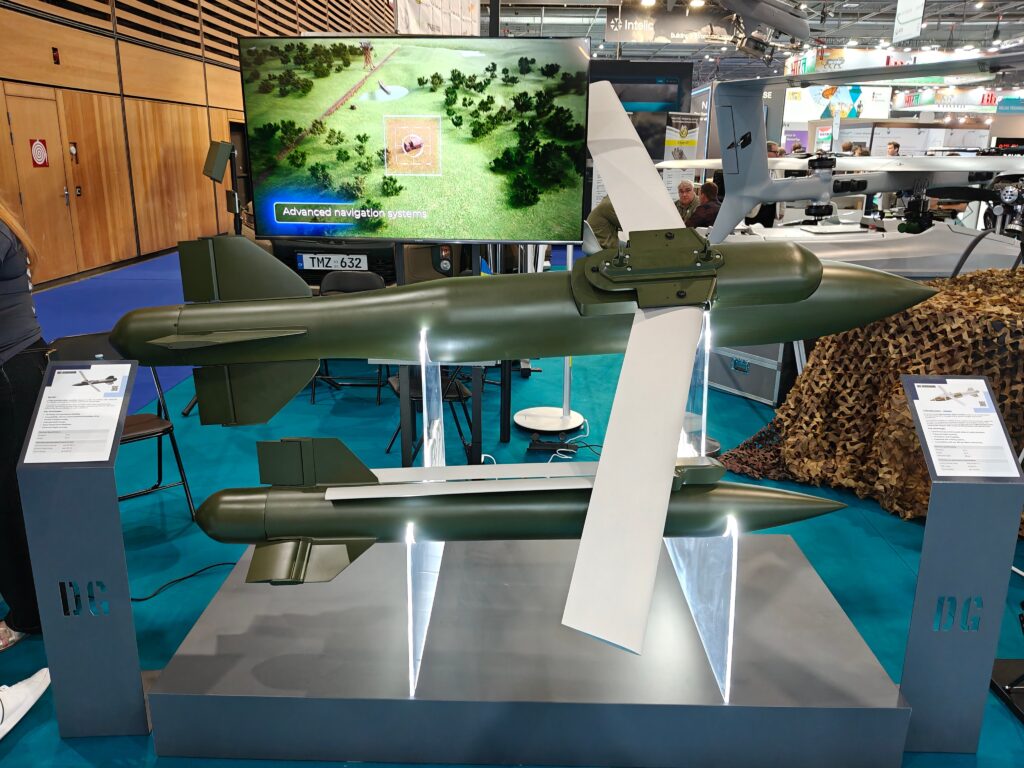
This is where glide bombs come in and now Ukraine no longer has to be held back by limited Western supplies. The new Vyrivniuvach (“Equalizer” or “Leveler”) has entered serial production, developer DG Industries told Defense Archives writer Jeff2146 at the Eurosatory 2026 defense expo in France. Ukrainian company BlueBird Tech is working on its own glide bomb.
Ukraine’s drones and manned airstrikes actually have a symbiotic relationship. Unmanned systems have severely degraded Russian air defenses that threaten warplanes, opening more gaps for them to strike.
“Now that the Russians have significantly reduced the number of S-400 and S-300 systems, and we’ve acquired systems and units that can detect a missile in advance and promptly command the pilot to perform the appropriate maneuver, the opportunity has arisen to use such systems,” said Kostyantyn Kryvolap, a former aviation test engineer at the Antonov Design Bureau. “And the country has begun to use them. That’s the whole idea.”
The bombs should help expand Ukraine’s air interdiction campaign by giving them a harder-hitting option, the Institute for the Study of War predicted. It will also give the Russians a taste of their own medicine—they have been dropping thousands of glide bombs per month, wreaking havoc on frontline positions and urban centers alike.
On the other hand, the destruction of Russian command posts, deployment sites, and logistics hubs is pushing them farther and farther into the rear, ironically leaving fewer juicy targets for glide bombs. That is unless the pilots are willing to put themselves in greater risk by flying high or going deeper into enemy territory.
“If you’re dropping something at a distance of 35-50 km, you have to search very hard for a suitable target,” Kryvolap said. “Right now, the kill zone is getting to be 60 km. Right now, real targets are at least 100 km away.”
Leveling the playing field and Russian targets
Russia is infamous for its glide bomb barrages that Ukrainians have struggled to deal with. However, Ukrainian bombers are also putting in the work.
Just days ago, Ukrainian MiG-29s blasted a base with two French AASM HAMMER glide bombs, demolishing a building reportedly filled with Russian personnel. In April, Ukrainian planes hit a UAV storage site at Donetsk Airport, flying close enough to drop GBU-39 Small Diameter Bombs.
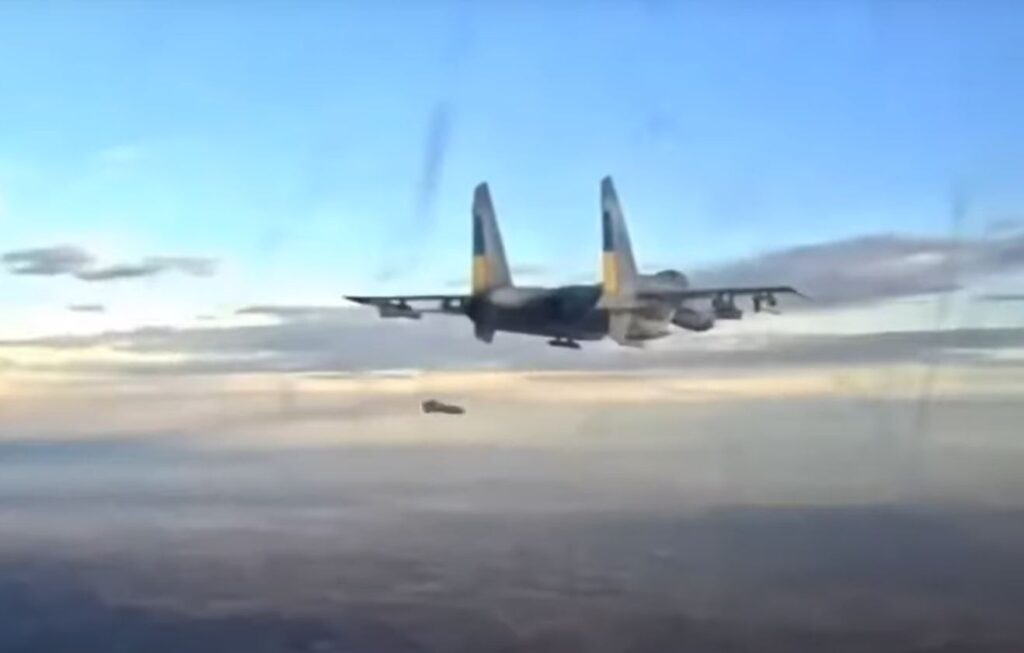
Until recently, Ukraine relied on Western partners for these capabilities, like the HAMMERs or the American JDAM-ER kits that convert dumb bombs into precision guided munitions. Now, Ukraine can make its own kit, compatible with most bombs, at reportedly a third of the JDAM-ER’s $21,000 price tag.
Anton Zemlyanyi, a senior researcher with the Ukrainian Security and Cooperation Center, called it “an extremely important stage in the Ukrainian defense industry—Ukraine is focusing on its own combat needs and independently seeking solutions to problems without relying on military assistance from partners.”
The irony of range
Glide bombs can travel dozens of kilometers, with the HAMMER and the JDAM-ER having reported ranges of over 70 km. DG Industries claims that the Vyrivniuvach can go 130 km, which on paper is a major upgrade if accurate.
In practice, however, no glide bomb is likely to fly that far in Ukraine. Military analysts put the real maximum between 60 and 90 km and even those are likely to be exceptions rather than the rule. Defense Express estimates the practical range at 40 km.
To get maximum range on a glide bomb, a pilot has to fly very high, which makes them an easier target for more plentiful Russian aviation or remaining ground-based air defenses. Ukrainian planes frequently fly low to the ground before pulling up sharply to release the payload: what’s called toss bombing in the West and doing a “girka” in Ukraine.
Alternatively, they can fly closer to their targets, pull a girka, release the bombs, then get out of dodge. Getting close is also risky.
For three years, Russia glide-bombed Ukraine in escorted pairs. Now Ukraine is glide-bombing Russia the same way.
Ukraine’s air force is “quite careful about the issue of saving lives and our equipment, saving the lives of our pilots and our equipment,” Kryvolap said. This makes sense, as the air force is quite small compared to Russia’s and every plane, Soviet or Western, is a precious resource that cannot easily be replaced. Ditto for experienced pilots.
Since the start of the war, the country has lost 116 aircraft, according to the Oryx/Valka Online OSINT loss tracker.
Erosion of Russian air defenses
Still, the air force may have the cause to be more daring for some missions, given the sorry state of Russian air defense.
From June 2025 to early March, Ukraine conducted 492 strikes against air defense infrastructure and 433 more against anti-access/area denial assets, an analysis by Tochnyi.info reported.
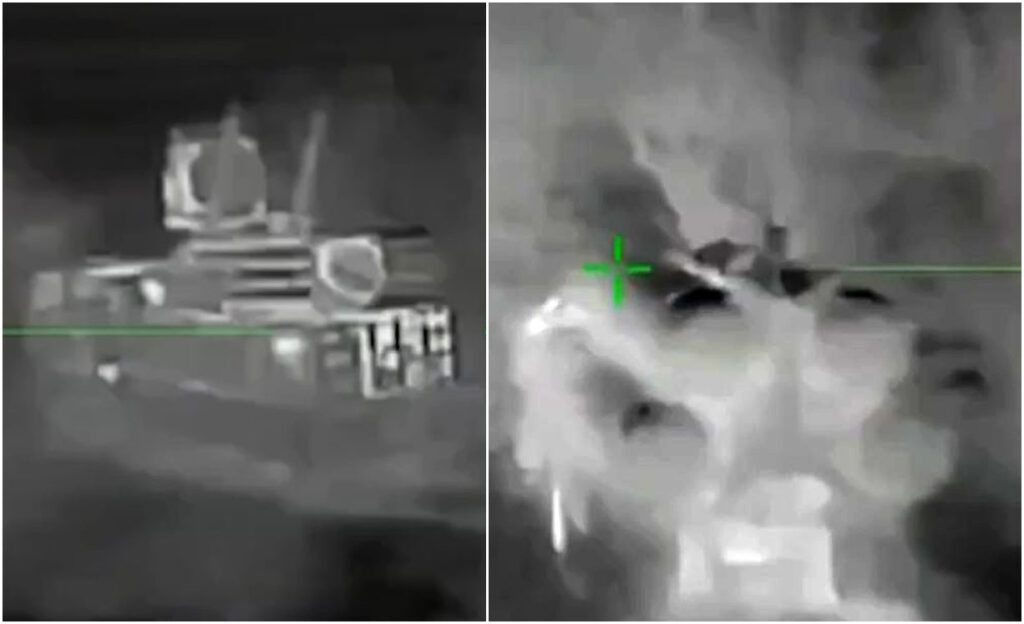
They haven’t slowed down since. Between March and May, Ukraine’s General Staff reported 24 radar systems damaged in Crimea alone. In April, 25 air defenses were hit, including radars, Tor, Buk, Osa, and Pantsir systems, as well as pieces of S-400 and S-300V systems.
Meanwhile, after the latest mass strike on Moscow, Russia is setting up S-300 and S-400 installations in the capital, the Moscow Times reported. This means that fewer of these systems will be available to protect the sky in occupied territories.
Callsign Churchill, a company commander with the 413th Unmanned Systems Regiment “Raid” told Euromaidan Press that in some areas, the Russians are “losing the concept of layered air defense” as layers get picked off, creating blind spots. This makes the sky a little less deadly for planes.
The biggest threats to aircraft are S-400 air defense systems, which have reported ranges up to 400 km, though they are more likely to engage aircraft at up to 200 km, Kryvolap said. S-300s come in all kinds of variants and upgrades, but many can also threaten aircraft at far greater ranges than any glide bomb.

The relative prevalence of these systems earlier during the war made the Ukrainian air force more reluctant to deploy aircraft on bombing missions where they could be shot down.
However, Ukrainian forces have been continually destroying these systems. There are dozens of reports on successful strikes on S-400 and S-300 missile systems and their radar.
This dynamic is an enabler for the use of Ukrainian glide bombs, experts said.
“Ukraine actively uses such weapons to strike enemy ground targets, especially given the lower conditions and level of countermeasures from the Russians,” Zemlyanyi said.
However, he cautioned not to overstate this trend. Russia has aviation of its own. “In conditions when both sides have operational front-line fighter aircraft… the use of aircraft for bombing is significantly complicated.”
Does Ukraine have enough planes to make it count?
Glide bombs are not just limited by Russian air defenses and fighters but by the number of aircraft Ukraine has, which is a fraction of Moscow’s. Based on open-source information, Ukraine’s air forces are focused on hitting Russian ground targets, though the jets dropping the bombs have to be screened from Russian aircraft by their fellow fliers.
The number of military jets Ukraine has is classified. TWZ reported that Kyiv entered the full-scale war with around 50 of its most prolific Soviet jet, the MiG-29 and 36 have been destroyed as of the start of June, according to Oryx.
Supplies were topped up by allies, with 14 transfers from Poland and 13 from Slovakia, though a portion of the above were to be used for parts. MiG-29s with Azerbaijani camo have been observed flying in Ukraine, though the number of Azerbaijani jets has not been reported.
Other planes that can use homegrown glide bombs include Su-24s and Su-27s. It’s not clear how many Ukraine has now, but Oryx confirmed 21 losses for Su-24Ms and 20 Su-27s. Su-27s are critically endangered as no ally can replace them.
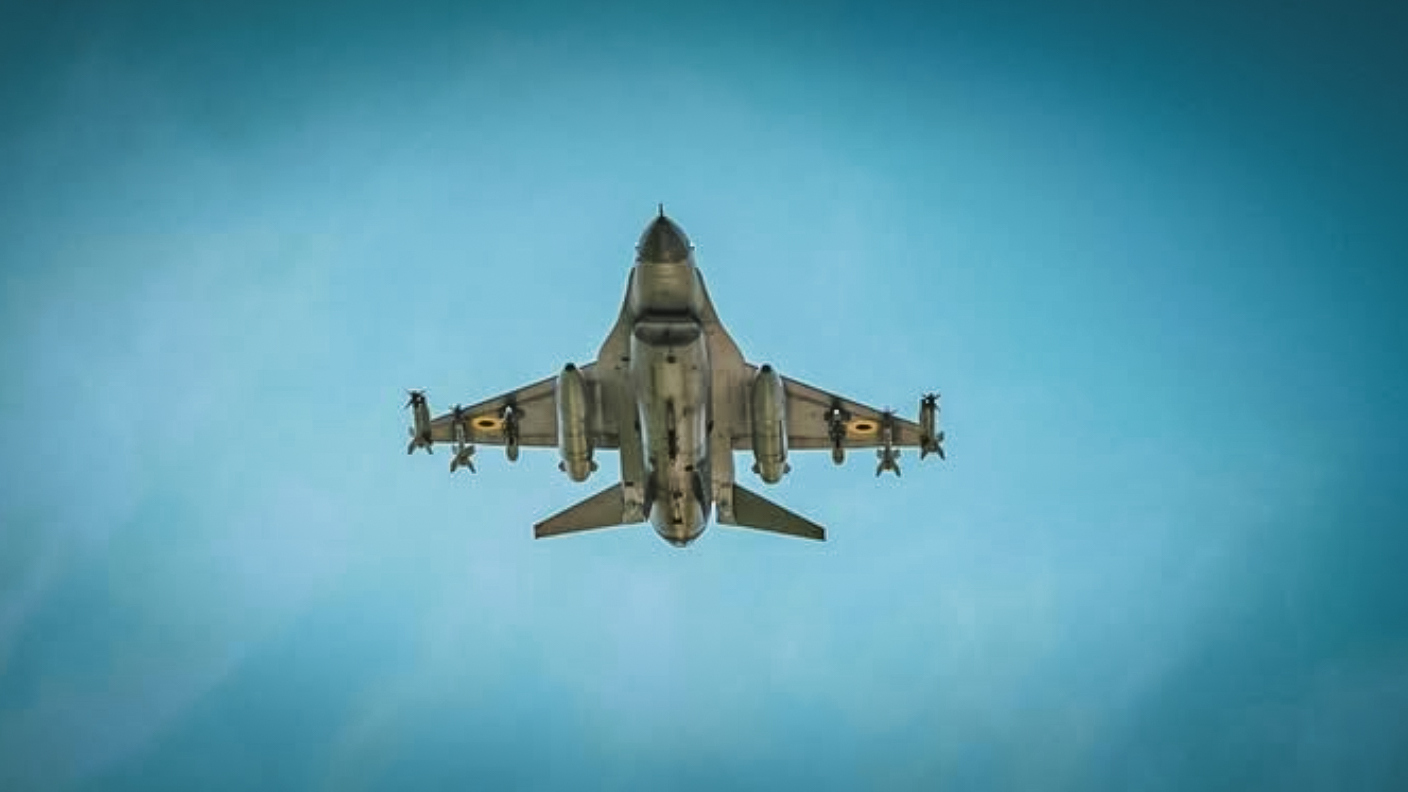
What allies can do is give Ukraine more Western jets. After four recorded combat losses, Ukraine reportedly has up to 39 foreign F-16s in service, out of a total of 79 pledged. France transferred a handful of Mirage fighters to Ukraine as well. Both F-16s and Mirages were seen conducting what look like air-to-ground operations.
Meanwhile, Sweden announced the transfer of 16 Gripen JAS 39C/D by 2027 and the sale of 22 Gripen JAS 39E by 2030.
The Vyrivniuvach can reportedly be adapted to Western planes, though this will require additional certification. “So there should be no problems with the carriers of this bomb,” Zemlyanyi said.
About the Author
