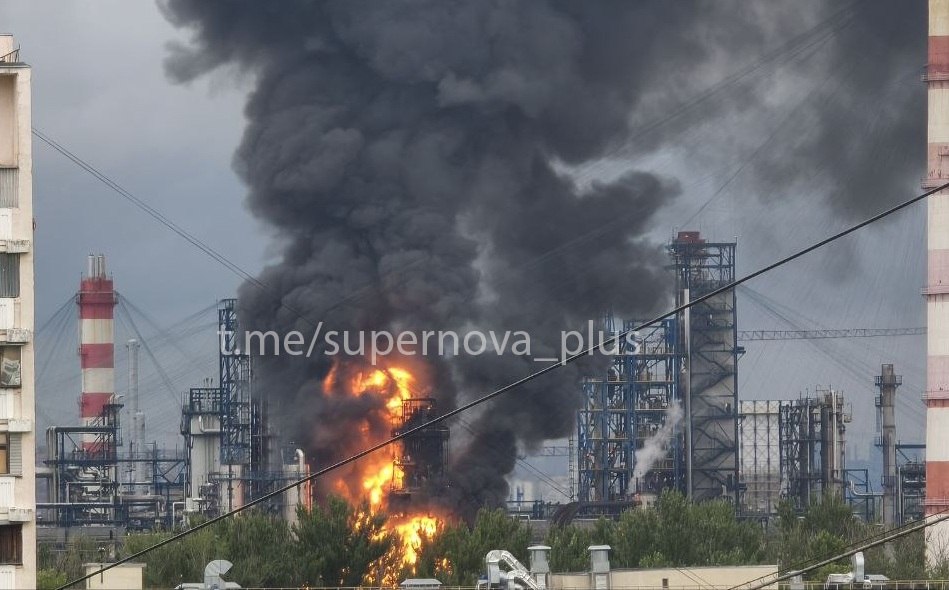
The Moscow oil refinery in Kapotnya will need at least six months of repairs and is unlikely to resume production this year, after two Ukrainian drone strikes, Reuters reported on 24 June, citing two sources.
The strikes on 16 and 18 June disabled both of the refinery’s primary processing units, which together account for all of its crude refining. The plant covers roughly 40% of the Moscow Oblast’s gasoline and about half its diesel, sits about 15 kilometers from the Kremlin, and supplies the Russian army, according to Ukraine’s General Staff.
What the strikes disabled
The 16 June strike knocked out the ELOU-AVT-6 unit, a primary crude-processing unit rated at 140,000 barrels per day. The 18 June strike disabled the refinery’s second primary unit.
With both down, the plant cannot process crude. Ukraine’s General Staff said the refinery had stopped processing oil for an indefinite period, and Ukrainian OSINT analysts reported the strikes had halted all of its primary refining.
Two strikes in three days
Ukraine hit the Kapotnya refinery twice within 72 hours. The first strike, overnight on 16 June, damaged the ELOU-AVT-6 unit and forced a temporary shutdown — the plant had already begun winding down before the drones arrived.
The second strike came overnight on 18 June. Residents across Moscow and the surrounding region reported a mass drone overflight, and Mayor Sergei Sobyanin said air defenses downed nearly 200 drones near the capital, though several reached the refinery.
“Several drones managed to reach the Moscow oil refinery,” Sobyanin wrote on Telegram. It was the largest Ukrainian drone attack on Moscow of the full-scale war.
Videos showed multiple fires and black smoke over several Moscow districts, and Ukraine’s General Staff confirmed at least five seats of fire, including a combined crude unit, secondary processing units, and a tank farm. President Zelenskyy confirmed both strikes as a response to Russian attacks on Ukrainian cities.
Why the refinery matters
The Kapotnya plant, run by Gazprom Neft, is one of Moscow’s main fuel sources, producing gasoline, diesel, and aviation kerosene for the capital’s airports. Its processing capacity exceeds 12 million tonnes of crude per year.
A shutdown stretching into 2027 would remove a large share of the Moscow region’s fuel processing for months.
About the Author
