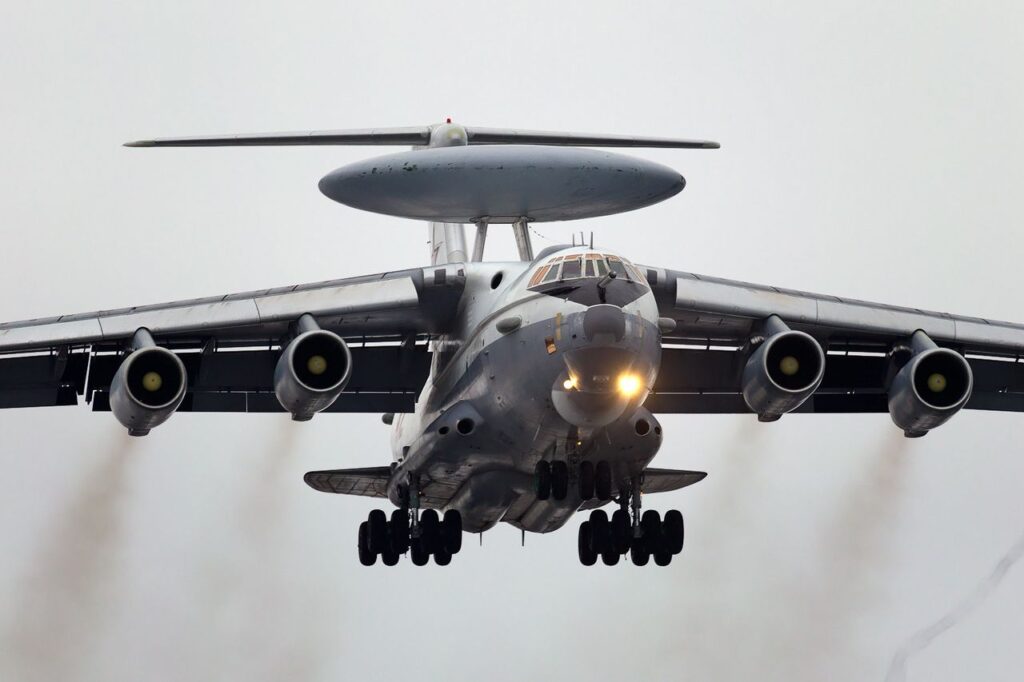
- A Russian radar plane helped spot and destroy Ukrainian cruise missile during a recent raid
- But there probably aren’t enough the planes to keep more than one on station around the clock
- And Ukrainian strikes are steadily depleting the radar plane fleet
Russia has just a few Beriev A-50U radar early warning planes left. But those rare aircraft are still busy helping Russian air defenses detect and destroy Ukrainian missiles ranging deep inside Russia to strike strategic industries.
The four-engine A-50Us with their top-mounted radars may be the key to Russia’s deep air defense. But that unique capability cuts both ways.
The same Ukrainian deep strike forces that the A-50U crews are working to stop are also hunting the lumbering radar planes on the ground at their bases inside Russia. And once the A-50Us are all gone, there’s nothing to replace them—and Russian air defenses will lose their best eyes in the sky. If and when that happens, more Ukrainians missiles will get through.
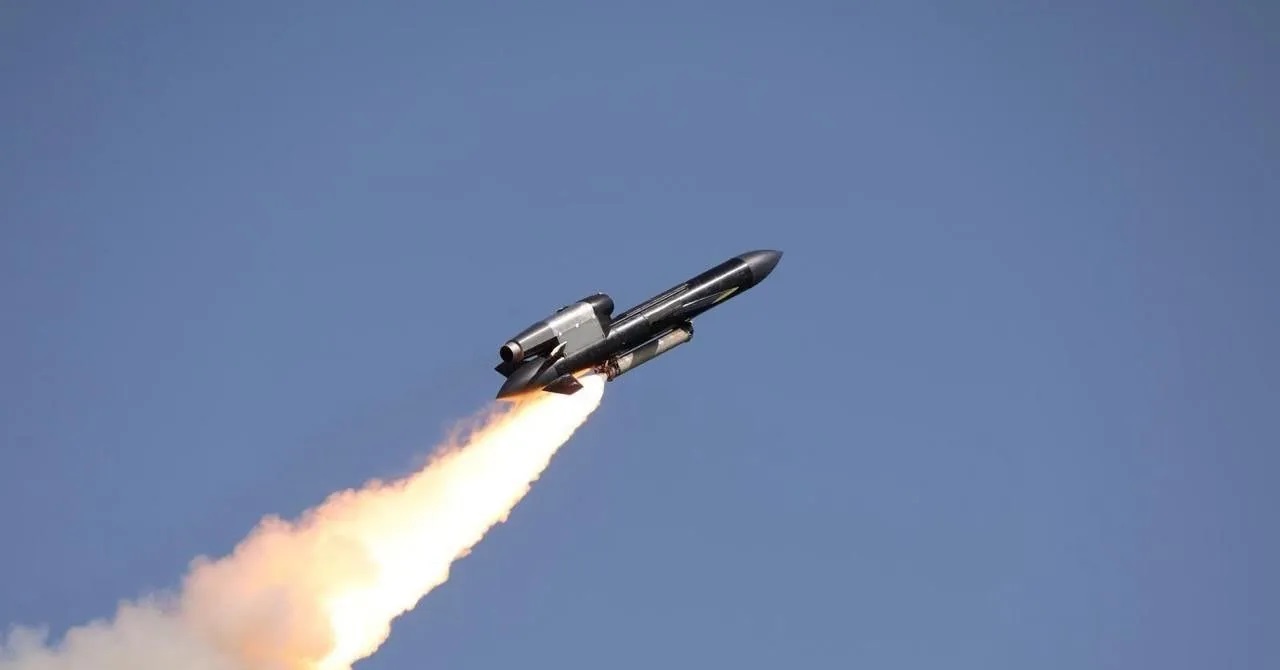
On 4 July, the Ukrainian armed forces reportedly fired at least five Fire Point FP-5 Flamingo cruise missiles at targets deep inside Russia. The six-ton missiles are among the heaviest and farthest-ranging Ukrainian deep strike weapons.
After many months of steady improvement by the engineers at Fire Point, the FP-5s are now reliably striking Russian targets with their 1,150-kg warheads. On 27 June, footage circulated depicting two FP-5s slamming into the Titan-Barrikady missile plant in Volgograd, in southern Russia 500 km from the front line in Ukraine.
And on 10 June, five Flamingos targeted the VNIIR-Progress defense electronics plant in Cheboksary, in western Russia 900 km from the front line. Two of the missiles struck the plant, punching right through anti-drone protections and inflicting major blast and fire damage.
For two years, Ukraine’s strikes barely scratched Russia’s war factories. Something just changed.
It seemed the five FP-5s that took flight on 4 July were on track to hit something in Votkinsk, in western Russia 1,400 km from the front line.
But the Russian air force intervened. FP-5s sneak past Russian air defenses by flying along river valleys and other natural obstructions that can shield them from detection by radar. But on 4 July, the Russians positioned an A-50U and its powerful radar overhead of the Ukrainian missiles’ flight paths.
Obstructions on the ground no longer offered any protection as the munitions motored toward Votkinsk. The Russians shot down all five of the $500,000 Flamingos.
The A-50U and its 15 crew were the key to the successful defense, according to Michael Bohnert, an analyst with the RAND think tank in California. “Its radar, unobstructed by the curvature of the Earth, was able to detect Ukrainian FP-5 Flamingo cruise missiles from far away and defeat them,” Bohnert explained.
But the Russians shouldn’t celebrate quite yet. “This employment is likely exploitable,” Bohnert warned.
Running out of A-50Us
According to Bohnert, it takes four A-50Us to keep one of the planes on station around the clock. That’s because one plane will be on duty, another will be returning from duty, a third will be on its way to relieve the on-duty plane and a fourth will be undergoing maintenance on the ground. Add three more A-50Us and “you can almost keep two up 24/7,” Bohnert concluded.
The problem for the Russians is that they may have just five active A-50Us. And there’s no replacement radar plane in active development after the Kremlin apparently suspended work on the new Beriev A-100.
Russia went to war in February 2022 with potentially seven active A-50Us. In a series of attacks going back three years, the Ukrainians may have hit more than half of them. At least two are total write-offs.
- A Ukrainian drone damaged an A-50U on the ground in Belarus in February 2023.
- In January 2024, a long-range Ukrainian missile—reportedly a US-made Patriot—shot down an A-50U over the Sea of Azov in southern Ukraine.
- Six weeks later, in February 2024, another Ukrainian missile, an ex-Soviet S-200, struck a third A-50U in the air in the same area.
- In March, Ukrainian drones may have damaged an A-50U on the tarmac at the 123rd Aviation Repair Plant in Staraya Russa, in Novgorod Oblast 630 km from the front line. There was “confirmed damage to the aircraft,” the Ukrainian general staff claimed.
The Ukrainians are steadily attriting the radar planes. And the Russians aren’t moving fast enough to develop and build new ones. There could come a time, and soon, when the Russian air force won’t have enough A-50Us to maintain a long patrol over the likeliest routes for Ukrainian missiles traveling deep into Russia.
If and when that happens, even more of the missiles will be able to reach their targets.
About the Author
