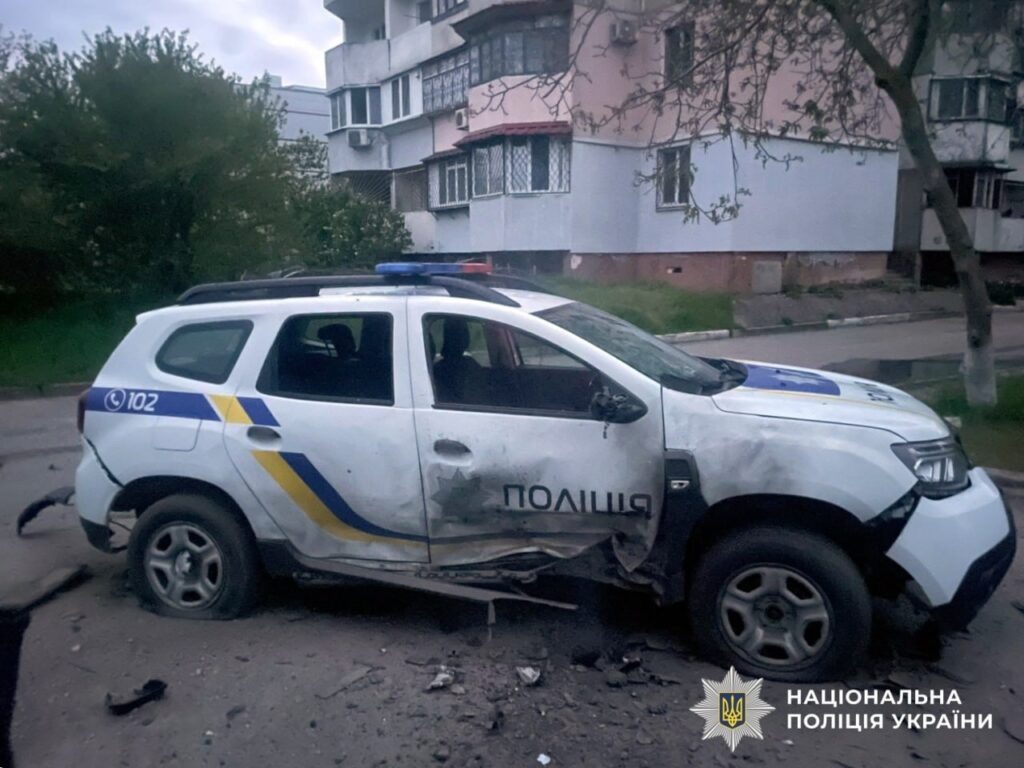
Russia dropped four guided aerial bombs on the outskirts of Kyrylyvka village in Chuhuiv district on 28 June, striking a police vehicle carrying officers from Police Department No. 1 of the Chuhuiv District Police Directorate, the Main Directorate of the National Police in Kharkiv Oblast reported.
Roman Komarov, a community liaison officer with the department’s community interaction sector, was killed at the scene. A juvenile prevention inspector from the same unit sustained serious injuries and was hospitalised in intensive care.
Who was Roman Komarov
Komarov was 25 years old. “Roman Komarov remained faithful to his oath until the last moment, conscientiously performed his official duties, and together with his colleagues rescued civilians, risking his own life. He gave his life fulfilling his duty to the Ukrainian people,” the Kharkiv Oblast police directorate said.
Pattern of attacks on evacuation operations
The 28 June strike is not an isolated incident. On 20 February, two officers from the White Angels special evacuation unit — Yuliia Keleberda and Yevhen Kalhan — were killed near the village of Seredniy Burluk in Kharkiv Oblast when a Russian Lancet-type drone struck their armoured vehicle during a civilian evacuation. “The White Angels special unit officers had set out to conduct a civilian evacuation. Near the village of Seredniy Burluk, the officers’ armoured vehicle was attacked by a Russian Lancet-type UAV. As a result of the strike, two police officers sustained fatal wounds and died at the scene,” the National Police of Ukraine reported.
Russia’s pattern of striking evacuation and rescue personnel
The killing of Roman Komarov on 28 June is part of a documented pattern. Rescuers, police officers, and paramedics are among the most vulnerable to Russian strikes, since they are the first to arrive at the scene of an attack.
The tactic most associated with targeting first responders is the “double-tap” strike — a follow-up attack timed to hit emergency personnel responding to an initial strike. Double-tap strikes involve an initial strike followed shortly thereafter by a second strike, often aimed at first responders or civilians rushing to aid victims of the first attack. The Russian military has employed this tactic in Sumy, Kharkiv, Zaporizhzhia, Kherson, and other frontline cities.
Russian attacks on civilian infrastructure workers have also escalated more broadly. On 1 February 2026, a Russian drone struck a bus carrying mineworkers, killing at least a dozen people. Ukrainian Energy Minister Denys Shmyhal called the attack “a cynical and targeted attack on energy sector workers.”
Read also
-
Ukraine drones hit Crimea’s S-300/S-400 near Kerch—and knocked out power across four occupied territories overnight
-
Latvia to build joint drone plant with Ukraine near Russian border
-
Ukraine drones hit Crimea’s S-300/S-400 near Kerch—and knocked out power across four occupied territories overnight
About the Author
