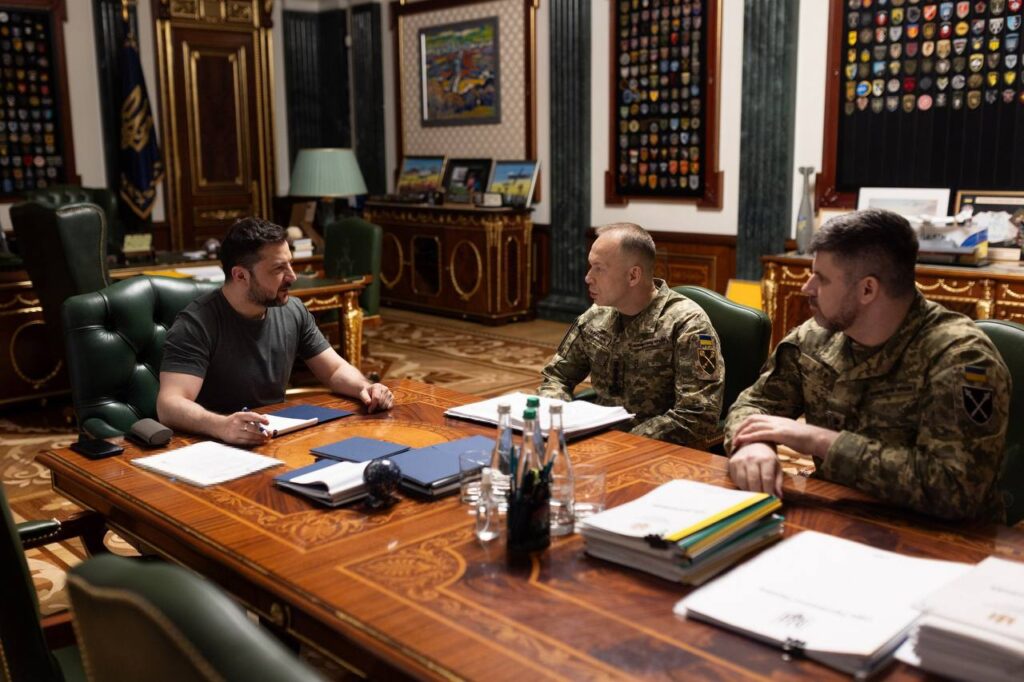
On the fifth straight day of protests demanding his removal, Ukraine’s Commander-in-Chief Oleksandr Syrskyi ended his silence—with a rare column apologizing to dismissed defense minister Mykhailo Fedorov and insisting he is fighting Russia, not the ministry—three days before the protesters’ 24 July deadline expires.
The column carries hard facts along with the apology: a month after new military contracts were unveiled, about 2,000 servicemen in a million-strong army have signed them, Syrskyi wrote, and money for soldiers’ pay was redirected to drone purchases, putting second-half salaries in question.
Since Fedorov’s dismissal in last week’s government reshuffle, protesters in more than a dozen cities have set the government an ultimatum: reinstate the minister and remove Syrskyi by 24 July, or rallies go nightly.
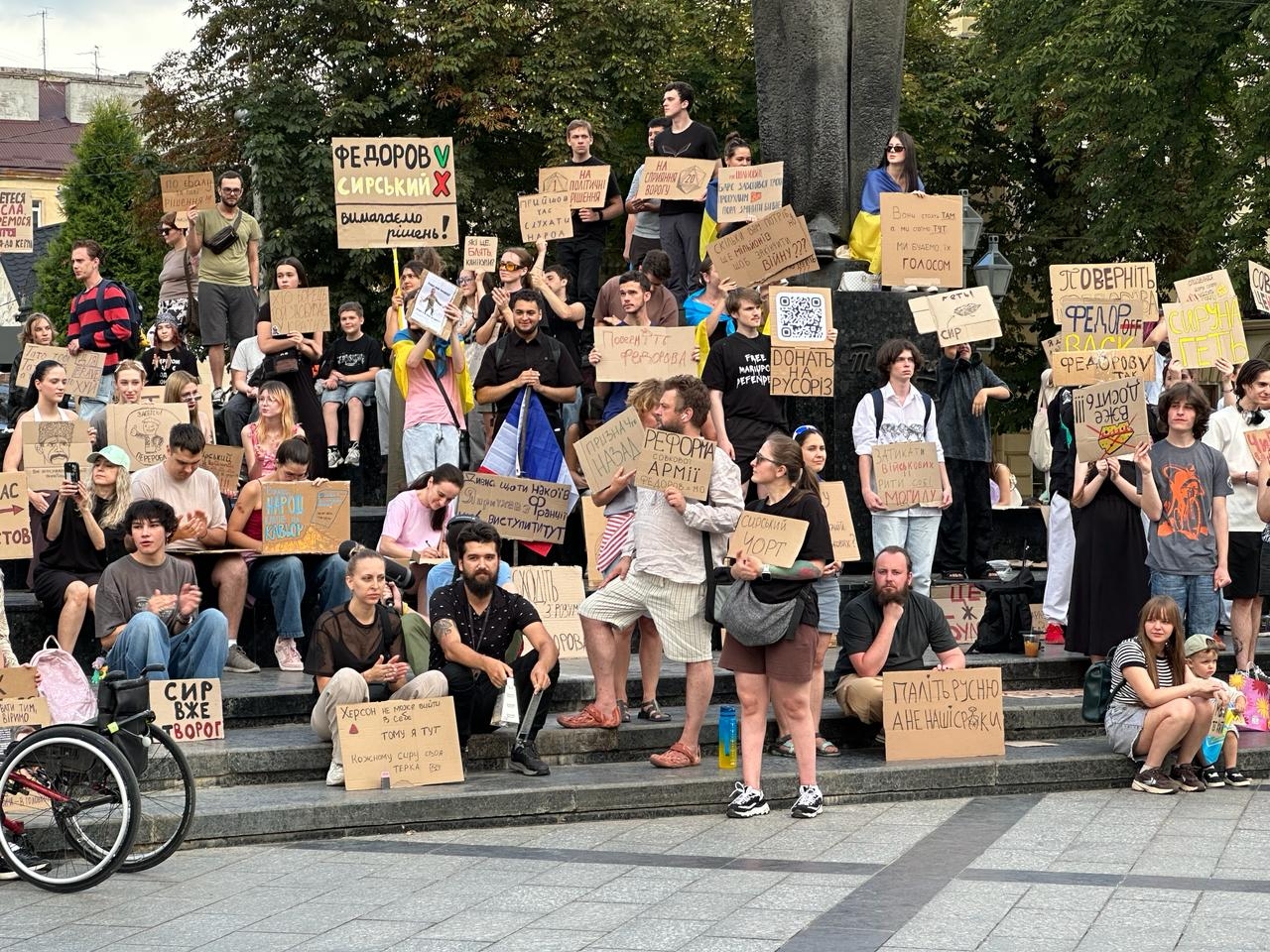
Ukraine’s protesters set a 24 July deadline as Zelenskyy weighs replacing his army chief
Syrskyi is the last of the principals to speak. Fedorov thanked his supporters on 18 July, writing that changes will come and that “dialogue exists.” Presidential Office head Kyrylo Budanov urged calm on 20 July, saying the position of society “has been heard” and warning that the enemy watches every internal dispute, waiting for Ukrainians to fight each other. Volodymyr Zelenskyy has promised decisions. The commander-in-chief’s column is the first point-by-point answer to the accusations.
“Mykhailo Albertovych, forgive me. I can be harsh.”
Oleksandr Syrskyi
An apology, and a defense
Syrskyi wrote in Militarnyi that media work does not interest him and that it came as a surprise to learn he and the minister had a “conflict,” having seen their relations as working ones—hard questions, different positions. Then he addressed the former minister directly: “Mykhailo Albertovych, forgive me. I can be harsh.”
He asked both Fedorov and the public to focus on victory rather than personalities, warning that splitting into a “Fedorov camp” and a “Syrskyi camp” reduces questions of life and death to slogans—the greatest favor Ukrainians could do the enemy.
He also answered the charge he called the strangest: that he does not want to fight with drones. The Unmanned Systems Forces were created as a separate branch under his command, he wrote, and he personally proposed Robert Brovdi, the officer known as Madiar, to lead them. “It was an unpopular decision, and I took full responsibility for it,” Syrskyi wrote.
But drones alone do not prepare a battlefield, he argued: the army also needs artillery, mortars, air defense, and electronic warfare, and the ministry must buy everything, not only what is in fashion. As for the demand that he publish a war strategy, he wrote that whoever asks the commander to present his strategy publicly is asking him to present it to the enemy.

The numbers he chose to publish
Beyond the apology, Syrskyi turned to the reform the protesters credit Fedorov with—and published a number: a month after the new military contracts were presented, about 2,000 servicemen had signed them. At the same time, he had received a stream of demotivated soldiers who expected one set of terms and got another.
Those contracts are the centerpiece of the army reform Fedorov launched a month before his dismissal: for the first time, soldiers can sign for a fixed term—10 to 14 months in infantry-assault roles, 24 months in other combat and support positions—with a guaranteed deferral from mobilization when the contract ends, replacing service without an end date, Fedorov explained in June. Signing opened on 15 June.
The government resolution behind the contract “experiment” raises serious legal questions, Syrskyi added, contrasting it with pay rises in the Interior Ministry system, which went through budget amendments and a parliamentary vote.
An acting minister, a running clock
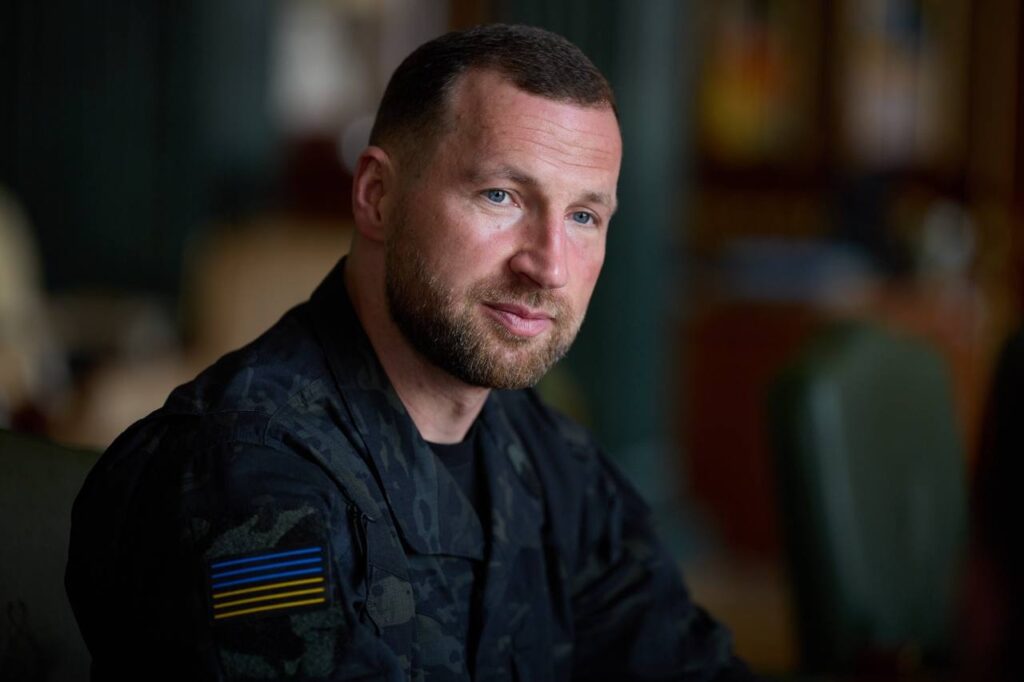
While the general wrote, the government moved. From 20 July, deputy defense minister Yevhenii Khmara—who previously led the Security Service’s Alpha special operations center and served as the agency’s acting head—officially took over as acting defense minister under a Cabinet order signed by new Prime Minister Serhii Koretskyi, the Ukrainian outlet NV reported.
A permanent minister still requires a parliamentary vote, and MPs closed their July sittings, leaving both ministries vacant until the next scheduled plenary on 18 August, unless Parliament is recalled early.
Meanwhile, ZN.UA reported that the President’s Office is considering offering Fedorov a new role as coordinator of military technology development—a “miltech czar”—while discussions continue on a possible replacement for Syrskyi, citing its sources in Washington. Neither has been confirmed.
In Lviv, a crossed-out cheese
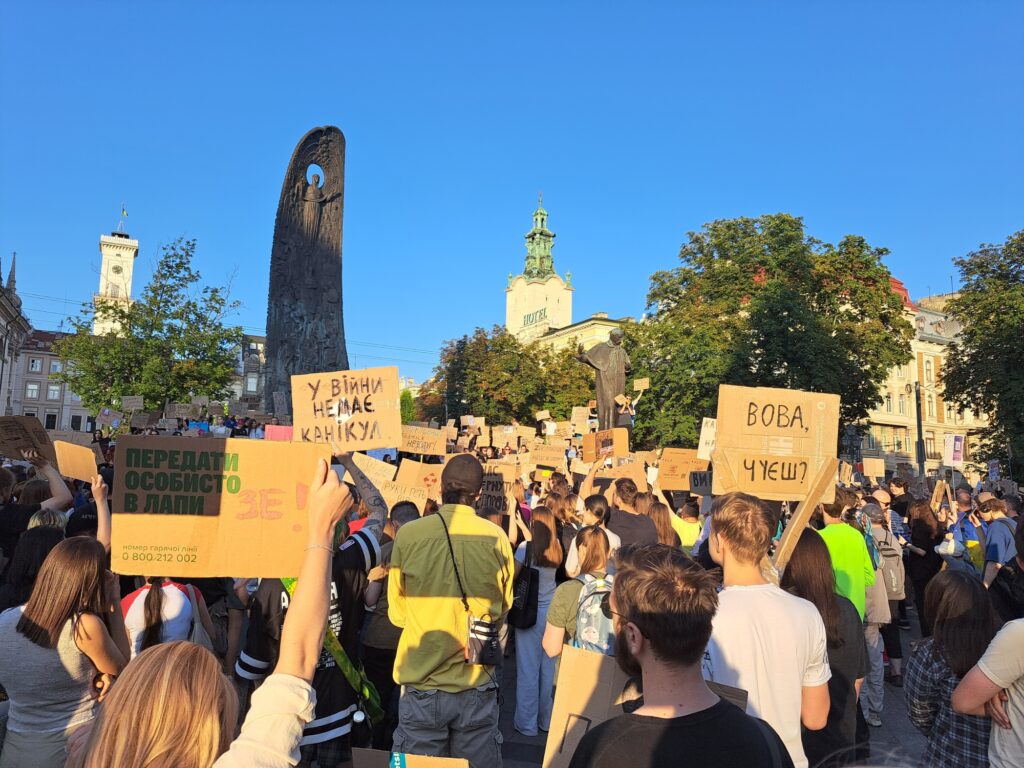
The streets did not wait for the column. Protesters came out for a fifth straight day in cities across Ukraine, including Lviv, where two of them—Yarema, 20, and Khrystyna, 21—answered Euromaidan Press’s question about why they were there by pointing at their cardboard sign: a wedge of cheese, crossed out. Syr—cheese—is the first syllable of the commander-in-chief’s surname.
“We are here because we see the possibility, the opportunity, and the desire to fight for our future, the future of our country,” Yarema told Euromaidan Press. “We have seen the changes that were happening. And we want these changes to continue happening, because these were good changes, first and foremost, for our military.”
“This is not the first rally,” he added. “But I hope it’s the last.”
About the Author
