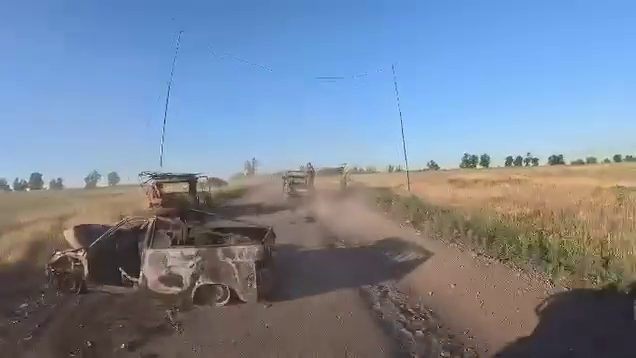
- Why did Russian commanders line up more than 50 vehicles just a few kilometers south of the gray zone in Donetsk Oblast?
- The vehicles were easy prey for Ukrainian drones
- Occupied Ukraine is becoming more dangerous by the day for all Russian vehicles
The Russian force in Ukraine has mostly parked its armored vehicles and shifted to infantry-led assaults across the drone-patrolled gray zone.
Which is why what happened on or just before 8 July is so bewildering. Despite Russian commanders concluding that vehicles are too easy for Ukraine’s tiny first-person-view drones to find and strike, and despite a reported ban on Russian vehicular traffic on eastern Ukraine’s Donetsk Ring Road, the Russian Center Group of Forces massed no fewer than 50 vehicles 12 km south of the gray zone stretching between Kostiantynivka and Toretske in Donetsk Oblast.
The outcome was predictable. Drones from the Ukrainian State Security Service’s Ivan Franko Group detected and attacked the column of trucks, vans, cars, all-terrain vehicles, and motorcycles just south of the ring road near the village of Malynivka, an important base for Russian forces fighting in Donetsk Oblast. When the smoke and dust cleared, more than 50 vehicles had been hit and immobilized if not destroyed.
“Despite the ban on movement of cargo and military transport on the Donetsk Ring Road, IFG with a firm hand and drones that you donated ‘detained’ several violators,” the Ivan Franko Group quipped.
It’s unclear how many Russians were killed or wounded. But the Center Group of Forces clearly failed at whatever it was trying to achieve—and the assembly of the column, in daylight, within drone reach, is the puzzle. Russian commanders knew what the sky over the gray zone does to vehicles. They sent the column anyway.
It’s possible the column was trying to reach the Donetsk Ring Road in order to turn west toward Toretske or east toward Kostiantynivka. Russian forces are attacking in both directions, aiming to break through Ukrainian defenses to open a path, any path, toward the twin free cities of Kramatorsk and Sloviansk, 22 km north of Kostiantynivka.
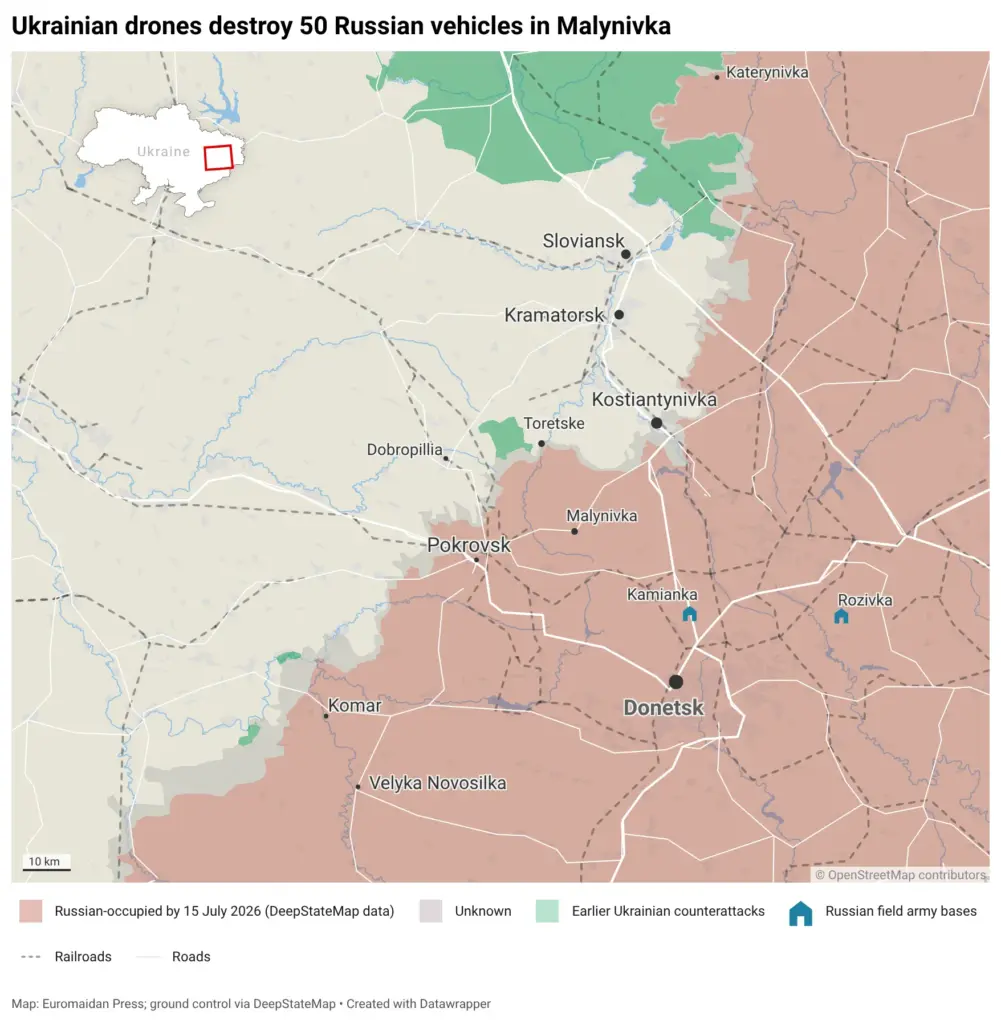
Left or right?
Whether the Russians planned on investing those vehicles in a direct assault in either direction is anyone’s guess. It’s possible the column was merely transporting infantry closer to the gray zone, sparing them a long foot march ahead of a dangerous foot assault.
But it’s also possible that, yes, the Russians meant to send the trucks, vans, cars, all-terrain vehicles, and motorcycles across the gray zone. Vehicular assaults are rare these days, but they still happen from time to time. They almost never succeed. There are just too many drones over and behind the gray zone.
Indeed, the vehicular kill zone is getting wider by the day as Ukraine deploys more and more drones for strikes on Russian supply lines at depths up to 200 km. The Ukrainian counterlogistics campaign that kicked off this spring has struck potentially thousands of Russian trucks as well as trains, bridges, and, more recently, cargo ships plying the Sea of Azov and Black Sea hauling critical war supplies.
The Russians are now adding anti-drone cages to some trucks and guarding the most important convoys and supply routes with gun-armed air defense teams. More convoys are taking back roads, hoping to escape the attention of the ever-present drones.
But these measures aren’t working as more Ukrainian drones take flight, including $6,000 AI-assisted fixed-wing models and $500 first-person-view quadcopters with detachable wings for greater range. Scrutinizing official videos for evidence of drone strikes, mapper Clément Molin tallied 600 destroyed or damaged Russian cargo trucks in June and another 240 in just the first week of July.
Importantly, Molin only counted confirmed strikes. There are surely many others that don’t leave behind clear, public video evidence.
The pace of strikes is increasing even as the Russians add anti-drone protections. There were 20 hits on Russian trucks every day in June, on average, and 34 hits every day in July. The strike near the Donetsk Ring Road occurred too late to be included in Molin’s count. When he adds it, the daily average will be higher still.
All that is to say, more of occupied Ukraine is becoming steadily more hostile to Russian vehicles. Knowing that, why would the Russians line up 50 vehicles so close to the gray zone? On the evidence near Malynivka, they no longer have a good answer.
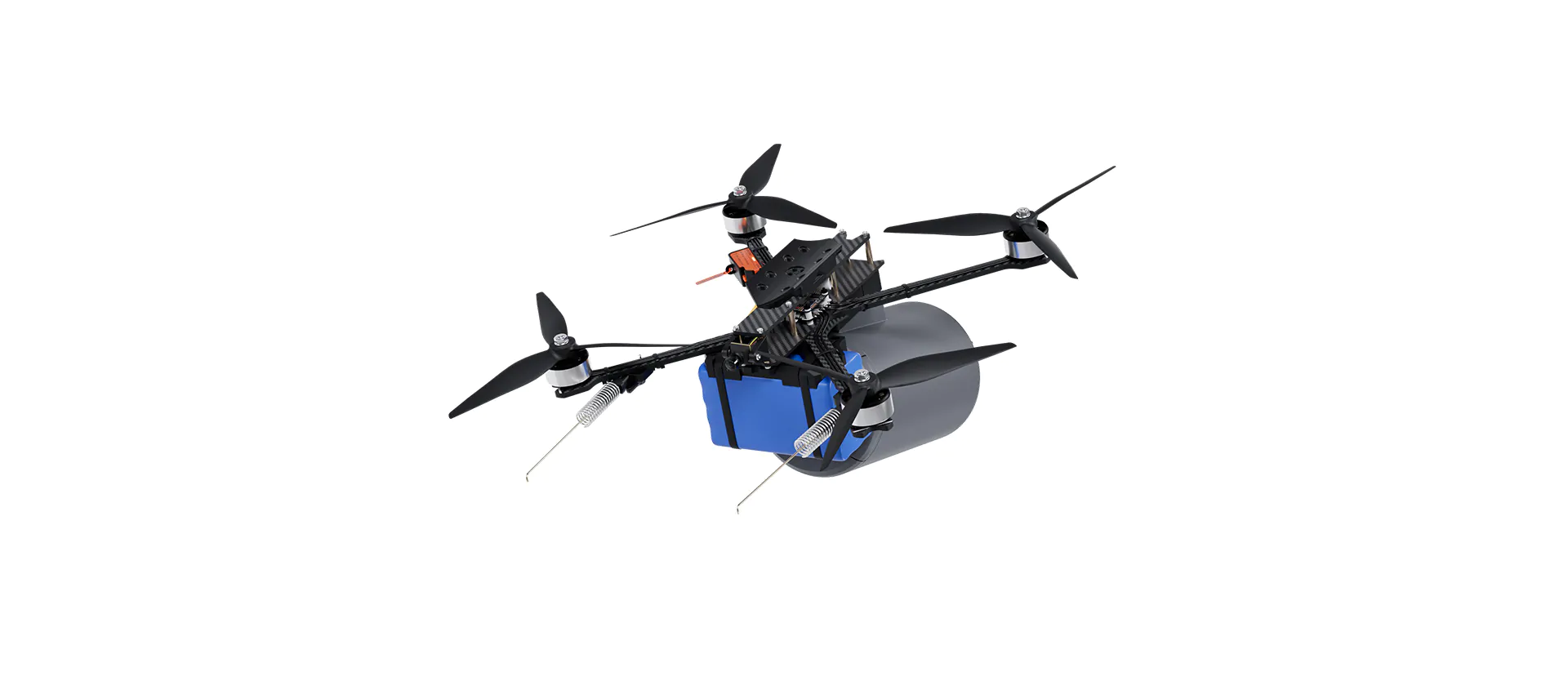
Ukraine’s $500 Vyriy FPV drone just flew 110 km to hit Russian logistics. That used to cost $5,000.
About the Author
