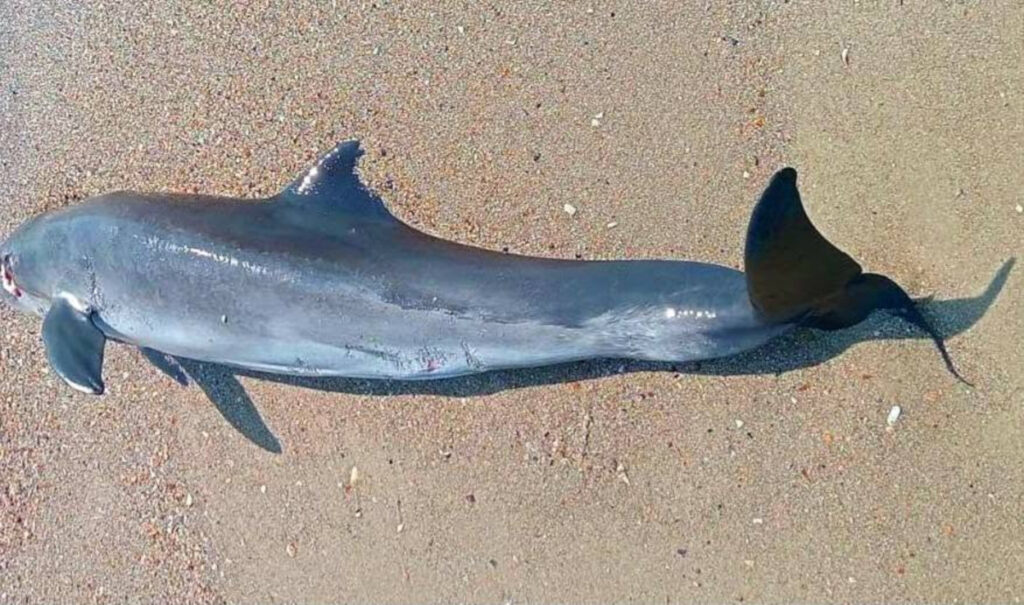
Russia’s full-scale invasion of Ukraine has killed more than 100,000 dolphins in the Black Sea and could trigger irreversible damage to the sea’s ecosystem if the losses continue, according to a leading Ukrainian marine biologist.
The warning comes as scientists continue documenting the environmental impact of the war in the Black Sea, with growing numbers of dead marine mammals forming part of evidence in Ukraine’s ecocide investigation against Russia. Underwater explosions, naval activity, pollution, and other military operations have all been linked to the deaths.
In an interview with RBK-Ukraine, Ivan Rusev, head of the research department at Ukraine’s Tuzly Lagoons National Nature Park, said researchers estimate that about 20,000 dolphins died in the first half of 2026 alone, bringing the total since Russia launched its full-scale invasion to more than 100,000.
“We may lose a unique ecosystem. Without dolphins, the Black Sea will cease to be ‘alive.’ It will begin to degrade, and life in it will gradually disappear,” Rusev told the outlet.
Scientists say most deaths go undocumented
Rusev said the documented toll represents only a small fraction of the true number of deaths because roughly 95% of dolphin carcasses sink before reaching shore.
Even among the few bodies washed ashore, researchers recover only a small proportion before they decompose or are carried away, making accurate documentation a race against time, he said.
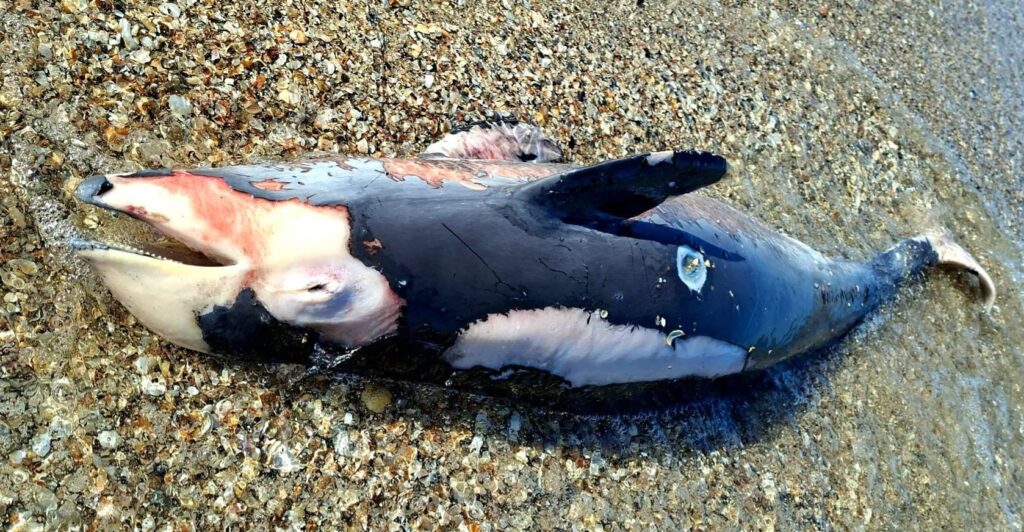
The estimates build on months of monitoring by researchers at Tuzly Lagoons National Nature Park, who earlier this month reported finding 63 dead harbor porpoises along Ukraine’s Black Sea coast since late May. They said the strandings likely represent only a small fraction of total deaths and are providing evidence to prosecutors investigating alleged Russian ecocide.
War-related threats multiply
According to Rusev, dolphins are being affected by multiple war-related factors.
He said powerful military sonar disrupts their echolocation and navigation, while underwater explosions can cause severe acoustic trauma, decompression sickness, and heart damage. Dolphins are also threatened by sea mines, exploding munitions, naval drones, chemical contamination, and burns caused by phosphorus munitions, he said.
Rusev added that stress and food shortages weaken the animals’ immune systems, making them more vulnerable to infections that would normally not be fatal.
The exact causes of individual deaths have not been conclusively established, though scientists have repeatedly linked the rising mortality to the cumulative effects of Russia’s war in the Black Sea.
Dolphins flee combat zones
Rusev said researchers in Romania, Bulgaria, and Türkiye have observed unusually large numbers of dolphins after many animals fled areas affected by fighting.
While the migration may improve the chances of survival for some dolphins, he warned that the overall population remains significantly depleted.
He also warned that chemical pollution generated by the war could eventually spread throughout the Black Sea, reaching as far as the Bosporus Strait and threatening the wider marine ecosystem.
Evidence gathered for ecocide investigation
Rusev stressed that documenting the deaths is essential, arguing that without evidence, the environmental consequences of the war could later be disputed.
The deaths of dolphins and other marine mammals are already being examined by Ukrainian authorities as part of an ecocide investigation into Russia’s actions, with researchers preserving carcasses and submitting evidence to prosecutors for forensic analysis.
About the Author
